
X-Energy secures $1.02 billion in a historic nuclear initial public offering, with the Amazon-supported reactor developer experiencing a 31% jump upon its debut on Nasdaq.
In brief, X-Energy secured $1.02 billion in the largest nuclear initial public offering (IPO) in history, setting its price at $23 per share (21% higher than the expected range) on the Nasdaq. Following the opening, shares surged 31%, indicating a market cap of $12 billion. The offering was oversubscribed by 15 times. Previously, the same company was unable to finalize a $1 billion SPAC transaction in 2023. The difference now lies in the surge in demand for AI-driven data center power: Amazon has pledged 5 GW by 2039, with Dow Chemical and Centrica joining in, and the pipeline for small modular reactor (SMR) offtake agreements doubling to 45 GW within 18 months.
In October 2023, X-Energy and Ares Acquisition Corporation mutually ended their SPAC merger, which had valued X-Energy at $1.05 billion. The collapse was attributed to ongoing volatility in public market conditions, as stated by the company. Following the liquidation of Ares, X-Energy returned to raising private equity. Last Thursday, 18 months later, X-Energy commenced trading on Nasdaq under the ticker XE after successfully executing an increased initial public offering at $23 per share, surpassing the maximum expected price by 21%. The company raised $1.02 billion, marking the largest nuclear IPO on record, which was oversubscribed by 15 times, resulting in one-third of institutional orders receiving no allocation. Shares began trading at $30.11, reflecting a 31% increase, and reached a peak of $31.33 during the day, leading to an implied market capitalization of over $12 billion. The difference between the failed SPAC and the oversubscribed IPO wasn't the reactor itself; the Xe-100 was already known in 2023. What transformed was the realization that there is a pressing need for power.
The reactor, known as the Xe-100, is a Generation IV high-temperature gas-cooled reactor utilizing a pebble-bed design. Each unit generates 80 megawatts of electrical power, cooled by helium gas, and fueled with proprietary TRISO-X particles, which are coated uranium enriched to below 20%. This fuel is contained in ceramic and carbon spheres designed to withstand extreme conditions without melting, ensuring over 99.99% retention of fission products. The reactor functions without a large water supply, does not require active safety systems, and lacks emergency diesel generators for fuel protection. It can transition from 40% to full power in just 12 minutes, making it suitable for the variable demand of data centers. In contrast to conventional nuclear plants, which utilize hundreds of operator-controlled variables, the Xe-100 operates with only four.
X-Energy’s TRISO-X fuel fabrication facility in Oak Ridge, Tennessee, obtained a 40-year special nuclear material license from the Nuclear Regulatory Commission, marking the first new fuel fabrication license in about 50 years and the first for a Category II facility. The NRC accepted the construction permit application for X-Energy’s principal project— a four-unit Xe-100 plant located at Dow Chemical’s operations in Seadrift, Texas— in May 2025, with an 18-month review timeline. In 2020, the Department of Energy chose X-Energy along with Bill Gates’s TerraPower for its Advanced Reactor Demonstration Programme, committing approximately $1.2 billion toward the development of the Xe-100 and TRISO fuel technologies, which have been in development for over a decade. The financial backing to commercialize it arrived only with the advent of new customers.
The customers include Amazon, which led X-Energy’s $500 million Series C-1 funding round in October 2024 and committed to a binding agreement to purchase up to five gigawatts of nuclear power from X-Energy by 2039. The initial project under this agreement is the Cascade Advanced Energy Facility, a four-unit, 320-megawatt installation in Washington state, developed in collaboration with the public utility Energy Northwest, with a potential expansion to 12 units and 960 megawatts. Amazon's nuclear strategy extends beyond X-Energy; it purchased Talen Energy’s data center campus next to the Susquehanna nuclear plant in Pennsylvania for $650 million and secured a 1,920-megawatt power purchase agreement valid until 2042. They are also considering a 300-megawatt SMR project with Dominion Energy in Virginia. Amazon seeks dependable, carbon-free baseload power for AI data centers, which renewable sources cannot consistently provide, and the rising energy costs are impacting global cloud infrastructure as geopolitical instability alters electricity economics.
Dow Chemical's Seadrift project aims to replace aging fossil fuel infrastructure by installing four Xe-100 units that will provide both electricity and industrial steam, partnering with Fluor for engineering. Centrica has entered a six-gigawatt joint
Other articles
 The value of the US government's investment in Intel has reached $36 billion. This outcome was not anticipated by anyone in Washington.
The 9.9% stake in Intel held by the US government, purchased for $8.9 billion using funds from the converted CHIPS Act, has appreciated to a value of $36 billion following a surge in earnings in Q1. There is currently no plan for divestiture.
The value of the US government's investment in Intel has reached $36 billion. This outcome was not anticipated by anyone in Washington.
The 9.9% stake in Intel held by the US government, purchased for $8.9 billion using funds from the converted CHIPS Act, has appreciated to a value of $36 billion following a surge in earnings in Q1. There is currently no plan for divestiture.
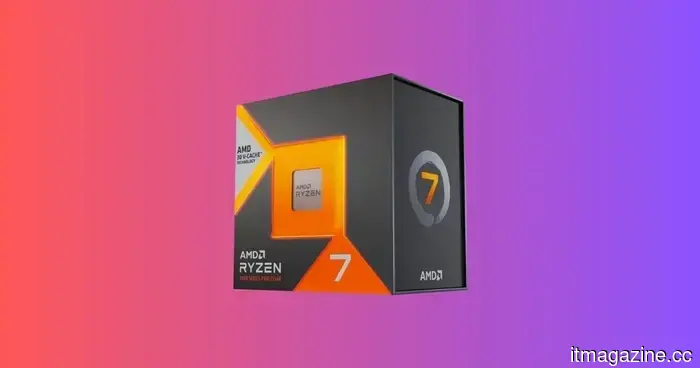 One of the top gaming CPUs ever produced has just seen a price drop of $60: the AMD Ryzen 7 7800X3D is now available for $388.
Since its release, the AMD Ryzen 7 7800X3D has consistently ranked as the top gaming CPU, and currently priced at $388.98, it is $60 lower than its original list price of $449. For those constructing or enhancing an AM5 system with a focus on gaming performance, the Ryzen 7 7800X3D continues to be the ideal processor, and this discount makes the […]
One of the top gaming CPUs ever produced has just seen a price drop of $60: the AMD Ryzen 7 7800X3D is now available for $388.
Since its release, the AMD Ryzen 7 7800X3D has consistently ranked as the top gaming CPU, and currently priced at $388.98, it is $60 lower than its original list price of $449. For those constructing or enhancing an AM5 system with a focus on gaming performance, the Ryzen 7 7800X3D continues to be the ideal processor, and this discount makes the […]
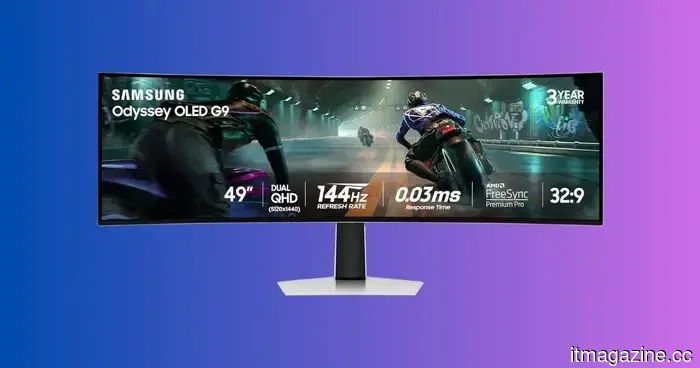 The Samsung Odyssey OLED G9 is currently available at a 31% discount, and I would confidently recommend the 49-inch QD-OLED ultrawide for $899 as the best monitor deal.
The Samsung Odyssey OLED G9 is priced at $899.99, which is a savings of $400 from its original price of $1,299.99. Buying this monitor makes everything you previously set up seem like a compromise. It features a 49-inch curved QD-OLED display with Dual QHD resolution, 144Hz refresh rate, and a response time of just 0.03ms.
The Samsung Odyssey OLED G9 is currently available at a 31% discount, and I would confidently recommend the 49-inch QD-OLED ultrawide for $899 as the best monitor deal.
The Samsung Odyssey OLED G9 is priced at $899.99, which is a savings of $400 from its original price of $1,299.99. Buying this monitor makes everything you previously set up seem like a compromise. It features a 49-inch curved QD-OLED display with Dual QHD resolution, 144Hz refresh rate, and a response time of just 0.03ms.
 Despite rumors of reductions, Apple may still deliver a performance showcase with the iPhone 18.
Apple's iPhone 18 could put an end to cost-cutting doubts with its 2nm A20 chip, 12GB of RAM in the standard versions, variable-aperture cameras in the Pro models, and Apple's proprietary C2 modem.
Despite rumors of reductions, Apple may still deliver a performance showcase with the iPhone 18.
Apple's iPhone 18 could put an end to cost-cutting doubts with its 2nm A20 chip, 12GB of RAM in the standard versions, variable-aperture cameras in the Pro models, and Apple's proprietary C2 modem.
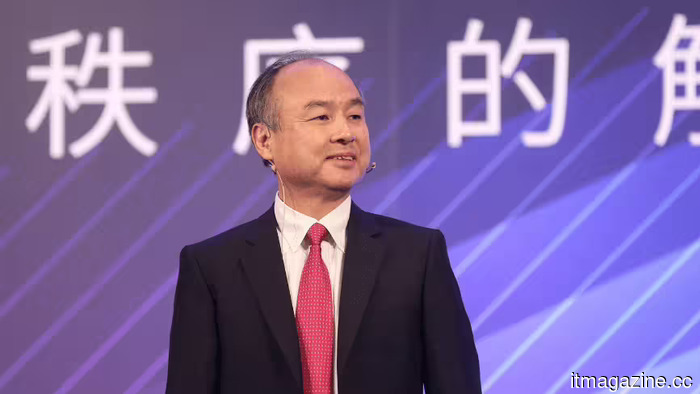 SoftBank is transforming a Sharp LCD manufacturing facility into a battery production site for AI data centers. These data centers cannot afford to wait five years.
Summary: SoftBank Corp. intends to transform a portion of the former Sharp LCD factory located in Sakai, Osaka, into one of the largest battery manufacturing facilities in Japan for AI data centers, with production anticipated to commence in five years (around 2031). This development finalizes a
X-Energy secures $1.02 billion in a historic nuclear IPO as the Amazon-supported reactor developer jumps 31% upon its debut on Nasdaq.
X-Energy's IPO, valued at $1.02 billion, saw demand that was 15 times greater than expected and was priced 21% higher than the initial range. This is notable given that the same company had difficulties finalizing a SPAC deal at $1 billion in 2023. The demand for AI data centers has significantly altered the situation.
SoftBank is transforming a Sharp LCD manufacturing facility into a battery production site for AI data centers. These data centers cannot afford to wait five years.
Summary: SoftBank Corp. intends to transform a portion of the former Sharp LCD factory located in Sakai, Osaka, into one of the largest battery manufacturing facilities in Japan for AI data centers, with production anticipated to commence in five years (around 2031). This development finalizes a
X-Energy secures $1.02 billion in a historic nuclear IPO as the Amazon-supported reactor developer jumps 31% upon its debut on Nasdaq.
X-Energy's IPO, valued at $1.02 billion, saw demand that was 15 times greater than expected and was priced 21% higher than the initial range. This is notable given that the same company had difficulties finalizing a SPAC deal at $1 billion in 2023. The demand for AI data centers has significantly altered the situation.
X-Energy secures $1.02 billion in a historic nuclear initial public offering, with the Amazon-supported reactor developer experiencing a 31% jump upon its debut on Nasdaq.
X-Energy's IPO of $1.02 billion saw demand that was 15 times greater than the shares available and was priced 21% higher than its initial range. This is notable given that the same company was unable to secure a SPAC deal at $1 billion in 2023. The demand for AI data centers has significantly altered the landscape.