
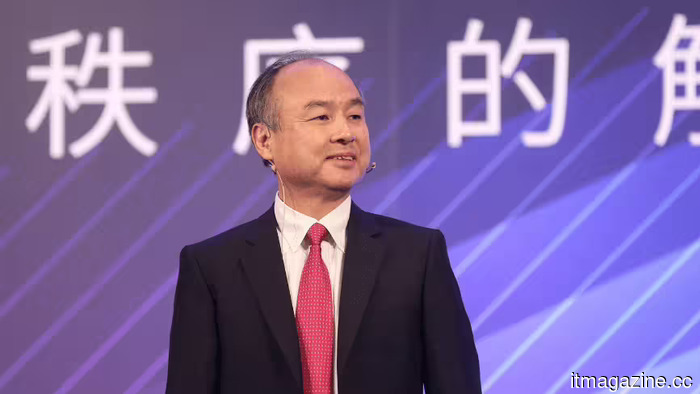
SoftBank is transforming a Sharp LCD manufacturing facility into a battery production site for AI data centers. These data centers cannot afford to wait five years.
Summary: SoftBank Corp. intends to transform part of the former Sharp LCD factory in Sakai, Osaka, into one of Japan's largest battery production facilities for AI data centres, with expected output in about five years (around 2031). This move completes a vertical integration strategy that includes chips (Arm, Graphcore, Ampere), modular data centre manufacturing (Lordstown), energy generation (SB Energy, over 3 GW solar), and now energy storage. SoftBank is laden with roughly $135 billion in total debt and has an S&P negative outlook, and the batteries will be needed for its Stargate AI infrastructure commitments long before the factory is active.
The Sakai building previously produced LCD panels for Sharp televisions. SoftBank acquired it last year for 100 billion yen, roughly $676 million, and announced plans to convert it into an AI data centre. Now, it will also serve as a battery factory. According to Bloomberg's report on Wednesday, SoftBank Corp., the group’s mobile arm, aims to turn part of the 440,000-square-metre site into one of Japan’s largest large-scale battery production lines to support its AI data centres. Executives had debated using the space for robotics manufacturing before deciding on energy storage. The batteries are anticipated to become operational within the next five years, coinciding with the ongoing construction of the data centres they are intended to supply.
This decision finalizes a vertical integration strategy that is notable even amidst the current AI infrastructure competition. SoftBank now owns Arm, which is the chip architecture behind nearly every smartphone and an increasing share of data centre processors. It has also acquired Graphcore, the British AI chip manufacturer, along with Ampere Computing, a cloud-native chip designer. Furthermore, it is constructing modular data centre units at a former electric vehicle plant in Lordstown, Ohio, which was purchased for $375 million. Its energy subsidiary, SB Energy, manages more than three gigawatts of solar capacity in the U.S. and maintains a pipeline of over 15 gigawatts of solar and 12 gigawatt-hours of storage. By establishing the battery line in Sakai, SoftBank is adding the last component: manufacturing energy storage hardware itself instead of sourcing it from CATL, BYD, or Tesla.
The energy challenge remains unresolved
AI data centres have power demands that traditional infrastructure was not equipped to manage. Workloads can fluctuate from 30% to 100% of capacity in mere seconds, necessitating batteries to buffer the facility from the grid. Due to congestion in grid interconnection queues across the United States, batteries have become crucial for bringing data centres online before permanent grid connections are set up. Individual installations now need between 20 to 500 megawatt-hours of storage. The North American market for AI data centre energy storage batteries is anticipated to surge from $898 million this year to $32.4 billion by 2034, with a remarkable compound annual growth rate of 74.3%. Major cloud providers, including Google, Microsoft, and Amazon, are racing to secure energy storage for facilities that are either under construction or in the planning stage.
Google is creating what it refers to as the world's largest battery storage system in Minnesota, in partnership with Form Energy on iron-air batteries that can deliver power for 100 hours. Eos Energy is working on zinc-based long-duration batteries and has identified data centres as its fastest-growing market. SoftBank, for its part, has struck a two-gigawatt-hour agreement with Oregon-based ESS for iron flow batteries intended for utility-scale solar projects in California and Texas. Its research division has been collaborating with Enpower Japan to develop all-solid-state batteries, achieving energy densities of 350 watt-hours per kilogram, with a goal of reaching 400 by the following year. The specific battery chemistry for the Sakai factory remains undisclosed, which is noteworthy: SoftBank has not indicated if it will produce lithium-ion cells, solid-state batteries, or an entirely different type.
The Stargate energy requirements
The battery factory is a result of the Stargate project, although SoftBank has not made the connection clear. Stargate, the $500 billion AI infrastructure joint venture chaired by Masayoshi Son alongside OpenAI, Oracle, and Abu Dhabi's MGX, requires energy at a scale that makes Oracle's $50 billion AI data centre capital expenditure appear modest. SoftBank’s proposed campus at a former Department of Energy nuclear enrichment site in Portsmouth, Ohio, plans for 10 gigawatts of capacity supported by 9.2 gigawatts of natural gas generation, with an initial phase cost of $33 billion. Another site in Milam County, Texas, will utilize 1.2 gigawatts of solar energy combined with integrated battery storage. The Abu Dhabi Stargate campus, a $30 billion facility, will need up to one gigawatt at full construction, highlighting the geopolitical risks that emphasize the importance of on-site energy resilience.
Other articles
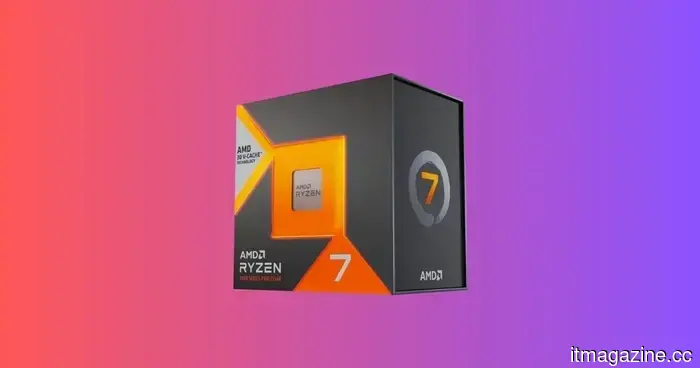 One of the top gaming CPUs ever produced has just seen a price drop of $60: the AMD Ryzen 7 7800X3D is now available for $388.
Since its release, the AMD Ryzen 7 7800X3D has consistently ranked as the top gaming CPU, and currently priced at $388.98, it is $60 lower than its original list price of $449. For those constructing or enhancing an AM5 system with a focus on gaming performance, the Ryzen 7 7800X3D continues to be the ideal processor, and this discount makes the […]
One of the top gaming CPUs ever produced has just seen a price drop of $60: the AMD Ryzen 7 7800X3D is now available for $388.
Since its release, the AMD Ryzen 7 7800X3D has consistently ranked as the top gaming CPU, and currently priced at $388.98, it is $60 lower than its original list price of $449. For those constructing or enhancing an AM5 system with a focus on gaming performance, the Ryzen 7 7800X3D continues to be the ideal processor, and this discount makes the […]
 The EU's initiative for child safety has hit a roadblock as the ePrivacy derogation has lapsed, an age verification application was compromised, and the CSA Regulation is stalled in trilogue discussions.
The ePrivacy derogation ended on April 3, the EU age verification application was compromised within minutes, and the CSA Regulation is still at a standstill. Europe's child safety measures require the data that its privacy regulations prohibit.
X-Energy secures $1.02 billion in a historic nuclear initial public offering, with the Amazon-supported reactor developer experiencing a 31% jump upon its debut on Nasdaq.
X-Energy's IPO of $1.02 billion saw demand that was 15 times greater than the shares available and was priced 21% higher than its initial range. This is notable given that the same company was unable to secure a SPAC deal at $1 billion in 2023. The demand for AI data centers has significantly altered the landscape.
The EU's initiative for child safety has hit a roadblock as the ePrivacy derogation has lapsed, an age verification application was compromised, and the CSA Regulation is stalled in trilogue discussions.
The ePrivacy derogation ended on April 3, the EU age verification application was compromised within minutes, and the CSA Regulation is still at a standstill. Europe's child safety measures require the data that its privacy regulations prohibit.
X-Energy secures $1.02 billion in a historic nuclear initial public offering, with the Amazon-supported reactor developer experiencing a 31% jump upon its debut on Nasdaq.
X-Energy's IPO of $1.02 billion saw demand that was 15 times greater than the shares available and was priced 21% higher than its initial range. This is notable given that the same company was unable to secure a SPAC deal at $1 billion in 2023. The demand for AI data centers has significantly altered the landscape.
 Google plans to invest as much as $40 billion in Anthropic, as Claude surpasses Gemini in the enterprise market where it is most critical.
Google is pledging $10 billion in cash and $30 billion in conditional funding to Anthropic, based on a valuation of $350 billion, in addition to providing 5 gigawatts of computing power over the next five years, as Claude achieves a $30 billion annual recurring revenue and surpasses Gemini in the enterprise sector.
Google plans to invest as much as $40 billion in Anthropic, as Claude surpasses Gemini in the enterprise market where it is most critical.
Google is pledging $10 billion in cash and $30 billion in conditional funding to Anthropic, based on a valuation of $350 billion, in addition to providing 5 gigawatts of computing power over the next five years, as Claude achieves a $30 billion annual recurring revenue and surpasses Gemini in the enterprise sector.
 I've just moved to my first major foldable device, and I now understand the attraction.
After years of doubt and frustrating experiences with flip phones, transitioning to a book-style foldable finally resonated with me. Whether I'm reading books, watching videos, or multitasking, I've discovered that the larger screen enhances my daily activities in ways that are difficult to overlook.
I've just moved to my first major foldable device, and I now understand the attraction.
After years of doubt and frustrating experiences with flip phones, transitioning to a book-style foldable finally resonated with me. Whether I'm reading books, watching videos, or multitasking, I've discovered that the larger screen enhances my daily activities in ways that are difficult to overlook.
SoftBank is transforming a Sharp LCD manufacturing facility into a battery production site for AI data centers. These data centers cannot afford to wait five years.
Summary: SoftBank Corp. intends to transform a portion of the former Sharp LCD factory located in Sakai, Osaka, into one of the largest battery manufacturing facilities in Japan for AI data centers, with production anticipated to commence in five years (around 2031). This development finalizes a