

The value of the US government's investment in Intel has reached $36 billion. This outcome was not anticipated by anyone in Washington.
In summary: The US government's 9.9% ownership in Intel, which was obtained for $8.9 billion last August by converting CHIPS Act grants and Secure Enclave funds into equity at $20.47 per share, has escalated in value to around $36 billion following a more than 20% increase in Intel's stock due to a significant Q1 earnings surprise. This unrealized gain of $26.5 billion marks one of the most lucrative government investments in industrial history, albeit an unintended one: Trump opposed the conditions of the CHIPS Act and opted for equity conversion as a means of fiscal restraint rather than as an industrial strategy. No exit strategy has been outlined.
The United States government currently possesses approximately 433 million shares of Intel, acquired in August for $8.9 billion at a price of $20.47 per share. Following a Q1 earnings report that exceeded Wall Street expectations, Intel's stock increased by over 20% on Wednesday, raising the value of this stake to about $36 billion. The unrealized gain stands at $26.5 billion, translating to a 300% return in just eight months. This investment is undeniably one of the most lucrative by the government in American industrial history, one that was largely unplanned.
The circumstances under which the federal government acquired a 9.9% stake in America’s leading chipmaker highlight a scenario where political opportunism led to an unexpectedly successful result. The CHIPS and Science Act, enacted in 2022, allocated $52 billion for domestic semiconductor production, with Intel receiving the largest portion: $8.5 billion in grants alongside $11 billion in loans. When the Trump administration came into power, it resisted the program’s requirements, which included project labor agreements, union stipulations for construction, a five-year prohibition on stock buybacks, and a commitment from Intel to invest $100 billion of its own capital. Instead of distributing the outstanding grants, the administration transformed $5.7 billion in unpaid CHIPS Act funds and $3.2 billion from the Secure Enclave defense program into an equity stake, thus eliminating the original conditions. Senator Elizabeth Warren criticized this move as giving “billions of dollars to Intel, with no significant strings attached.”
The unforeseen profit arose from an equity conversion strategy that Trump, who had previously labeled the CHIPS Act “a terrible deal,” justified not as an industrial strategy but as a financial safeguard: if the government was to allocate taxpayer money to a chipmaker, it ought to possess a portion of the company. The arrangement incorporates a five-year warrant for an additional 5% of Intel shares at $20, which is exercisable only if Intel sells majority control of its foundry business, serving as a safeguard intended to maintain domestic chip production under American ownership. The government, being a passive investor, does not occupy a board seat and has agreed to vote its shares in accordance with Intel's board decisions.
What has shifted is not the government’s involvement but Intel's performance trajectory. Under CEO Lip-Bu Tan, appointed after the ouster of Pat Gelsinger in March 2025, Intel has surpassed earnings expectations for six consecutive quarters. In the first quarter, revenues reached $13.6 billion, exceeding consensus estimates by 10%. Adjusted earnings per share soared to $0.29, a drastic increase from the $0.01 anticipated by analysts. Revenue from data centers and AI increased by 22% year on year to hit $5.1 billion. The forecast for the second quarter predicts revenues between $13.8 billion and $14.8 billion, approximately $1 billion higher than projections. Intel stock has risen over 80% year-to-date, following an 84% surge in 2025, as the government purchased shares at a significantly low point in a market that has since rebounded sharply.
Gelsinger's departure in December 2024 was triggered by a 60% stock decline during his leadership, alongside a $16.6 billion loss, a halted dividend, and the announcement of 15,000 layoffs. Lip-Bu Tan, the former CEO of Cadence Design Systems and an ex-Intel board member, took on the challenge of reviving the company, leading to recognition by Time magazine, which included him in its list of the 100 most influential people. He eliminated over 20,000 additional positions, recalibrated the company's focus on its 18A chip fabrication process, and established partnerships that had once seemed unlikely.
The Intel 18A, a process node that incorporates RibbonFET gate-all-around transistors and PowerVia backside power delivery, commenced high-volume manufacturing in January 2026. Yields have surpassed 60% and are improving at an approximate rate of 7% per month, with industry-standard levels expected by 2027. Microsoft is utilizing Intel Foundry for custom AI accelerators, while Amazon is contracting for specialized Xeon chips and
Other articles
 Despite rumors of reductions, Apple may still deliver a performance showcase with the iPhone 18.
Apple's iPhone 18 could put an end to cost-cutting doubts with its 2nm A20 chip, 12GB of RAM in the standard versions, variable-aperture cameras in the Pro models, and Apple's proprietary C2 modem.
Despite rumors of reductions, Apple may still deliver a performance showcase with the iPhone 18.
Apple's iPhone 18 could put an end to cost-cutting doubts with its 2nm A20 chip, 12GB of RAM in the standard versions, variable-aperture cameras in the Pro models, and Apple's proprietary C2 modem.
 The EU's efforts to enhance child safety have hit a roadblock as the ePrivacy derogation comes to an end, an age verification application has been compromised, and the CSA Regulation remains stalled in trilogue discussions.
The ePrivacy derogation ended on April 3, the EU age verification application was compromised in just minutes, and the CSA Regulation is still at a standstill. Europe's child protection measures rely on data that its privacy regulations prohibit.
The EU's efforts to enhance child safety have hit a roadblock as the ePrivacy derogation comes to an end, an age verification application has been compromised, and the CSA Regulation remains stalled in trilogue discussions.
The ePrivacy derogation ended on April 3, the EU age verification application was compromised in just minutes, and the CSA Regulation is still at a standstill. Europe's child protection measures rely on data that its privacy regulations prohibit.
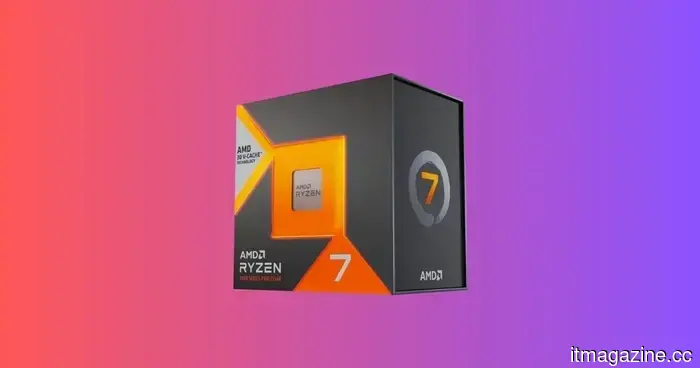 One of the top gaming CPUs ever produced has just seen a price drop of $60: the AMD Ryzen 7 7800X3D is now available for $388.
Since its release, the AMD Ryzen 7 7800X3D has consistently ranked as the top gaming CPU, and currently priced at $388.98, it is $60 lower than its original list price of $449. For those constructing or enhancing an AM5 system with a focus on gaming performance, the Ryzen 7 7800X3D continues to be the ideal processor, and this discount makes the […]
One of the top gaming CPUs ever produced has just seen a price drop of $60: the AMD Ryzen 7 7800X3D is now available for $388.
Since its release, the AMD Ryzen 7 7800X3D has consistently ranked as the top gaming CPU, and currently priced at $388.98, it is $60 lower than its original list price of $449. For those constructing or enhancing an AM5 system with a focus on gaming performance, the Ryzen 7 7800X3D continues to be the ideal processor, and this discount makes the […]
 The future of vehicle diagnostics: Facilitating the shift to electric vehicles
The global automotive sector is undergoing one of the most significant transformations in its history. The shift towards electrification is gaining momentum, emissions standards are becoming more stringent in key markets, and vehicles are swiftly transitioning into software-defined platforms. However, in addition to the attention on electric vehicles (EVs), a quieter transformation is taking place that is redefining the automotive landscape: the advancement of vehicle diagnostics.
The future of vehicle diagnostics: Facilitating the shift to electric vehicles
The global automotive sector is undergoing one of the most significant transformations in its history. The shift towards electrification is gaining momentum, emissions standards are becoming more stringent in key markets, and vehicles are swiftly transitioning into software-defined platforms. However, in addition to the attention on electric vehicles (EVs), a quieter transformation is taking place that is redefining the automotive landscape: the advancement of vehicle diagnostics.
 The EU's initiative for child safety has hit a roadblock as the ePrivacy derogation has lapsed, an age verification application was compromised, and the CSA Regulation is stalled in trilogue discussions.
The ePrivacy derogation ended on April 3, the EU age verification application was compromised within minutes, and the CSA Regulation is still at a standstill. Europe's child safety measures require the data that its privacy regulations prohibit.
The EU's initiative for child safety has hit a roadblock as the ePrivacy derogation has lapsed, an age verification application was compromised, and the CSA Regulation is stalled in trilogue discussions.
The ePrivacy derogation ended on April 3, the EU age verification application was compromised within minutes, and the CSA Regulation is still at a standstill. Europe's child safety measures require the data that its privacy regulations prohibit.
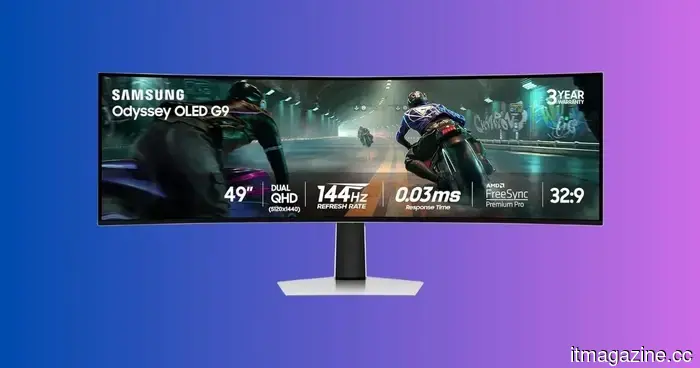 The Samsung Odyssey OLED G9 is currently 31% discounted, and for $899, you can get a 49-inch QD-OLED ultrawide monitor that I would confidently recommend.
The Samsung Odyssey OLED G9 is currently priced at $899.99, offering a savings of $400 from its original list price of $1,299.99. It’s a monitor purchase that makes everything you previously set up seem like a compromise. This model features a 49-inch curved QD-OLED panel with Dual QHD resolution, a refresh rate of 144Hz, and a response time of 0.03ms, which is a remarkable specification.
The Samsung Odyssey OLED G9 is currently 31% discounted, and for $899, you can get a 49-inch QD-OLED ultrawide monitor that I would confidently recommend.
The Samsung Odyssey OLED G9 is currently priced at $899.99, offering a savings of $400 from its original list price of $1,299.99. It’s a monitor purchase that makes everything you previously set up seem like a compromise. This model features a 49-inch curved QD-OLED panel with Dual QHD resolution, a refresh rate of 144Hz, and a response time of 0.03ms, which is a remarkable specification.
The value of the US government's investment in Intel has reached $36 billion. This outcome was not anticipated by anyone in Washington.
The 9.9% stake in Intel held by the US government, purchased for $8.9 billion using funds from the converted CHIPS Act, has appreciated to a value of $36 billion following a surge in earnings in Q1. There is currently no plan for divestiture.