
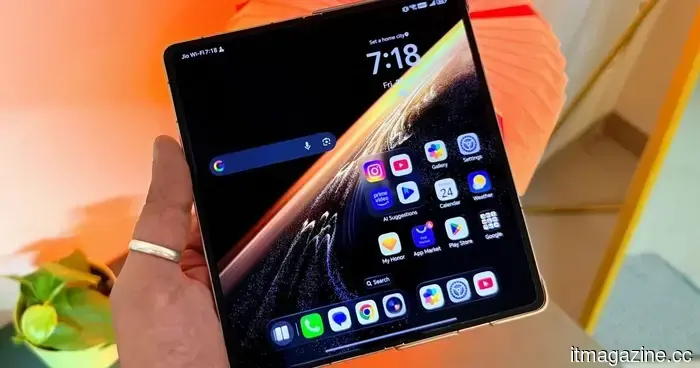
I've just moved to my first major foldable device, and I now understand the attraction.
For quite a while, I viewed foldable phones as a solution looking for a problem. They tend to be expensive, fragile, and often seem overly eager to validate their existence. Although I admired the engineering behind them, I struggled to see how they would enhance my daily life. To me, a standard flat phone just seemed more logical—simpler, more affordable, and sufficient for nearly everything.
I was never particularly excited about foldables.
Some of my skepticism stemmed from personal experience. I had previously tried flip-style foldables, and they didn't leave a favorable impression. The battery life of my Galaxy Z Flip 3 was a frequent source of stress, making me think twice before leaving home without a charger.
Then there was the Motorola Razr+ 2023, which I inadvertently broke without realizing how it happened. After those experiences, I dismissed foldables as an intriguing experiment that simply wasn’t for me— for valid reasons.
What shifted my perspective
Ultimately, it took several years of closely observing the technology's progression, numerous discussions with colleagues who were daring enough to use a foldable as their primary device, and watching many durability test videos. However, the significant turning point came when I finally made the decision to try a large, book-style foldable: the Honor Magic V6.
I initially expected to encounter the same compromises, but my viewpoint changed quickly.
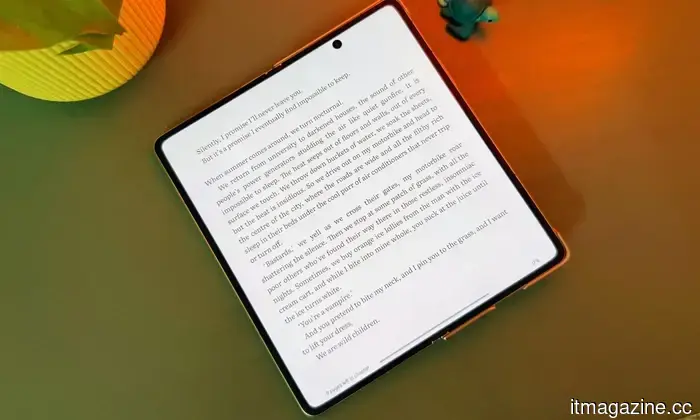
It won me over in subtle ways. The first aspect that impressed me was reading. I tend to read on my phone at unusual hours and often in short bursts that end up lasting longer than I planned. On a standard phone, reading feels cramped. You find yourself scrolling more than necessary, and your eyes tire more quickly than anticipated.
On the foldable, it just felt better. The larger inner display allows the text ample space to breathe, creating an experience reminiscent of holding a small book rather than staring at a narrow screen. I noticed I was reading for longer periods without realizing it, which is probably the most evident sign that the hardware was beneficial to me.
The next revelation came with video. While it doesn't compete with a TV or a high-quality tablet, it makes casual viewing feel less like a compromise. The visuals feel less constrained, subtitles are easier to read, and the entire experience is more engaging. Even with the inevitable black bars on certain content, watching a movie on the large display was far more enjoyable than on my iPhone 16 Pro.
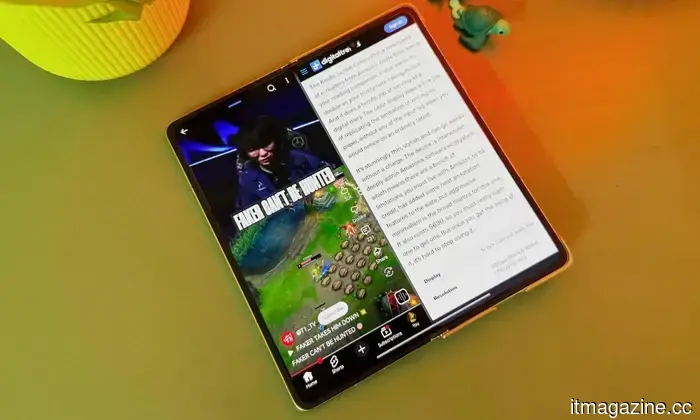
Choosing a “one feature to rule them all” is challenging, but for me, it was multitasking on a book-style foldable phone. This is when the device ceased to feel like a novelty. Running two or even three apps side by side feels genuinely practical.
The pivotal moment
Messages on one side, a browser or document on the other. Notes open while I read in the Kindle app. A video is playing on the left edge while I scroll through social media feeds and check the latest updates.
I find myself switching apps less and maintaining my flow more. While the phone hasn’t revolutionized how I work on the go, it has significantly reduced the annoyance of getting things done in real time.
The trade-offs remain significant
None of this means my experience has been flawless. I still tend to be overly cautious with the device due to its price and the fragile inner screen. The crease is still visible, and app optimization can be hit-or-miss, especially in games where the user interface doesn’t always scale properly. There are still instances where it feels like a phone interface stretched across a larger screen.
However, despite these quirks, the fundamental experience is effective. It enhances the activities I already engage in. Transitioning back to a traditional phone now would feel like a downgrade, even if continuing with book-style foldables is more expensive than I would prefer. Luckily, that's a concern for my future self.

Other articles
 Google plans to invest as much as $40 billion in Anthropic, as Claude surpasses Gemini in the enterprise market where it is most critical.
Google is pledging $10 billion in cash and $30 billion in conditional funding to Anthropic, based on a valuation of $350 billion, in addition to providing 5 gigawatts of computing power over the next five years, as Claude achieves a $30 billion annual recurring revenue and surpasses Gemini in the enterprise sector.
Google plans to invest as much as $40 billion in Anthropic, as Claude surpasses Gemini in the enterprise market where it is most critical.
Google is pledging $10 billion in cash and $30 billion in conditional funding to Anthropic, based on a valuation of $350 billion, in addition to providing 5 gigawatts of computing power over the next five years, as Claude achieves a $30 billion annual recurring revenue and surpasses Gemini in the enterprise sector.
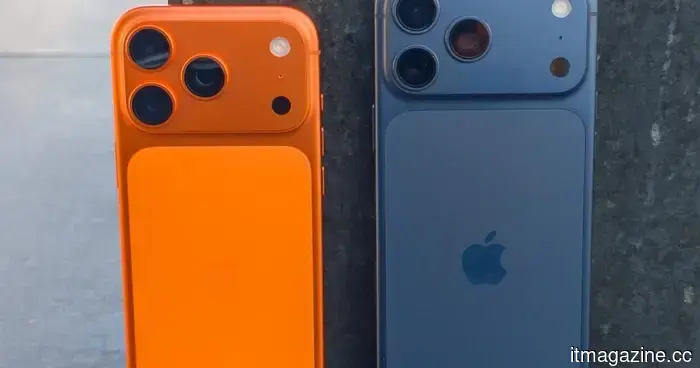 Despite rumors of reductions, Apple may still deliver a performance showcase with the iPhone 18.
Apple's iPhone 18 could put an end to cost-cutting doubts with its 2nm A20 chip, 12GB of RAM in the standard versions, variable-aperture cameras in the Pro models, and Apple's proprietary C2 modem.
Despite rumors of reductions, Apple may still deliver a performance showcase with the iPhone 18.
Apple's iPhone 18 could put an end to cost-cutting doubts with its 2nm A20 chip, 12GB of RAM in the standard versions, variable-aperture cameras in the Pro models, and Apple's proprietary C2 modem.
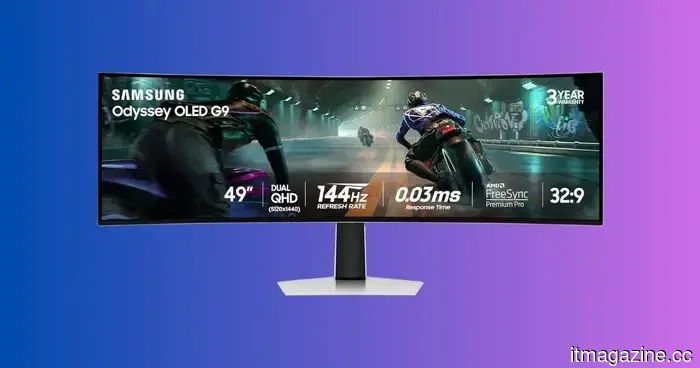 The Samsung Odyssey OLED G9 is currently available at a 31% discount, and I would confidently recommend the 49-inch QD-OLED ultrawide for $899 as the best monitor deal.
The Samsung Odyssey OLED G9 is priced at $899.99, which is a savings of $400 from its original price of $1,299.99. Buying this monitor makes everything you previously set up seem like a compromise. It features a 49-inch curved QD-OLED display with Dual QHD resolution, 144Hz refresh rate, and a response time of just 0.03ms.
The Samsung Odyssey OLED G9 is currently available at a 31% discount, and I would confidently recommend the 49-inch QD-OLED ultrawide for $899 as the best monitor deal.
The Samsung Odyssey OLED G9 is priced at $899.99, which is a savings of $400 from its original price of $1,299.99. Buying this monitor makes everything you previously set up seem like a compromise. It features a 49-inch curved QD-OLED display with Dual QHD resolution, 144Hz refresh rate, and a response time of just 0.03ms.
 The Fire TV Stick HD has quietly launched along with an adapter, but it's not fully prepared for prime usage.
Amazon's latest Gigabit Ethernet Adapter appears to be an enhancement for the Fire TV Stick HD, but there's an important hardware detail to consider.
The Fire TV Stick HD has quietly launched along with an adapter, but it's not fully prepared for prime usage.
Amazon's latest Gigabit Ethernet Adapter appears to be an enhancement for the Fire TV Stick HD, but there's an important hardware detail to consider.
 The EU's efforts to enhance child safety have hit a roadblock as the ePrivacy derogation comes to an end, an age verification application has been compromised, and the CSA Regulation remains stalled in trilogue discussions.
The ePrivacy derogation ended on April 3, the EU age verification application was compromised in just minutes, and the CSA Regulation is still at a standstill. Europe's child protection measures rely on data that its privacy regulations prohibit.
The EU's efforts to enhance child safety have hit a roadblock as the ePrivacy derogation comes to an end, an age verification application has been compromised, and the CSA Regulation remains stalled in trilogue discussions.
The ePrivacy derogation ended on April 3, the EU age verification application was compromised in just minutes, and the CSA Regulation is still at a standstill. Europe's child protection measures rely on data that its privacy regulations prohibit.
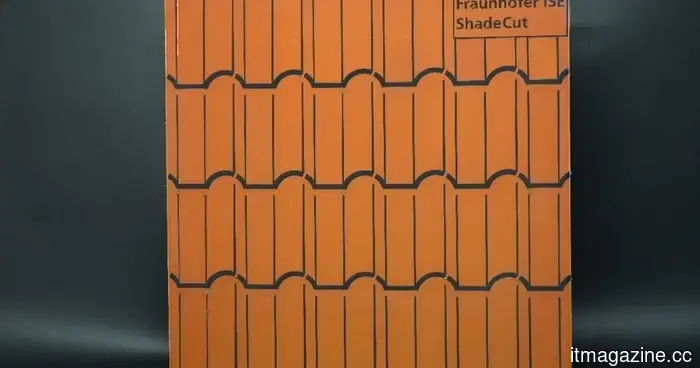 The era of unsightly solar panels may finally be behind us. Welcome the vibrant artistic tiles!
Scientists at Germany's Fraunhofer Institute have created ShadeCut, a technology that uses patterned colored films on solar panels to resemble roof tiles, bricks, or personalized designs.
The era of unsightly solar panels may finally be behind us. Welcome the vibrant artistic tiles!
Scientists at Germany's Fraunhofer Institute have created ShadeCut, a technology that uses patterned colored films on solar panels to resemble roof tiles, bricks, or personalized designs.
I've just moved to my first major foldable device, and I now understand the attraction.
After years of doubt and frustrating experiences with flip phones, transitioning to a book-style foldable finally resonated with me. Whether I'm reading books, watching videos, or multitasking, I've discovered that the larger screen enhances my daily activities in ways that are difficult to overlook.