
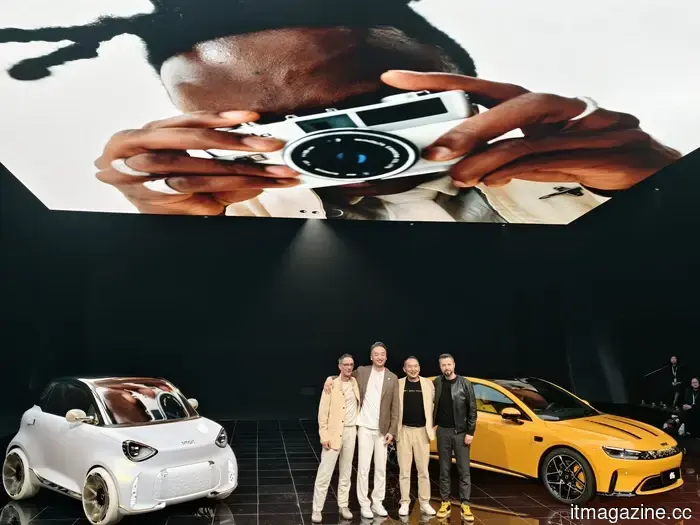
The smart #2 electric vehicle concept and the #6 EHD hybrid hatchback were revealed during the brand night event prior to the Beijing Auto Show.
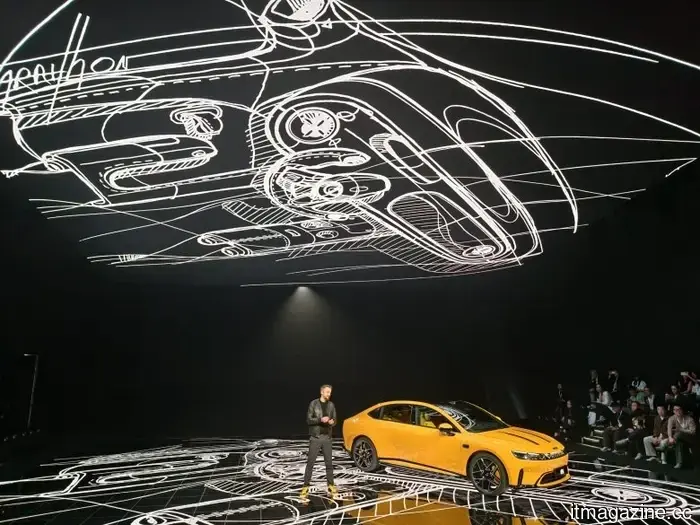
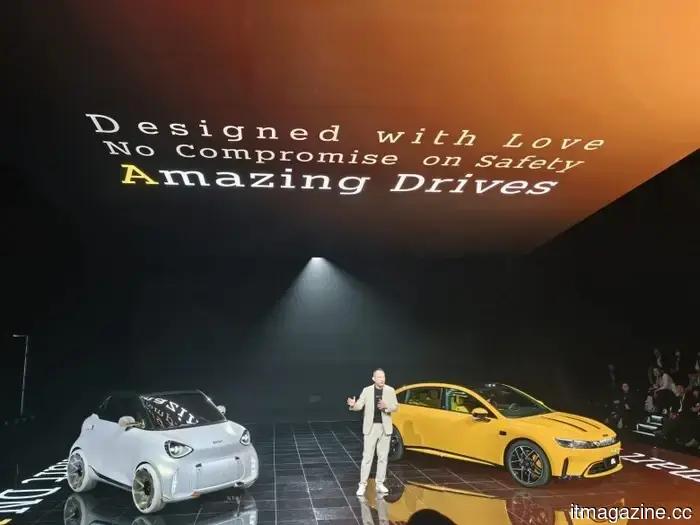
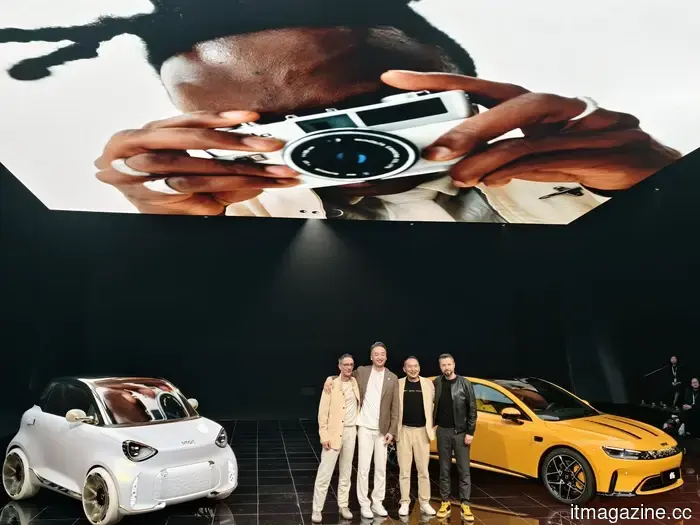
On Wednesday, during the smart Global Brand Night event in Beijing, the China-Germany joint venture electric vehicle brand smart introduced the new smart #2 concept car and the smart #6 EHD under the theme Change of Perspectives. As the brand expands its electric vehicle offerings and repositions itself in the premium EV market, smart is capturing renewed interest with these concept models. The newly presented cars also mark a return to the brand's urban mobility roots while exploring new segments.
**smart #2 Concept: a compact electric city car**
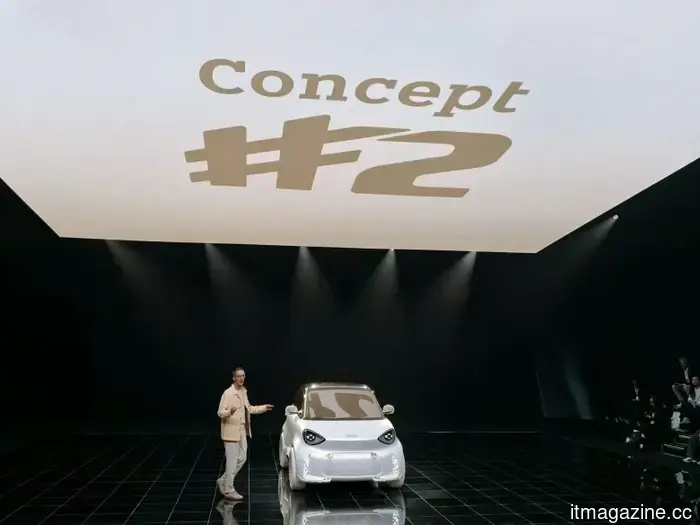
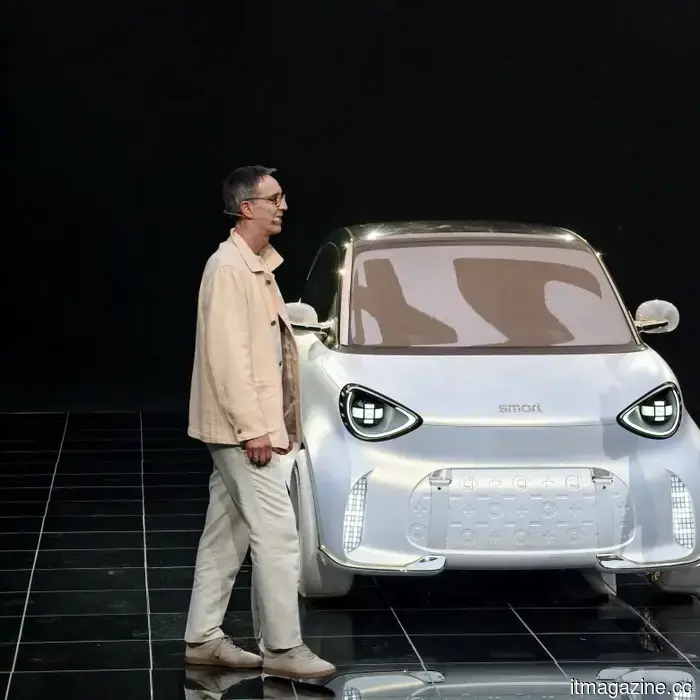
The smart #2 concept car was designed by the Mercedes-Benz design team and is built on the new ECA architecture. It pays tribute to the brand’s origins while echoing the classic design of the first-generation smart fortwo. The vehicle features a matte white and gold color scheme, with smooth body lines and gold chrome accents for subtle detailing.
Measuring approximately 2.79 meters in length, it adheres to smart’s signature wheel-at-each-corner configuration, featuring short overhangs and a long wheelbase to enhance interior space. Its turning radius is 6.95 meters, making it highly maneuverable and ideal for urban driving and parking.
This fully electric car boasts a CLTC range of almost 400 kilometers. It supports DC fast charging, allowing the battery to recharge from 10% to 80% in about 20 minutes. Additionally, it features Vehicle-to-Load (V2L) capability to power external devices.
**smart #6 EHD: luxury hybrid hatchback with extended range**
The smart #6 EHD marks smart’s first hatchback model in the hybrid segment, merging Mercedes-Benz’s platform experience with Geely’s hybrid system development. Its exterior design follows the Sensual & Sharp theme, drawing inspiration from shark morphology.
The vehicle measures 4906 × 1922 × 1508 mm, with a wheelbase of 2926 mm and an reported space utilization of 86%. The interior adopts circular geometric elements as a primary design motif and includes a dual-screen setup for the center and front passenger displays, with multiple interface themes available. It also features an audio system and multi-color ambient lighting.
Equipped with the EHD hybrid system delivering a combined output of 320 kW, the CLTC combined driving range reaches up to 1,810 km, with fuel consumption in charge-depleting mode at 3.9 L/100 km and compatibility with 92-octane petrol.
**Interview with smart executives**
In a media session following the event, smart Global CEO Tong Xiangbei and Head of Design at smart Kai Sieber spoke about the company’s product strategy, global alignment, and positioning. According to them, smart is working on a cohesive global product lineup based on shared platforms.
Tong indicated that smart operates as a global brand, with products developed under global standards from the beginning. China often acts as the primary launch market before wider global implementation.
He noted that smart does not create completely separate product lines for different regions, but instead makes engineering adjustments within a unified architecture to cater to regulatory and usage differences in markets like China and Europe.
Kai mentioned that the current platform is adaptable for various body styles and future versions, although new product decisions will be influenced by market demand, brand positioning, and business viability.
Regarding competition in China, both executives emphasized that smart does not primarily compete on price. Tong mentioned engineering integrity and core automotive value, while Kai pointed out consistent design language and coherent driving characteristics as key differentiators.
Concerning the smart #2, Tong described it as a vehicle focused on urban space efficiency, enabled by an EV platform and a wheel-at-corner layout. He emphasized that it is a functional car rather than a simplified model.
He added that small-car usage varies across Europe and China, targeting a broad audience that includes urban commuters, second-car households, and users like retirees looking for compact mobility.
Kai further added from a design standpoint that the smart #2 continues the brand's reinterpretation of proportion and space efficiency. The electric platform architecture allows for greater cabin space usability, ensuring that the vehicle maintains both functional integrity and a coherent automotive identity, rather than being seen merely as a basic micro-mobility tool.
Jessie Wu is a tech reporter based in Shanghai, covering consumer electronics, semiconductors, and the gaming industry for TechNode. Connect with her via email: jessie.wu@technode.com.
Other articles
 The smart #2 EV concept and the #6 EHD hybrid hatchback were revealed during the brand night prior to the Beijing Auto Show.
On Wednesday, at the Global Brand Night event in Beijing, the electric vehicle brand smart, a China-Germany joint venture, introduced the new smart model.
The smart #2 EV concept and the #6 EHD hybrid hatchback were revealed during the brand night prior to the Beijing Auto Show.
On Wednesday, at the Global Brand Night event in Beijing, the electric vehicle brand smart, a China-Germany joint venture, introduced the new smart model.
 The Beats x Jennie headphones are so stylish that even those who dislike K-Pop will crave them.
Beats and Jennie have collaborated on a special edition of the Solo 4, featuring a striking all-black design with unique custom elements.
The Beats x Jennie headphones are so stylish that even those who dislike K-Pop will crave them.
Beats and Jennie have collaborated on a special edition of the Solo 4, featuring a striking all-black design with unique custom elements.
 Astronauts aboard the ISS are set to receive an upgraded laptop from HP.
The crew aboard the ISS is getting ready for a computer upgrade, and the new HP laptops being introduced appear to be significantly more powerful than the older devices they are substituting.
Astronauts aboard the ISS are set to receive an upgraded laptop from HP.
The crew aboard the ISS is getting ready for a computer upgrade, and the new HP laptops being introduced appear to be significantly more powerful than the older devices they are substituting.
 VAST Data has secured $1 billion in funding at a valuation of $30 billion, supported by Nvidia, as the demand for AI data infrastructure continues to grow.
VAST Data has increased its valuation to $30 billion in a $1 billion Series F funding round led by Drive Capital and Access Industries, with participation from Nvidia. The company's revenue is tripling annually.
VAST Data has secured $1 billion in funding at a valuation of $30 billion, supported by Nvidia, as the demand for AI data infrastructure continues to grow.
VAST Data has increased its valuation to $30 billion in a $1 billion Series F funding round led by Drive Capital and Access Industries, with participation from Nvidia. The company's revenue is tripling annually.
 VAST Data secures $1 billion in funding, achieving a valuation of $30 billion, supported by Nvidia, as the demand for AI data infrastructure grows rapidly.
VAST Data has increased its valuation threefold to $30 billion following a $1 billion Series F round led by Drive Capital and Access Industries, with participation from Nvidia. The company's revenue is also tripling annually.
VAST Data secures $1 billion in funding, achieving a valuation of $30 billion, supported by Nvidia, as the demand for AI data infrastructure grows rapidly.
VAST Data has increased its valuation threefold to $30 billion following a $1 billion Series F round led by Drive Capital and Access Industries, with participation from Nvidia. The company's revenue is also tripling annually.
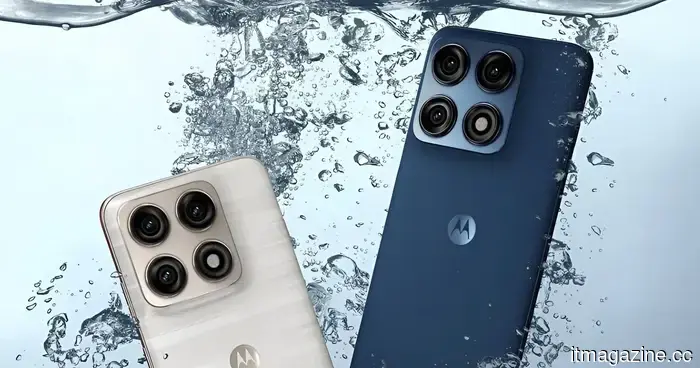 Motorola has just introduced a sleek mid-range device featuring a substantial battery.
The Motorola Edge 70 Pro has officially launched in India, featuring a sleek design of just 6.99mm and a large 6,500mAh battery, with a broader release across Europe expected soon.
Motorola has just introduced a sleek mid-range device featuring a substantial battery.
The Motorola Edge 70 Pro has officially launched in India, featuring a sleek design of just 6.99mm and a large 6,500mAh battery, with a broader release across Europe expected soon.
The smart #2 electric vehicle concept and the #6 EHD hybrid hatchback were revealed during the brand night event prior to the Beijing Auto Show.
On Wednesday, during the Global Brand Night event in Beijing, the electric vehicle brand smart, a joint venture between China and Germany, introduced the new smart model.