
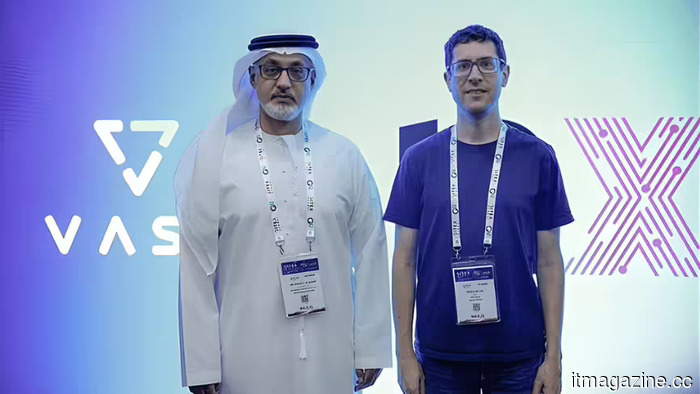
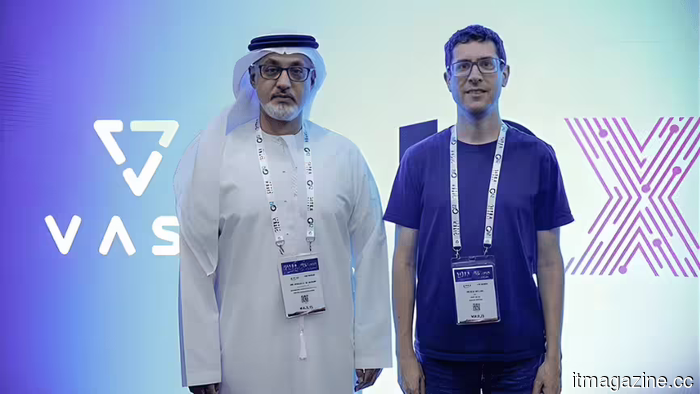
VAST Data secures $1 billion in funding, achieving a valuation of $30 billion, supported by Nvidia, as the demand for AI data infrastructure grows rapidly.
Summary: VAST Data secured $1 billion in a Series F round, achieving a valuation of $30 billion, significantly up from the $9.1 billion valuation during its Series E late last year. Drive Capital and Access Industries co-led this funding, with contributions from Nvidia, Fidelity, and NEA. Over $500 million of the total amount is secondary capital, designated for early investors and employees selling shares, thus alleviating liquidity concerns for long-term shareholders and reducing the urgency for an IPO. This funding round positions VAST Data as the most valuable private tech company established in Israel, following Google's $32 billion acquisition of Wiz in March.
The notable valuation is significant not just due to the $1 billion raised in 2026, a year characterized by unprecedented AI funding rounds reshaping capital expectations, but also because VAST Data provides data infrastructure—a vital component in the AI stack, situated between GPUs and models. It does not fall into the category of foundation model companies or cloud service providers; rather, it focuses on ensuring that data is delivered swiftly to processors. Jensen Huang, CEO of Nvidia, expressed his support during VAST’s Forward 2026 conference, emphasizing that “with VAST Data, we’re transforming the storage of AI infrastructure” and underscoring that even top-tier AI processors face serious data bottlenecks without VAST's technology—an insight that captures the attention of investors.
What VAST Data actually does
VAST Data offers an "AI operating system" that integrates storage, database, and compute functions into one cohesive platform. Its core architecture, termed DASE (Disaggregated and Shared Everything), was unveiled when the company exited stealth in February 2019. This architecture is flash-first and single-tier, abolishing the traditional storage hierarchy that shifts data between high-speed, high-cost tiers and slower, lower-cost ones. For AI workloads, where extensive data is required for training at high throughput, eliminating tiering resolves bottlenecks that legacy systems were unable to handle.
The platform has broadened its scope beyond just storage. VAST DataSpace delivers a globally distributed namespace across on-premises, cloud, and edge locations, scaling to exabytes and trillions of files. VAST InsightEngine automates real-time AI pipelines, managing chunking, embedding, vectorization, and retrieval for various applications including retrieval-augmented generation, semantic search, and classification. VAST DataBase includes an integrated vector store that the company claims supports trillions of vectors with constant-time search capabilities. The Nvidia-certified VAST CNode-X makes GPU servers integral infrastructure components within the platform, hosting a fully CUDA-accelerated version of the operating system optimized for operation on Nvidia-powered servers. The assertion here is that VAST is fundamentally a data platform built for AI, with storage serving merely as the foundation.
The figures
VAST Data has reported over $4 billion in total bookings and more than $500 million in committed annual recurring revenue (ARR) as of the end of fiscal year 2026. CTech, a technology publication affiliated with an Israeli financial paper, states that the overall ARR—including non-committed revenue—has reached $2 billion. Its revenue has been approximately tripling on an annual basis, generating over $100 million in cash quarterly, while also maintaining a positive cash flow and operating margin—a rarity for a company experiencing such growth. The number of its customers among Fortune 1000 companies has increased fourfold, with the top 100 new accounts averaging over $1.2 million in spending. Contracts generally span five to seven years.
Notable customer relationships highlight the platform's scale. VAST Data supports the data infrastructure of xAI’s Colossus supercomputing cluster, which incorporates over 200,000 Nvidia GPUs, and claims to have cut the total cost of ownership by 50%. CoreWeave entered into a substantial $1.17 billion commercial agreement in November 2025, using VAST as its primary data infrastructure for Nvidia-accelerated computing cloud. Other clients include Pixar, which uses the platform for training data made up of petabytes of rendered assets, NASA, the US Department of Energy, Boston Children’s Hospital, Booking Holdings, and several major banks. Renen Hallak, VAST’s founder and CEO, stated that the company is “already supporting AI environments that span millions of GPUs globally, functioning across every layer of the AI stack.”
The data layer thesis
The investment rationale for a $30 billion valuation of a data infrastructure firm is based on a structural analysis of the AI stack's mechanics. The industry has devoted three years and hundreds of billions in resources toward GPUs. Investment in global AI, pegged by the Stanford AI Index at $285.9 billion in U.S. private AI funding in 2025 alone, has mainly focused on computing resources. However, GPUs that lack data are idle, leading to inefficiencies in training. The data layer—comprising systems that store,
Другие статьи
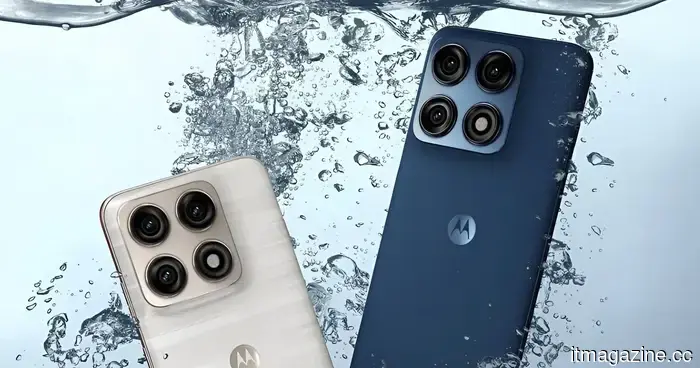 Motorola только что выпустила тонкий смартфон среднего класса с действительно мощным аккумулятором.
Motorola Edge 70 Pro теперь официально представлен в Индии, сочетая тонкий дизайн толщиной 6,99 мм с массивной батареей на 6 500 мАч, в то время как более широкое европейское распространение, похоже, последует за этим.
Motorola только что выпустила тонкий смартфон среднего класса с действительно мощным аккумулятором.
Motorola Edge 70 Pro теперь официально представлен в Индии, сочетая тонкий дизайн толщиной 6,99 мм с массивной батареей на 6 500 мАч, в то время как более широкое европейское распространение, похоже, последует за этим.
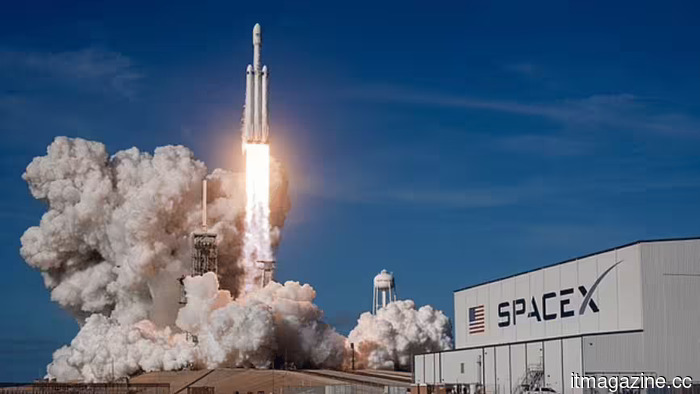 SpaceX S-1 предупреждает, что орбитальные ИИ дата-центры могут быть не жизнеспособными, спустя несколько месяцев после того, как Маск назвал космический ИИ очевидным решением.
Предварительная регистрация SpaceX перед IPO утверждает, что космические дата-центры используют непроверенные технологии и могут никогда не стать жизнеспособными. Маск сказал на Давосе, что они станут самым дешевым вариантом в течение трех лет.
SpaceX S-1 предупреждает, что орбитальные ИИ дата-центры могут быть не жизнеспособными, спустя несколько месяцев после того, как Маск назвал космический ИИ очевидным решением.
Предварительная регистрация SpaceX перед IPO утверждает, что космические дата-центры используют непроверенные технологии и могут никогда не стать жизнеспособными. Маск сказал на Давосе, что они станут самым дешевым вариантом в течение трех лет.
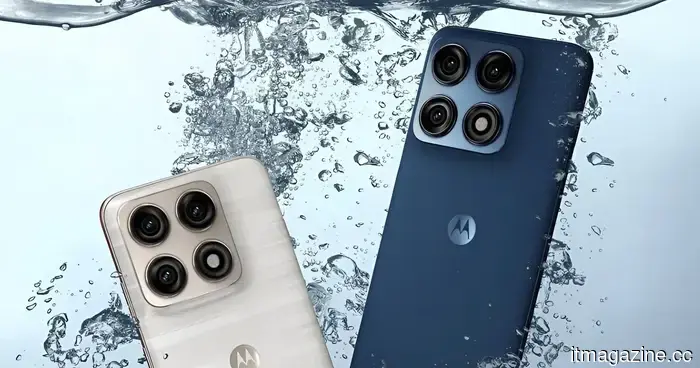 Motorola только что выпустила тонкий смартфон среднего класса с действительно мощной батареей.
Motorola Edge 70 Pro теперь официально представлен в Индии, сочетая тонкий дизайн толщиной 6,99 мм с массивной батареей на 6 500 мАч, в то время как более широкое европейское распространение, похоже, последует за этим.
VAST Data привлекла 1 миллиард долларов при оценке в 30 миллиардов долларов с поддержкой Nvidia на фоне ускоряющегося спроса на инфраструктуру данных для ИИ.
VAST Data утроила свою оценку до 30 миллиардов долларов в раунде финансирования серии F на 1 миллиард долларов, возглавляемом Drive Capital и Access Industries, с участием Nvidia. Выручка утроилась по сравнению с прошлым годом.
Google превращает Chrome в инструмент AI для работы с агентными возможностями с Auto Browse, Skills и корпоративной DLP за $6 в месяц
Chrome получает Авто Просмотр, ИИ Навыки, боковую панель Gemini и корпоративный DLP за $6 в месяц. Google утверждает, что браузер больше не является окном, а платформой ИИ для работы.
Google превращает Chrome в инструмент для работы с агентным ИИ с Auto Browse, Skills и корпоративной DLP за 6 долларов в месяц
Chrome получает Авто Просмотр, ИИ Навыки, боковую панель Gemini и корпоративный DLP за $6 в месяц. Google утверждает, что браузер больше не является окном, а платформой ИИ для рабочего места.
Motorola только что выпустила тонкий смартфон среднего класса с действительно мощной батареей.
Motorola Edge 70 Pro теперь официально представлен в Индии, сочетая тонкий дизайн толщиной 6,99 мм с массивной батареей на 6 500 мАч, в то время как более широкое европейское распространение, похоже, последует за этим.
VAST Data привлекла 1 миллиард долларов при оценке в 30 миллиардов долларов с поддержкой Nvidia на фоне ускоряющегося спроса на инфраструктуру данных для ИИ.
VAST Data утроила свою оценку до 30 миллиардов долларов в раунде финансирования серии F на 1 миллиард долларов, возглавляемом Drive Capital и Access Industries, с участием Nvidia. Выручка утроилась по сравнению с прошлым годом.
Google превращает Chrome в инструмент AI для работы с агентными возможностями с Auto Browse, Skills и корпоративной DLP за $6 в месяц
Chrome получает Авто Просмотр, ИИ Навыки, боковую панель Gemini и корпоративный DLP за $6 в месяц. Google утверждает, что браузер больше не является окном, а платформой ИИ для работы.
Google превращает Chrome в инструмент для работы с агентным ИИ с Auto Browse, Skills и корпоративной DLP за 6 долларов в месяц
Chrome получает Авто Просмотр, ИИ Навыки, боковую панель Gemini и корпоративный DLP за $6 в месяц. Google утверждает, что браузер больше не является окном, а платформой ИИ для рабочего места.
VAST Data secures $1 billion in funding, achieving a valuation of $30 billion, supported by Nvidia, as the demand for AI data infrastructure grows rapidly.
VAST Data has increased its valuation threefold to $30 billion following a $1 billion Series F round led by Drive Capital and Access Industries, with participation from Nvidia. The company's revenue is also tripling annually.