
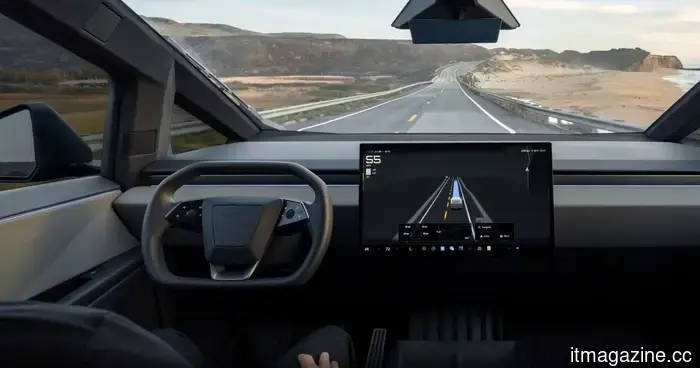
Tesla has finally revealed the reality about full self-driving capabilities in older vehicles, and it brings a glimmer of hope amid uncertainty.
This marks a pivotal moment that highlights the disparity between years of ambitious commitments and the actual limitations of what software can deliver on its own.
For several years, Tesla owners with Hardware 3 vehicles (produced between 2019 and 2023) have been anticipating a software upgrade that would enable fully autonomous driving. Yet, on April 22, 2026, during Tesla’s earnings call, Elon Musk provided an answer that was not what many had expected.
Musk stated that the cars equipped with the company’s third-generation hardware cannot achieve unsupervised Full Self-Driving through software alone; they require hardware upgrades. This means that roughly four million vehicles sold worldwide cannot attain FSD (according to TechCrunch).
What exactly did Musk say regarding FSD and Hardware 3 cars?
“Hardware 3 simply does not possess the capability to achieve unsupervised FSD,” Musk explained during the call. Instead, Tesla’s Hardware 3 vehicles require a new computer and new cameras to fulfill the FSD promise (via over-the-air updates) that the company has been advocating for years.
FSD has been a key selling point that led many buyers to choose these vehicles initially, making this announcement disappointing for those who acquired their Tesla EVs between 2019 and 2023.
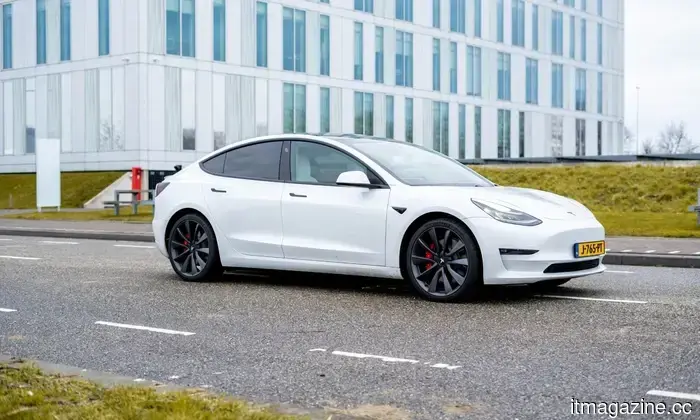
The following table lists the models that utilized Hardware 3:
| Model Type | HW3 Period | Notes |
|------------------|-----------------------|-----------------------------------------------------|
| Model S & Model X| Retrofit | Oct 2016 – Mar 2019; initially shipped with HW2.0 or HW2.5; upgraded free to HW3 |
| Model 3 | Retrofit | 2017 – mid-2019; early units shipped with HW2.5; retrofitted to HW3 |
| Model S & Model X| Factory Built | Mar 2019 – Jan 2023; shipped standard with HW3 from factory |
| Model 3 | Factory Built | Apr 2019 – late 2023; standard until the “Highland” refresh (Oct 2023 in most markets; Jan 2024 in US) |
| Model Y | Factory Built | 2020 – May 2023 (US); US-made cars until May 2023; some China-produced models as late as Feb 2024 |
So, what’s the status for Hardware 3 owners?
Currently, they are not entirely left without options. Tesla plans to continue providing incremental FSD software updates for its Hardware 3 vehicles; however, achieving true autonomy necessitates the hardware upgrades mentioned previously.
The scale of this undertaking is considerable enough that the company is considering establishing “micro-factories” in major urban areas to manage the workload, as existing service centers cannot handle the volume of upgrades on their own.
Importantly, Tesla has not confirmed publicly whether the hardware upgrades will be free for buyers who paid for the FSD capability upfront or if additional costs will apply. There are speculations about a discounted trade program, suggesting that owners may be able to trade in their Hardware 3 vehicles for a discount toward newer Hardware 4 models, but Tesla has not verified these claims at this time.
It appears that Tesla is aware of the reputational and legal implications of inaction, and the decision on whether owners will receive free upgrades or be subject to extra costs (after paying for the FSD add-on) could influence whether this acknowledgment becomes a gesture of goodwill from the company or leads to backlash from buyers.
For over five years, Shikhar has been effectively simplifying developments in consumer technology and sharing insights…
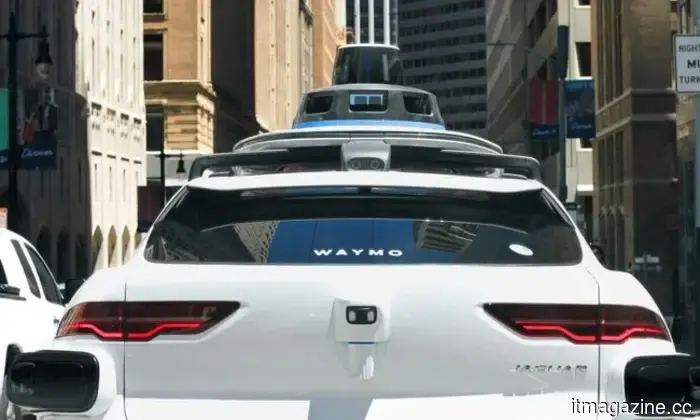
Autonomous vehicles were intended to liberate us from traffic congestion. However, research suggests otherwise.
The promise of self-driving cars was a future where one could relax and effortlessly glide past traffic while the vehicle managed everything. A recent study from the University of Texas at Arlington presents unfavorable news for that vision. According to the research, the widespread implementation of autonomous vehicles could actually worsen traffic conditions significantly.
Professors Stephen Mattingly and Farah Naz conducted a meta-analysis on the impact of self-driving cars on vehicle miles traveled (VMT). Their findings indicated an average increase of 5.95% in vehicle miles traveled. For non-shared autonomous vehicles, this figure rose closer to 7%.
Battery technology is addressing problems that buyers still find unappealing.
The 6-minute charge is irrelevant – and that is the issue.
The electric vehicle sector has long pursued a goal that seemed straightforward: to make charging as quick as refueling a gasoline vehicle. This was the promise, the marketing pitch, and in many respects, the rationale behind extensive investments in battery technology and government subsidies. By 2026, that goal is no longer merely theoretical.
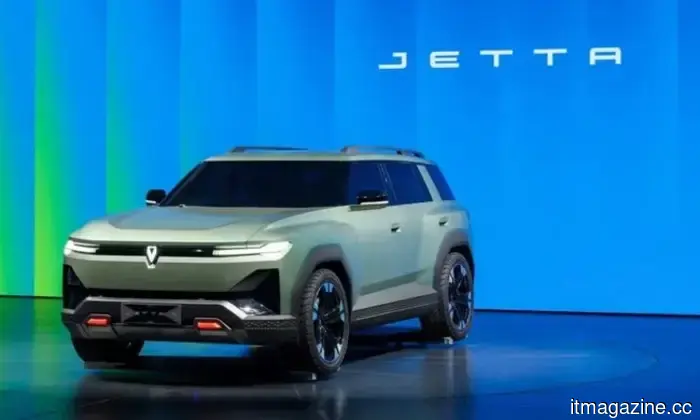
Volkswagen is transforming the Jetta into a $15,000 electric SUV, but it won't be hitting US roads.
The Jetta X is a boxy,

Other articles
 Cloudsmith in Belfast secures $72 million in Series C funding led by TCV.
Cloudsmith has secured $72 million in a Series C funding round, led by TCV and Insight Partners, to manage and protect the software supply chain generated by AI.
Cloudsmith in Belfast secures $72 million in Series C funding led by TCV.
Cloudsmith has secured $72 million in a Series C funding round, led by TCV and Insight Partners, to manage and protect the software supply chain generated by AI.
 Monitors have evolved beyond just basic upgrades. Here’s what’s new.
Monitor technology is advancing past mere enhancements. With advancements in OLED technology, extremely high refresh rates, and the introduction of 6K displays, here's what is genuinely transforming and its significance.
Monitors have evolved beyond just basic upgrades. Here’s what’s new.
Monitor technology is advancing past mere enhancements. With advancements in OLED technology, extremely high refresh rates, and the introduction of 6K displays, here's what is genuinely transforming and its significance.
 The TORRAS × FPF Collection Merges Intelligent Design With the Essence of International Football.
The collection focuses on TORRAS' iconic accessories, notably its kickstand phone cases for the iPhone 17 series. Instead of highlighting typical usage situations, the spotlight is on sports-oriented settings – training practices, match readiness, post-game reviews, and leisure times where football remains integral to everyday life. The kickstand mechanism is a crucial […]
The TORRAS × FPF Collection Merges Intelligent Design With the Essence of International Football.
The collection focuses on TORRAS' iconic accessories, notably its kickstand phone cases for the iPhone 17 series. Instead of highlighting typical usage situations, the spotlight is on sports-oriented settings – training practices, match readiness, post-game reviews, and leisure times where football remains integral to everyday life. The kickstand mechanism is a crucial […]
 Tesla increases its capital expenditure for 2026 to $25 billion.
Tesla increased its 2026 capital expenditure forecast to $25 billion, which includes six factory ramp-ups, production of Optimus starting in July, a doubling of AI computing capacity, and a chip fabrication plant in Austin.
Norway's sovereign wealth fund, valued at $2.2 trillion, recorded a 1.9% loss in the first quarter.
Norway’s $2.2 trillion Government Pension Fund Global experienced a 1.9% decline in the first quarter of 2026, marking its first quarterly loss in four quarters, as the conflict in Iran prompted a significant selloff in US tech stocks.
Tesla increases its capital expenditure for 2026 to $25 billion.
Tesla increased its 2026 capital expenditure forecast to $25 billion, which includes six factory ramp-ups, production of Optimus starting in July, a doubling of AI computing capacity, and a chip fabrication plant in Austin.
Norway's sovereign wealth fund, valued at $2.2 trillion, recorded a 1.9% loss in the first quarter.
Norway’s $2.2 trillion Government Pension Fund Global experienced a 1.9% decline in the first quarter of 2026, marking its first quarterly loss in four quarters, as the conflict in Iran prompted a significant selloff in US tech stocks.
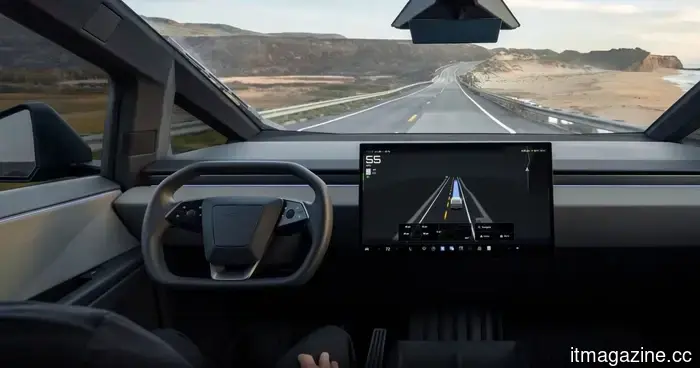 Tesla has finally revealed the reality of full self-driving capabilities in older vehicles, offering a glimmer of hope in challenging times.
Elon Musk confirmed during Tesla's Q2 2026 earnings call that vehicles equipped with Hardware 3 require physical upgrades, and Tesla intends to establish micro-factories to manage the volume of necessary replacements.
Tesla has finally revealed the reality of full self-driving capabilities in older vehicles, offering a glimmer of hope in challenging times.
Elon Musk confirmed during Tesla's Q2 2026 earnings call that vehicles equipped with Hardware 3 require physical upgrades, and Tesla intends to establish micro-factories to manage the volume of necessary replacements.
Tesla has finally revealed the reality about full self-driving capabilities in older vehicles, and it brings a glimmer of hope amid uncertainty.
Elon Musk stated during Tesla's Q2 2026 earnings call that vehicles with Hardware 3 require physical upgrades, and Tesla intends to establish micro-factories to manage the necessary scale of replacements.