
Tesla increases its capital expenditure for 2026 to $25 billion.
The CFO, Vaibhav Taneja, confirmed that the company will experience negative free cash flow for the remainder of 2026. However, Q1 showed an unexpected positive free cash flow of $1.4 billion, leaving Tesla with $44.7 billion in cash at the quarter's end. The capital expenditure guidance has been revised up from $20 billion to $25 billion, representing a $5 billion increase from the guidance provided just three months prior.
During the Q1 2026 earnings call on April 22, Tesla announced it is raising its capital expenditure expectations for 2026 to around $25 billion, up from the "over $20 billion" forecast made in January. This new estimate is approximately three times the company's historical annual capital expenditure run rate, with Tesla having spent $8.5 billion in 2025, $11.3 billion in 2024, and $8.9 billion in 2023.
On the call, CFO Vaibhav Taneja confirmed that Tesla anticipates negative free cash flow for the rest of the year, contrasting with the unexpected $1.4 billion in positive free cash flow seen in Q1. Tesla closed the first quarter with $44.7 billion in cash, cash equivalents, and short-term investments.
Musk described the allocation of capital across several areas, with the most significant being the establishment of six new production lines simultaneously for vehicles, robots, energy storage, and battery manufacturing—an unprecedented ramp for Tesla. This includes the production of Cybercabs (the specific robotaxi platform), Semi truck manufacturing, and the Houston Gigafactory. Additionally, an Optimus manufacturing facility is currently being built near Tesla’s factory in Austin.
Musk mentioned that large-scale production of Optimus is expected to commence around late July or August. The Fremont factory, which is halting production of the Model S and Model X, will transition to Optimus manufacturing at scale.
Part of the capital expenditure will focus on AI computing, with plans to more than double AI computing capacity in about six months. The company is also constructing a semiconductor research facility, known as a "Terafab," in Austin, Texas, dedicated to chip design. Musk stated that this is necessary for Tesla to manage its silicon supply chain for AI training and inference. The strengthening of the supply chain for batteries, energy, and AI silicon was also identified as a spending focus.
Musk characterized the increase in capital spending as a clear positive, stating, “With 2026, we’re going to be substantially increasing our investments in the future.” He indicated that significant growth in capital expenditures is expected, which he feels is justified by a much larger future revenue stream. He compared Tesla's spending to Amazon's projected $200 billion and Google's $175–$185 billion in capital expenditures for 2026.
The robotaxi program has expanded beyond Austin, with Tesla launching its unsupervised robotaxi service to Dallas and Houston during Q1, in addition to its existing operations in Austin and the San Francisco Bay Area. Musk described a hyper-conservative system behavior as a deliberate safety measure, noting that Tesla has 1.28 million FSD subscribers. He also mentioned that Optimus would "probably" be made "useful outside of Tesla sometime next year," suggesting 2027.
Following the announcement of the positive free cash flow, Tesla shares briefly rose by about 4% before losing those gains in after-hours trading as Musk and Taneja discussed the capital expenditure plans. Taneja was straightforward, stating, “While this may seem like a lot, and we will have the impact of negative free cash flow for the rest of the year, we believe this is the right strategy to position the company for the next era.”
Other articles
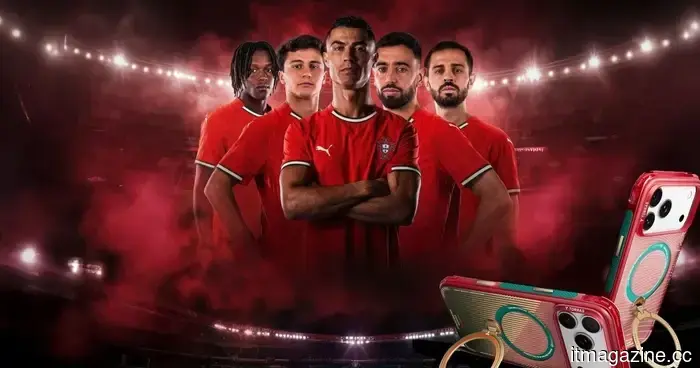 The TORRAS × FPF Collection Merges Intelligent Design With the Essence of International Football.
The collection focuses on TORRAS' iconic accessories, notably its kickstand phone cases for the iPhone 17 series. Instead of highlighting typical usage situations, the spotlight is on sports-oriented settings – training practices, match readiness, post-game reviews, and leisure times where football remains integral to everyday life. The kickstand mechanism is a crucial […]
Norway's sovereign wealth fund, valued at $2.2 trillion, recorded a 1.9% loss in the first quarter.
Norway's Government Pension Fund Global, valued at $2.2 trillion, experienced a 1.9% decline in the first quarter of 2026, marking its first quarterly loss in four periods, following a significant selloff in US tech stocks spurred by the conflict in Iran.
The TORRAS × FPF Collection Merges Intelligent Design With the Essence of International Football.
The collection focuses on TORRAS' iconic accessories, notably its kickstand phone cases for the iPhone 17 series. Instead of highlighting typical usage situations, the spotlight is on sports-oriented settings – training practices, match readiness, post-game reviews, and leisure times where football remains integral to everyday life. The kickstand mechanism is a crucial […]
Norway's sovereign wealth fund, valued at $2.2 trillion, recorded a 1.9% loss in the first quarter.
Norway's Government Pension Fund Global, valued at $2.2 trillion, experienced a 1.9% decline in the first quarter of 2026, marking its first quarterly loss in four periods, following a significant selloff in US tech stocks spurred by the conflict in Iran.
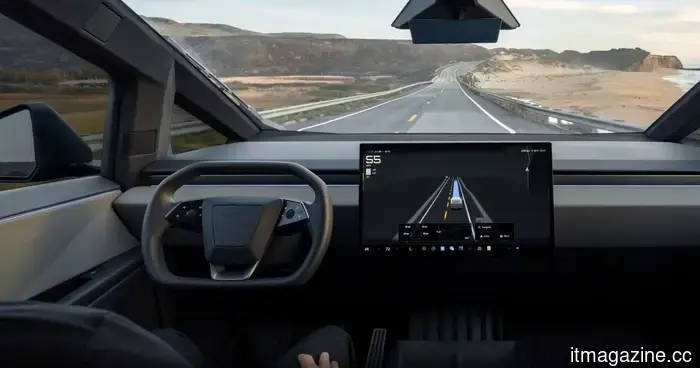 Tesla has finally revealed the reality about full self-driving capabilities in older vehicles, and it brings a glimmer of hope amid uncertainty.
Elon Musk stated during Tesla's Q2 2026 earnings call that vehicles with Hardware 3 require physical upgrades, and Tesla intends to establish micro-factories to manage the necessary scale of replacements.
Tesla has finally revealed the reality about full self-driving capabilities in older vehicles, and it brings a glimmer of hope amid uncertainty.
Elon Musk stated during Tesla's Q2 2026 earnings call that vehicles with Hardware 3 require physical upgrades, and Tesla intends to establish micro-factories to manage the necessary scale of replacements.
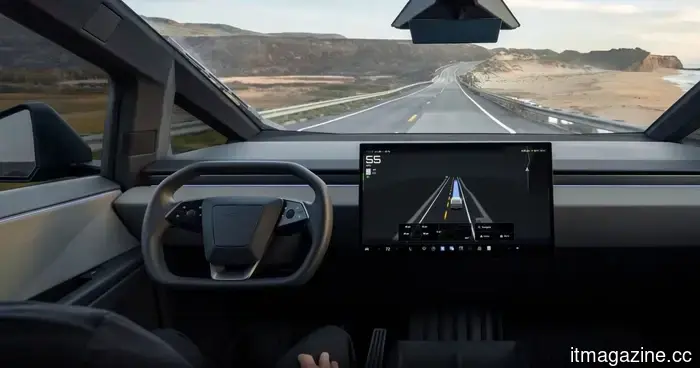 Tesla has finally revealed the reality of full self-driving capabilities in older vehicles, offering a glimmer of hope in challenging times.
Elon Musk confirmed during Tesla's Q2 2026 earnings call that vehicles equipped with Hardware 3 require physical upgrades, and Tesla intends to establish micro-factories to manage the volume of necessary replacements.
Tesla has finally revealed the reality of full self-driving capabilities in older vehicles, offering a glimmer of hope in challenging times.
Elon Musk confirmed during Tesla's Q2 2026 earnings call that vehicles equipped with Hardware 3 require physical upgrades, and Tesla intends to establish micro-factories to manage the volume of necessary replacements.
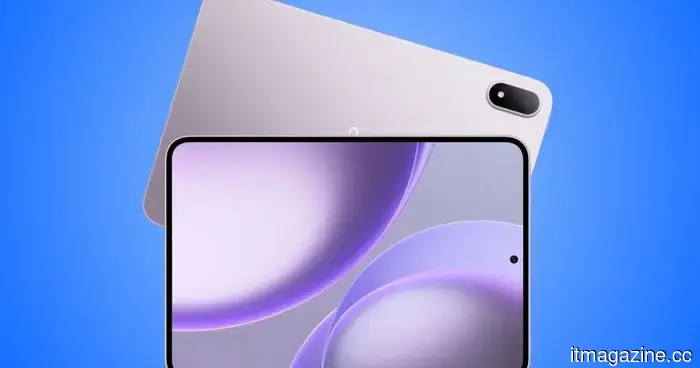 Android has finally introduced a worthy competitor to the iPad mini, and it looks impressive.
The Oppo Pad Mini enters the market as a competitor to the iPad mini, featuring a 2.5K 144Hz OLED screen, Snapdragon 8 Gen 5 processor, and an 8,000mAh battery with 67W charging capabilities.
Android has finally introduced a worthy competitor to the iPad mini, and it looks impressive.
The Oppo Pad Mini enters the market as a competitor to the iPad mini, featuring a 2.5K 144Hz OLED screen, Snapdragon 8 Gen 5 processor, and an 8,000mAh battery with 67W charging capabilities.
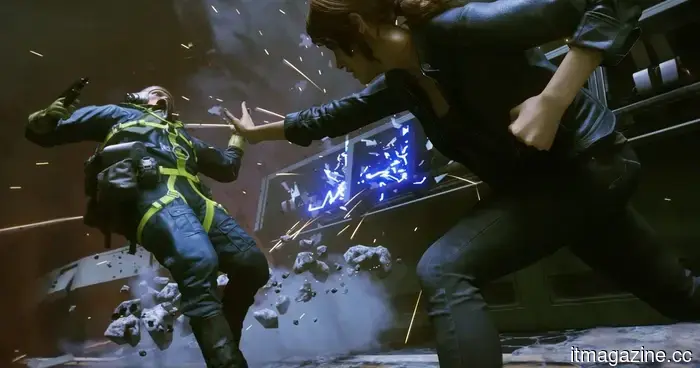 Control Ultimate Edition has just been released on iPhone and iPad, and I highly recommend it.
Control Ultimate Edition has launched on iPhone and iPad, featuring a mobile-optimized interface, touch controls, and universal purchase capabilities, making it one of the most recommendable action games.
Control Ultimate Edition has just been released on iPhone and iPad, and I highly recommend it.
Control Ultimate Edition has launched on iPhone and iPad, featuring a mobile-optimized interface, touch controls, and universal purchase capabilities, making it one of the most recommendable action games.
Tesla increases its capital expenditure for 2026 to $25 billion.
Tesla increased its 2026 capital expenditure forecast to $25 billion, which includes six factory ramp-ups, production of Optimus starting in July, a doubling of AI computing capacity, and a chip fabrication plant in Austin.