
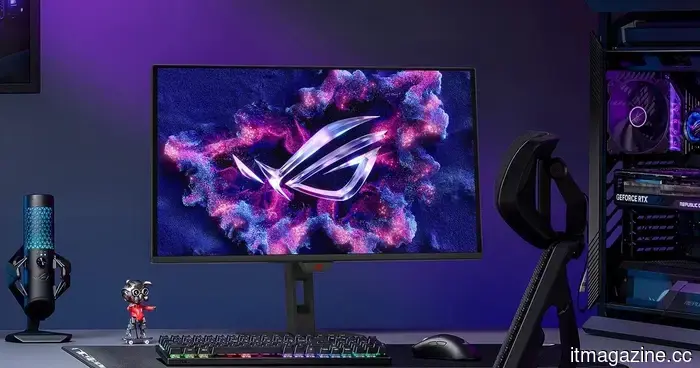
Monitors have evolved beyond just basic upgrades. Here’s what’s new.
For a considerable time, monitors evolved in a predictable manner. Resolutions enhanced, refresh rates rose, and panel technologies progressed steadily. Upgrades felt gradual rather than revolutionary.
This trend is beginning to change.
A new generation of display technology is altering the capabilities of monitors and, more crucially, their applications. OLED is becoming more viable for uses beyond gaming. Refresh rates are soaring beyond what most users previously deemed necessary. Higher-resolution formats are starting to take the place of conventional multi-monitor setups.
These developments are interconnected. Collectively, they indicate a category that is diversifying in several directions simultaneously.
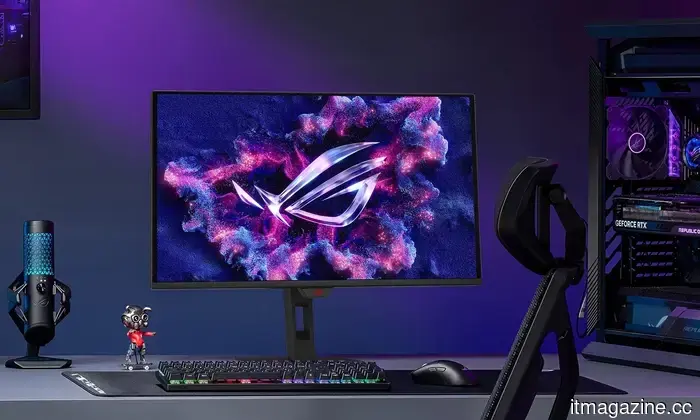
OLED is overcoming its previous constraints
ASUS
OLED has traditionally been linked with gaming, mainly due to its contrast and response times, providing an experience that is challenging to match with standard LCD panels.
The main difficulty has been its everyday usability.
Past OLED monitors often had issues with text clarity because their subpixel arrangements were not tailored for desktop applications. Their performance in brighter settings also diminished perceived contrast, limiting their adaptability.
Recent QD-OLED panels are addressing these issues. RGB stripe layouts are enhancing text rendering, which makes these displays more suited for productivity. Meanwhile, improvements at the panel level are helping maintain deeper blacks even in well-lit spaces.
This development allows OLED to occupy a more versatile position, moving it beyond a single use case.
Now, OLED has transitioned from a niche option to a more versatile, multifunctional display category.
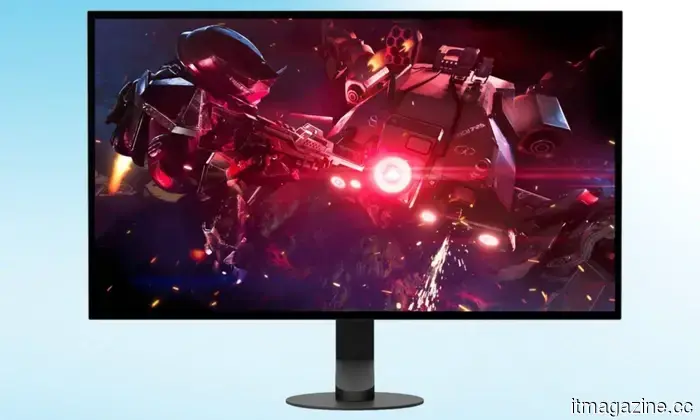
Refresh rates are achieving unprecedented levels
Sony
Speed remains a significant focus.
Monitors are now hitting 550Hz at 1440p, with optional modes that can push refresh rates past 1000Hz by lowering the resolution. These statistics represent a responsiveness that exceeds typical standards.
For most users, the distinctions may not be immediately evident. However, in competitive gaming, even slight reductions in latency can have a considerable impact.
More remarkable is how these high speeds are being supported. Technologies that synchronize strobing with refresh rates are enhancing motion clarity without causing flicker or ghosting.
At this level, clarity and consistency are just as important as the headline specifications.
Motion clarity is becoming an independent priority
The emphasis has shifted from merely increasing refresh rates to refining how motion is presented.
New methodologies aim to diminish motion blur while sidestepping the issues associated with older techniques. This results in visuals that are smoother and feel more stable during quick movements.
Some displays rated at 360Hz are now providing motion clarity that rivals much higher effective refresh rates. This alters the evaluation of performance, especially for fast-paced content.
Higher resolutions are transforming workspace arrangements
Resolution is also advancing in a more practical manner.
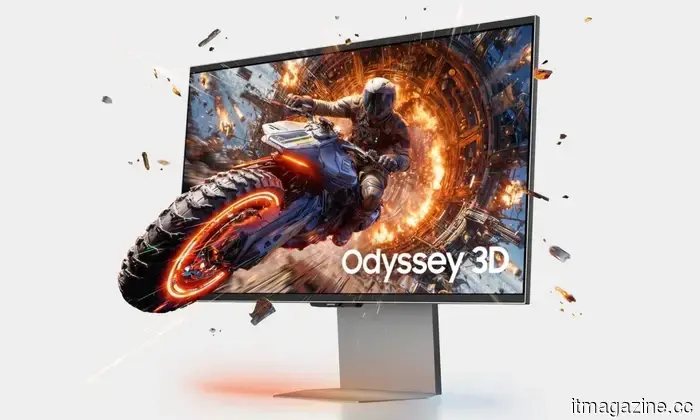
Samsung
6K displays are beginning to emerge, offering substantially more screen space than standard 4K monitors. With nearly 20 million pixels, these displays enable users to operate across multiple applications without needing extra screens.
This fosters a more cohesive workspace, eliminating the necessity for bezels and minimizing inconsistencies between displays.
Some of these monitors also feature dual-mode functionality. High-resolution modes cater to detailed work, while lower-resolution modes facilitate higher refresh rates ideal for gaming.
This adaptability reflects a broader trend toward monitors that can accommodate various use cases.
These innovations are not confined to high-end devices
Although much of this advancement appears at the premium level, it is starting to become available at more affordable price points.
OLED monitors, in particular, are becoming more accessible. Models incorporating high refresh rates and rapid response times are now offered at significantly lower prices than before.
Simultaneously, well-calibrated LCD monitors continue to deliver impressive performance for both creative tasks and general usage.
This ensures that new technologies will not remain exclusive to flagship products for long.
A category that is growing, not just enhancing
What makes this moment remarkable is not a singular breakthrough, but the synergy of several innovations.
Image quality is advancing through OLED improvements. Speed is escalating with higher refresh rates and better motion management. Resolution is expanding to accommodate more intricate workflows.
These changes are broadening the potential of monitors, rather than merely enhancing existing abilities.
For users clinging to older displays, this transformation signifies something more impactful than a standard upgrade cycle.
Other articles
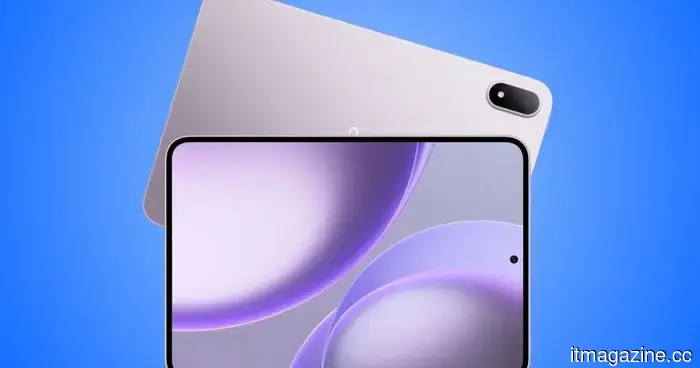 Android has finally introduced a worthy competitor to the iPad mini, and it looks impressive.
The Oppo Pad Mini enters the market as a competitor to the iPad mini, featuring a 2.5K 144Hz OLED screen, Snapdragon 8 Gen 5 processor, and an 8,000mAh battery with 67W charging capabilities.
Norway's sovereign wealth fund, valued at $2.2 trillion, recorded a 1.9% loss in the first quarter.
Norway's Government Pension Fund Global, valued at $2.2 trillion, experienced a 1.9% decline in the first quarter of 2026, marking its first quarterly loss in four periods, following a significant selloff in US tech stocks spurred by the conflict in Iran.
Android has finally introduced a worthy competitor to the iPad mini, and it looks impressive.
The Oppo Pad Mini enters the market as a competitor to the iPad mini, featuring a 2.5K 144Hz OLED screen, Snapdragon 8 Gen 5 processor, and an 8,000mAh battery with 67W charging capabilities.
Norway's sovereign wealth fund, valued at $2.2 trillion, recorded a 1.9% loss in the first quarter.
Norway's Government Pension Fund Global, valued at $2.2 trillion, experienced a 1.9% decline in the first quarter of 2026, marking its first quarterly loss in four periods, following a significant selloff in US tech stocks spurred by the conflict in Iran.
 Control Ultimate Edition has just arrived on iPhone and iPad, and I strongly recommend it.
Control Ultimate Edition is now available on iPhone and iPad, featuring a mobile-friendly interface, touch controls, and support for universal purchase, making it one of the most recommended action games.
Control Ultimate Edition has just arrived on iPhone and iPad, and I strongly recommend it.
Control Ultimate Edition is now available on iPhone and iPad, featuring a mobile-friendly interface, touch controls, and support for universal purchase, making it one of the most recommended action games.
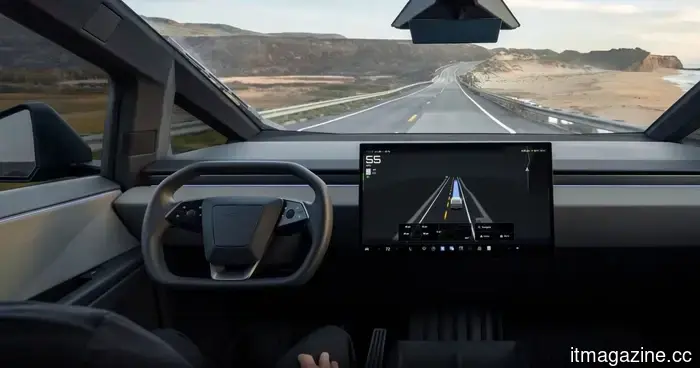 Tesla has finally revealed the reality of full self-driving capabilities in older vehicles, offering a glimmer of hope in challenging times.
Elon Musk confirmed during Tesla's Q2 2026 earnings call that vehicles equipped with Hardware 3 require physical upgrades, and Tesla intends to establish micro-factories to manage the volume of necessary replacements.
Tesla has finally revealed the reality of full self-driving capabilities in older vehicles, offering a glimmer of hope in challenging times.
Elon Musk confirmed during Tesla's Q2 2026 earnings call that vehicles equipped with Hardware 3 require physical upgrades, and Tesla intends to establish micro-factories to manage the volume of necessary replacements.
 Tesla increases its capital expenditure for 2026 to $25 billion.
Tesla increased its 2026 capital expenditure forecast to $25 billion, which includes six factory ramp-ups, production of Optimus starting in July, a doubling of AI computing capacity, and a chip fabrication plant in Austin.
Norway's sovereign wealth fund, valued at $2.2 trillion, recorded a 1.9% loss in the first quarter.
Norway’s $2.2 trillion Government Pension Fund Global experienced a 1.9% decline in the first quarter of 2026, marking its first quarterly loss in four quarters, as the conflict in Iran prompted a significant selloff in US tech stocks.
Tesla increases its capital expenditure for 2026 to $25 billion.
Tesla increased its 2026 capital expenditure forecast to $25 billion, which includes six factory ramp-ups, production of Optimus starting in July, a doubling of AI computing capacity, and a chip fabrication plant in Austin.
Norway's sovereign wealth fund, valued at $2.2 trillion, recorded a 1.9% loss in the first quarter.
Norway’s $2.2 trillion Government Pension Fund Global experienced a 1.9% decline in the first quarter of 2026, marking its first quarterly loss in four quarters, as the conflict in Iran prompted a significant selloff in US tech stocks.
Monitors have evolved beyond just basic upgrades. Here’s what’s new.
Monitor technology is advancing past mere enhancements. With advancements in OLED technology, extremely high refresh rates, and the introduction of 6K displays, here's what is genuinely transforming and its significance.