
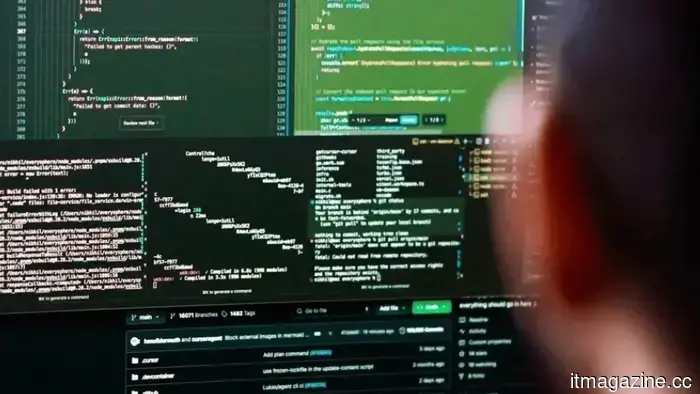
Cursor is in discussions to secure $2 billion at a valuation of $50 billion after achieving a $2 billion annual recurring revenue (ARR) within three years.
In summary: AI coding startup Cursor (Anysphere) is negotiating to secure at least $2 billion at a valuation of around $50 billion, with participation from Andreessen Horowitz, Thrive Capital, and Nvidia. This would nearly double its valuation from $29.3 billion in November 2025. The company has rapidly scaled from zero to $2 billion in annual recurring revenue (ARR) in just three years, marking the fastest B2B growth on record, and has over one million paying customers, including 70% of the Fortune 1000, while facing strong competition from GitHub Copilot, Claude Code, and Windsurf.
Cursor, developed by Anysphere, is seeking to raise at least $2 billion in new funding at an estimated valuation of $50 billion. This round is oversubscribed and will be co-led by Andreessen Horowitz and Thrive Capital, with Nvidia acting as a strategic co-investor. If finalized, this deal would almost double Cursor’s valuation from the $29.3 billion it achieved just five months earlier, marking its fifth funding round within a span of less than two years.
Cursor's remarkable growth has no equal in the enterprise software sector. The company reached $100 million in annualized revenue in January 2025, $500 million by June, $1 billion by November, and $2 billion by February 2026. This explosive growth trajectory from zero to $2 billion ARR in approximately three years positions Cursor as the fastest-growing B2B software company, surpassing all SaaS benchmarks, including those set by Slack, Zoom, and Snowflake. It boasts over one million paying customers, more than two million total users, and around 50,000 enterprise teams, with nearly 70% of the Fortune 1000 represented in its client roster.
Cursor's fundraising journey condenses a typical decade-long timeline into just 18 months. The Series A closed in August 2024, valued at $400 million, and was quickly followed by a $2.6 billion Series B five months later, led by Thrive and a16z. In May 2025, the Series C was raised at $9 billion, while the Series D in November 2025 reached $29.3 billion, bringing in Coatue, Nvidia, and Google as new investors and adding $2.3 billion in capital. The current funding round would inject another $2 billion, raising the total valuation to $50 billion.
Each funding round has approximately doubled or tripled the preceding valuation, bolstered by revenue growth that consistently exceeds the capital raised. Cursor has achieved slight gross margin profitability due to its proprietary Composer model, introduced in November 2025, and the use of cost-effective external AI models. Currently, enterprise clients represent about 60% of the revenue, indicating a shift from the individual developers who initially championed the product.
Cursor functions as a variant of Microsoft’s Visual Studio Code, the most widely utilized code editor globally, incorporating AI capabilities throughout the development process. It offers code autocompletion, suggests modifications across multiple files, conducts tests, addresses errors, and increasingly acts as an autonomous agent capable of performing complex coding tasks with minimal human oversight. The product bridges the gap between traditional code editors and fully autonomous coding agents, providing developers with more control than chat-based tools like Claude Code while automating more than typical editors with additional AI features.
The transition from basic code completion to agent-based coding workflows represents a defining technical shift for the developer tools market in 2026. Andrej Karpathy termed “vibe coding” as "passé" in February 2026, asserting that genuine value now lies in AI systems that can strategize, implement, test, and refine entire codebases. Cursor's Composer model is tailored for this purpose, enabling multi-file modifications, automated testing cycles, and self-correcting code generation. A benchmark in March 2026 demonstrated that Cursor could create a data table component in two iterations, whereas Windsurf and GitHub Copilot took three and five, respectively.
Cursor's valuation relies on its ability to stay competitive in an increasingly crowded market. GitHub Copilot, supported by Microsoft and OpenAI, has 4.7 million paid users and a 90% adoption rate among the Fortune 100, controlling about 37% of the AI coding tools market and enhancing its agentic features through Copilot Workspace. Windsurf, from Codeium, reportedly provides around 80% of Cursor's capabilities at 75% of the cost, featuring a Cascade agentic workflow engine favored by budget-conscious teams.
The most notable competitive risk comes from Anthropic’s Claude Code, which has rapidly gained recognition among developers, achieving 57% awareness by January 2026 and 18% active workplace usage. Operating as a terminal-based coding agent rather than a traditional editor places Claude Code in a different workflow category, yet its ability for autonomous multi-step code generation is converging
Other articles
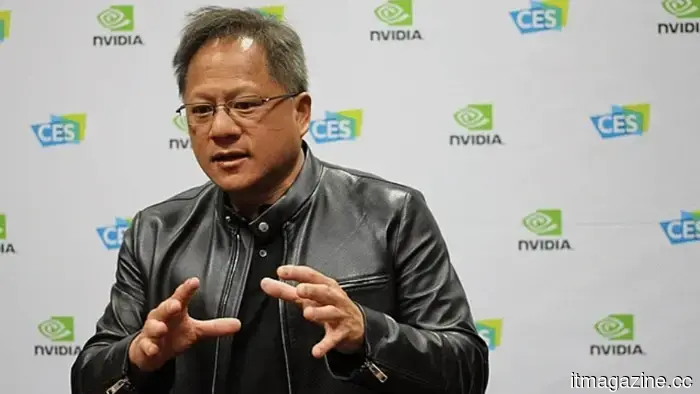 Nvidia's Jensen Huang cautions that DeepSeek operating on Huawei chips would result in a 'terrible situation' for the United States.
Nvidia CEO Jensen Huang stated that DeepSeek optimizing AI models for Huawei's Ascend chips rather than American hardware would represent "a terrible outcome for the United States."
Nvidia's Jensen Huang cautions that DeepSeek operating on Huawei chips would result in a 'terrible situation' for the United States.
Nvidia CEO Jensen Huang stated that DeepSeek optimizing AI models for Huawei's Ascend chips rather than American hardware would represent "a terrible outcome for the United States."
 Palantir, Thales, and a startup are vying to develop the FAA's predictive AI for air traffic management.
The FAA's SMART system is designed to forecast air traffic conflicts two hours in advance. Following the identification of systemic issues at LaGuardia, Palantir, Thales, and Air Space Intelligence are vying for the contract.
Palantir, Thales, and a startup are vying to develop the FAA's predictive AI for air traffic management.
The FAA's SMART system is designed to forecast air traffic conflicts two hours in advance. Following the identification of systemic issues at LaGuardia, Palantir, Thales, and Air Space Intelligence are vying for the contract.
 Nvidia's Jensen Huang cautions that DeepSeek operating on Huawei chips would result in a 'terrible consequence' for the United States.
Nvidia CEO Jensen Huang stated that DeepSeek optimizing AI models for Huawei's Ascend chips rather than American hardware would be "a terrible result for the United States."
Nvidia's Jensen Huang cautions that DeepSeek operating on Huawei chips would result in a 'terrible consequence' for the United States.
Nvidia CEO Jensen Huang stated that DeepSeek optimizing AI models for Huawei's Ascend chips rather than American hardware would be "a terrible result for the United States."
 Europe's €80 billion investment in public funding for venture capital and scaleups encounters fundamental growth obstacles.
The EIF's €15 billion ETCI 2 fund aims for €80 billion in scaleup financing, yet the 80% scaleup shortfall in Europe and the presence of unprofitable unicorns indicate that simply providing capital may not be enough to bridge the gap with the US.
Europe's €80 billion investment in public funding for venture capital and scaleups encounters fundamental growth obstacles.
The EIF's €15 billion ETCI 2 fund aims for €80 billion in scaleup financing, yet the 80% scaleup shortfall in Europe and the presence of unprofitable unicorns indicate that simply providing capital may not be enough to bridge the gap with the US.
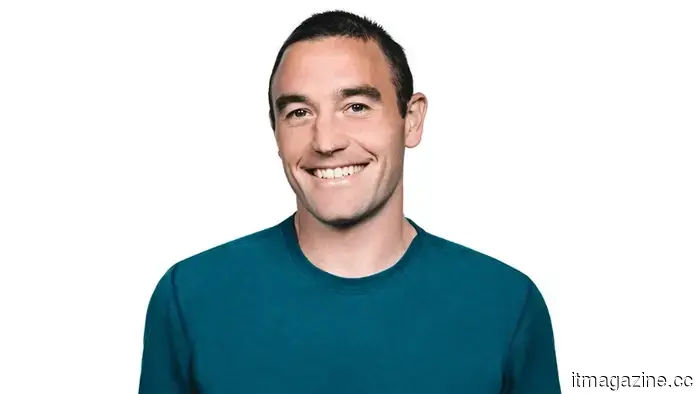 OpenAI experiences a triple exit in one day as the product chief, head of Sora, and enterprise CTO all depart.
Kevin Weil, Bill Peebles, and Srinivas Narayanan are departing from OpenAI as the organization terminates Sora and disbands OpenAI for Science, marking the continuation of a two-year trend of leadership departures.
OpenAI experiences a triple exit in one day as the product chief, head of Sora, and enterprise CTO all depart.
Kevin Weil, Bill Peebles, and Srinivas Narayanan are departing from OpenAI as the organization terminates Sora and disbands OpenAI for Science, marking the continuation of a two-year trend of leadership departures.
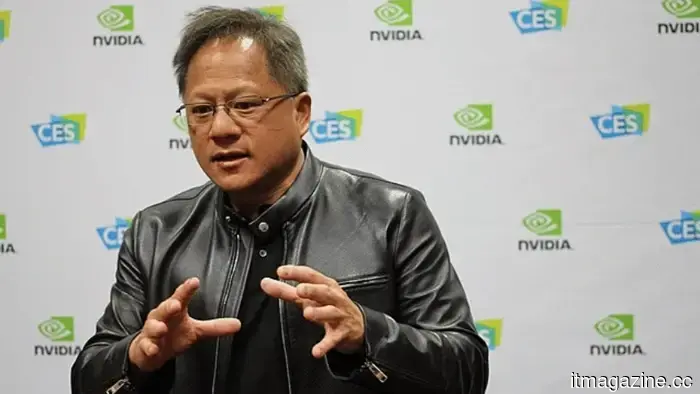 Nvidia's Jensen Huang cautions that DeepSeek operating on Huawei processors would lead to a 'terrible result' for the United States.
Nvidia's CEO Jensen Huang states that DeepSeek's optimization of AI models for Huawei's Ascend chips, rather than American hardware, would be "a terrible consequence for the United States."
Nvidia's Jensen Huang cautions that DeepSeek operating on Huawei processors would lead to a 'terrible result' for the United States.
Nvidia's CEO Jensen Huang states that DeepSeek's optimization of AI models for Huawei's Ascend chips, rather than American hardware, would be "a terrible consequence for the United States."
Cursor is in discussions to secure $2 billion at a valuation of $50 billion after achieving a $2 billion annual recurring revenue (ARR) within three years.
Cursor is aiming to secure $2 billion at a $50 billion valuation from a16z, Thrive, and Nvidia after achieving $2 billion in annual recurring revenue (ARR) within three years, marking the quickest scaling in B2B history, with 70% of the Fortune 1,000 as its clients.