
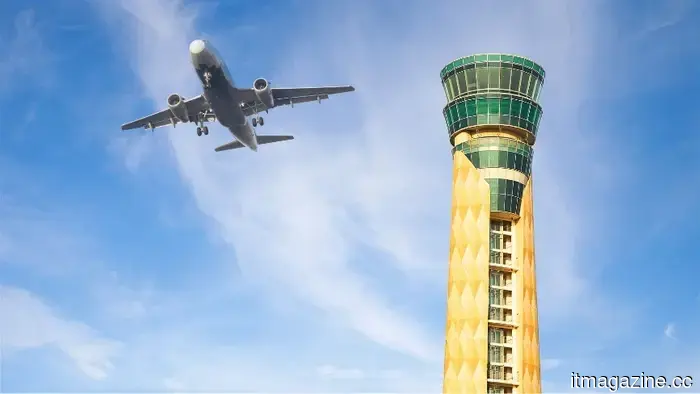
Palantir, Thales, and a startup are vying to develop the FAA's predictive AI for air traffic management.
In summary, the FAA is working on an AI system known as SMART (Strategic Management of Airspace Routing Trajectories), which aims to enhance air traffic conflict prediction from the current 15 minutes to two hours. Three companies—Palantir, Thales, and Air Space Intelligence—are vying for the contract. This initiative is a response to the LaGuardia crash that highlighted issues of controller workload and outdated systems and is part of a $32.5 billion modernization plan that includes replacing 612 old radar systems and hiring 1,200 new controllers in fiscal 2026.
The FAA is creating an AI system named SMART to enable air traffic controllers to forecast and resolve flight conflicts up to two hours in advance, shifting from a current planning window of just 15 minutes. The project, confirmed by Transportation Secretary Sean Duffy on April 17, has a press event scheduled for April 21 to provide additional details. SMART, which utilizes high-fidelity 4D modeling, aims to identify potential bottlenecks and conflicts before aircraft take off. This system will change air traffic management from a reactive to a predictive approach, addressing the existing infrastructure's limitations that were built for fewer flights and depend on real-time decisions made by controllers with limited visibility into the future. The FAA has indicated that the system might become operational in some capacity later this year.
Among the bidders, Palantir Technologies has the strongest ties to government. The company's projected revenue for 2026 stands at about $7.2 billion, showing a growth rate of 61%, bolstered by a $10 billion Army contract signed in July 2025 and collaborations with GE Aerospace and Airbus. Palantir’s government revenue surged by 70% year over year in Q4 2025. The company’s aviation AI proposal leverages its main business of processing vast amounts of operational data and providing it in accessible decision-support formats for government users.
Thales, a European aerospace and defense company, boasts over 85 years of experience supplying air traffic management systems to both the FAA and the Department of Defense, with over 99% of U.S. airport instrument landing systems utilizing Thales technology. Its TopSky platform is already integrated into the existing aviation infrastructure, giving it a competitive edge that the other bidders lack.
Air Space Intelligence, a Boston-based startup supported by Andreessen Horowitz, is the smallest of the competitors but may be the most relevant. Its Flyways AI platform currently manages over 40% of U.S. air traffic through partnerships with major airlines, employing similar 4D modeling and optimization as required by SMART. ASI has also partnered with Joby Aviation to incorporate electric air taxis into the national airspace, placing it at the crossroads of current air traffic management and future aviation technologies.
The urgency for SMART is underscored by a recent incident: on March 22, Air Canada Express Flight 8646 collided with a fire truck on the runway at LaGuardia Airport. The investigation revealed that the involved air traffic controller was juggling multiple roles, and the automated runway safety system failed to activate due to difficulties in tracking vehicles near the runway. This event highlighted longstanding issues in the aviation industry: controllers are overwhelmed, the technology is outdated, and the capacity for error is diminishing as flight volumes rise.
The FAA has obtained $12.5 billion from Congress for air traffic control modernization and anticipates needing an additional $20 billion to finish the update. The agency is in the process of replacing 612 old radar systems, transitioning its NOTAM system to a cloud-based platform, and ramping up controller recruitment efforts, having already hired nearly 1,200 new controllers in fiscal 2026—around half of its annual goal. FAA Administrator Bryan Bedford has prioritized SMART in the modernization initiative since he was confirmed by Congress and sworn in last July.
Elon Musk's Department of Government Efficiency (DOGE) has also engaged with FAA operations, assessing air traffic control facilities and promising “rapid safety upgrades” to the systems. Another initiative, titled Project Lift, is allocating FAA funds to enhance network communications. DOGE is set to conclude its operations on July 4, although a follow-up entity will continue its work.
The rivalry among Palantir, Thales, and Air Space Intelligence represents three different strategies for government AI procurement. Palantir offers a versatile platform suited for various government applications, supported by solid security clearances and established relationships. Thales provides unmatched domain knowledge and an established customer base. Meanwhile, ASI presents a specialized aviation AI platform that is already managing a significant share of the traffic the FAA is aiming to oversee.
The FAA’s track record with technology modernization is challenging. The last major overhaul, known as the NextGen program, extended over a decade and exceeded budget forecasts significantly. The air traffic control workforce has shown resistance to automation that disrupts established practices, and the timeframes for government aviation procurement span years rather than months. The indication that SMART could
Other articles
 Europe's €80 billion investment of public funds in venture capital and scale-ups encounters fundamental growth challenges.
The EIF's €15B ETCI 2 fund aims for €80B in scaleup financing, yet Europe's 80% scaleup shortfall and unprofitable unicorns indicate that merely providing capital will not suffice to bridge the gap with the US.
Europe's €80 billion investment of public funds in venture capital and scale-ups encounters fundamental growth challenges.
The EIF's €15B ETCI 2 fund aims for €80B in scaleup financing, yet Europe's 80% scaleup shortfall and unprofitable unicorns indicate that merely providing capital will not suffice to bridge the gap with the US.
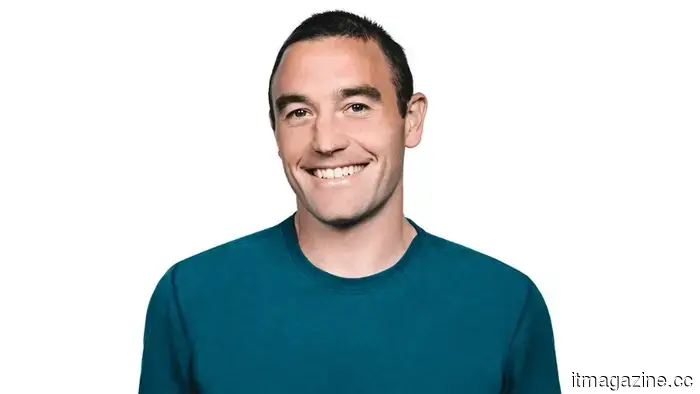 OpenAI experiences a triple departure in one day, losing its product chief, the head of Sora, and the enterprise CTO.
Kevin Weil, Bill Peebles, and Srinivas Narayanan depart from OpenAI as the organization disbands Sora and disassembles OpenAI for Science, marking the continuation of a leadership exodus that has lasted two years.
OpenAI experiences a triple departure in one day, losing its product chief, the head of Sora, and the enterprise CTO.
Kevin Weil, Bill Peebles, and Srinivas Narayanan depart from OpenAI as the organization disbands Sora and disassembles OpenAI for Science, marking the continuation of a leadership exodus that has lasted two years.
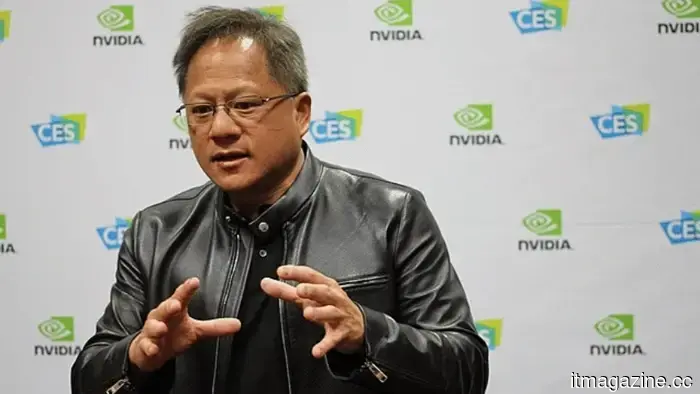 Nvidia's Jensen Huang cautions that DeepSeek operating on Huawei chips would result in a 'terrible situation' for the United States.
Nvidia's CEO Jensen Huang stated that DeepSeek optimizing AI models for Huawei's Ascend chips rather than American hardware would be "an awful development for the United States."
Nvidia's Jensen Huang cautions that DeepSeek operating on Huawei chips would result in a 'terrible situation' for the United States.
Nvidia's CEO Jensen Huang stated that DeepSeek optimizing AI models for Huawei's Ascend chips rather than American hardware would be "an awful development for the United States."
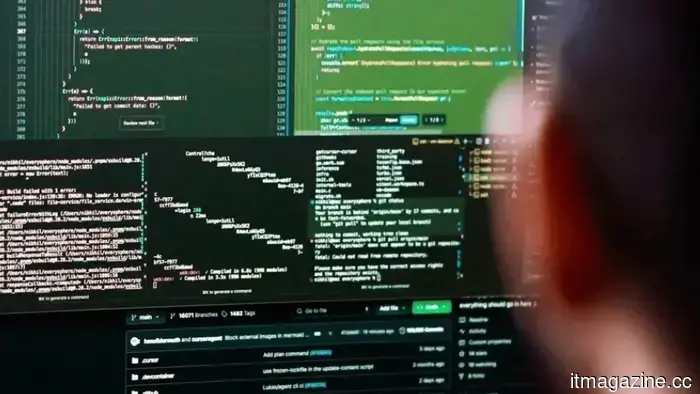 Cursor is in discussions to secure $2 billion at a valuation of $50 billion after achieving a $2 billion annual recurring revenue (ARR) within three years.
Cursor is aiming to secure $2 billion at a $50 billion valuation from a16z, Thrive, and Nvidia after achieving $2 billion in annual recurring revenue (ARR) within three years, marking the quickest scaling in B2B history, with 70% of the Fortune 1,000 as its clients.
Cursor is in discussions to secure $2 billion at a valuation of $50 billion after achieving a $2 billion annual recurring revenue (ARR) within three years.
Cursor is aiming to secure $2 billion at a $50 billion valuation from a16z, Thrive, and Nvidia after achieving $2 billion in annual recurring revenue (ARR) within three years, marking the quickest scaling in B2B history, with 70% of the Fortune 1,000 as its clients.
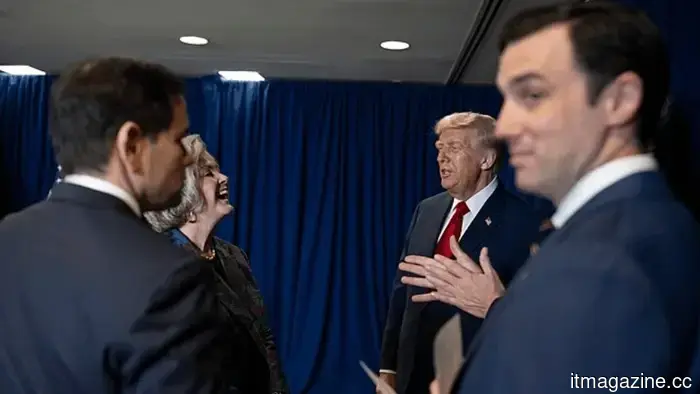 Anthropic's Amodei has a meeting with Wiles and Bessent at the White House regarding access to Mythos and the standoff with the Pentagon.
Anthropic CEO Amodei engaged in "productive" discussions with Wiles and Bessent at the White House regarding access to Mythos, indicating a potential easing of the conflict surrounding the Pentagon's blacklisting.
Anthropic's Amodei has a meeting with Wiles and Bessent at the White House regarding access to Mythos and the standoff with the Pentagon.
Anthropic CEO Amodei engaged in "productive" discussions with Wiles and Bessent at the White House regarding access to Mythos, indicating a potential easing of the conflict surrounding the Pentagon's blacklisting.
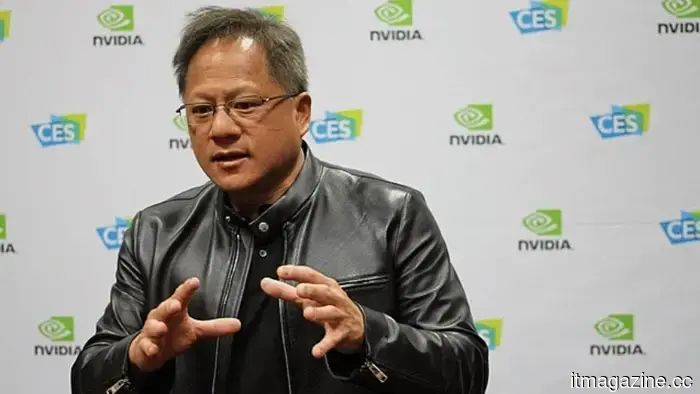 Nvidia's Jensen Huang cautions that DeepSeek operating on Huawei chips would result in a 'terrible consequence' for the United States.
Nvidia CEO Jensen Huang stated that DeepSeek optimizing AI models for Huawei's Ascend chips rather than American hardware would be "a terrible result for the United States."
Nvidia's Jensen Huang cautions that DeepSeek operating on Huawei chips would result in a 'terrible consequence' for the United States.
Nvidia CEO Jensen Huang stated that DeepSeek optimizing AI models for Huawei's Ascend chips rather than American hardware would be "a terrible result for the United States."
Palantir, Thales, and a startup are vying to develop the FAA's predictive AI for air traffic management.
The FAA's SMART system is designed to forecast air traffic conflicts two hours in advance. Following the identification of systemic issues at LaGuardia, Palantir, Thales, and Air Space Intelligence are vying for the contract.