

Europe's €80 billion investment in public funding for venture capital and scaleups encounters fundamental growth obstacles.
The European Investment Fund is in the process of creating a €15 billion fund of funds known as ETCI 2, which intends to unlock up to €80 billion in funding for scaleups throughout Europe. Germany’s WIN initiative aims to achieve €12 billion by the year 2030. In France, the Tibi program has committed €7 billion in private capital and recognized 92 VC and growth funds, accumulating €22 billion in assets. Additionally, the European Commission's Scaleup Europe Fund is allocating €5 billion, with a fund manager expected to be chosen this month. When considering the European Innovation Council's €10 billion budget running through 2027, the total public and publicly mobilized capital directed towards venture and growth investments in Europe now surpasses anything previously attempted on the continent.
The concern remains whether this influx of funds will effectively address the intended issues or lead to new challenges.
The justification for the increased spending stems from the gaps observed. In 2025, European venture capital investment reached €66.2 billion, representing approximately 22% of what was invested in the United States. The difference is most pronounced in later-stage funding: EU growth investments constitute around 10% of US levels. Although Europe generates a higher number of tech startups than America, it has 80% fewer scaleups and 85% fewer unicorns. The reason for this disparity is well understood: European pension and insurance funds represent only 7% of VC investments, in contrast to about 20% in the US, and sovereign wealth funds contribute to less than 1% of European VC fundraising. While Europe creates companies, it struggles to provide the necessary financing for those that require hundreds of millions to compete on a global stage.
The EIF, which backs about 25% of all venture capital invested in Europe and supports nearly half of all VC-backed startups annually, serves as the main vehicle for bridging this gap. The first-generation fund of funds, ETCI 1, raised €3.9 billion from countries including Spain, Germany, France, Italy, Belgium, and the EIB Group, backing 14 funds with over €1 billion each. Its portfolio contains 11 unicorns, such as DeepL, TravelPerk, and Framer. ETCI 2 aims to operate on an entirely different scale, supporting approximately 100 funds ranging from €300 million mid-sized vehicles to mega funds exceeding €1 billion, with the ability to invest up to €200 million per company—over three times the €60 million limit of ETCI 1.
The Scaleup Europe Fund, which operates separately from ETCI, reflects the Commission’s inclination to direct capital towards strategic technologies. Its areas of focus include AI, quantum computing, semiconductors, robotics, autonomous systems, energy, space, biotech, and advanced materials. As reported by Bloomberg in March, five managers have been shortlisted: EQT, Northzone, Eurazeo, Atomico, and Vitruvian Partners. The fund combines €1 billion in public capital from the European Innovation Council with €4 billion from private investors, with operations expected to commence in the second quarter of this year.
Germany’s WIN initiative, which began in September 2024 with KfW Group and the Federal Ministry of Finance, is taking a different approach. Instead of establishing a single mega fund, it seeks to reform the regulatory environment to unlock institutional capital. This program includes raising the pension fund VC quota from 35% to 40%, introducing a 5% infrastructure quota, and easing pension fund coverage requirements. Institutional investors like Deutsche Bank, Allianz, and Deutsche Telekom are involved. France's Tibi program, now in its second phase, has pursued a similar strategy, convincing 35 institutional investors to commit €7 billion and categorizing funds across late-stage, publicly traded tech, and early-stage segments.
The combined impact implies that Europe is overhauling its financial rules to funnel capital into technology at a pace that would have been politically unimaginable five years ago.
The challenge, however, is that Europe’s scaleup deficit is not simply a matter of capital; it is a structural issue that has not changed in tandem with the funding announcements.
Sixty-two percent of European startups identify talent acquisition as their primary scaling obstacle. The single market remains sufficiently fragmented that expanding from one European nation to another often entails dealing with distinct regulatory, tax, and employment frameworks, which incur added costs and complexities without providing the market scale available to American companies. The EIC’s own portfolio highlights this tension: it has backed 740 deep tech companies with a total portfolio value nearing €70 billion, and for every public euro invested, more than three private euros have followed. Yet only six of these firms have valuations exceeding €500 million, and the transition from funded startup to globally competitive scaleup remains low.
The situation regarding profitability is even grimmer. Among Europe’s ten most valuable startups, only two are confirmed to be profitable. Within

Other articles
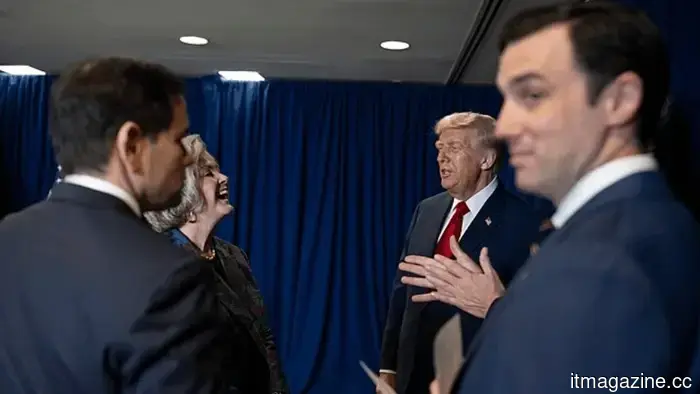 Anthropic's Amodei has a meeting with Wiles and Bessent at the White House regarding access to Mythos and the standoff with the Pentagon.
Anthropic CEO Amodei engaged in "productive" discussions with Wiles and Bessent at the White House regarding access to Mythos, indicating a potential easing of the conflict surrounding the Pentagon's blacklisting.
Anthropic's Amodei has a meeting with Wiles and Bessent at the White House regarding access to Mythos and the standoff with the Pentagon.
Anthropic CEO Amodei engaged in "productive" discussions with Wiles and Bessent at the White House regarding access to Mythos, indicating a potential easing of the conflict surrounding the Pentagon's blacklisting.
 Palantir, Thales, and a startup are in competition to develop the FAA's predictive AI for air traffic.
The FAA's SMART system can forecast air traffic conflicts two hours in advance. After systemic issues were revealed at LaGuardia, Palantir, Thales, and Air Space Intelligence are vying for the contract.
Palantir, Thales, and a startup are in competition to develop the FAA's predictive AI for air traffic.
The FAA's SMART system can forecast air traffic conflicts two hours in advance. After systemic issues were revealed at LaGuardia, Palantir, Thales, and Air Space Intelligence are vying for the contract.
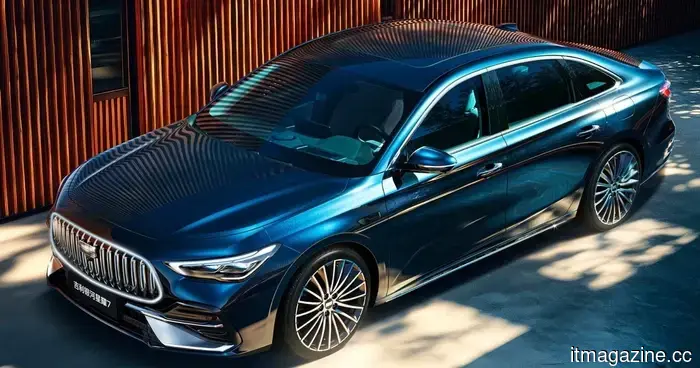 Volvo's parent company has just introduced a $16,000 electric vehicle that appears surprisingly luxurious.
Geely has initiated presales for the Galaxy Starshine 7 in China, an electric sedan priced from approximately $16,000, featuring elegant design and dual-motor capabilities.
Volvo's parent company has just introduced a $16,000 electric vehicle that appears surprisingly luxurious.
Geely has initiated presales for the Galaxy Starshine 7 in China, an electric sedan priced from approximately $16,000, featuring elegant design and dual-motor capabilities.
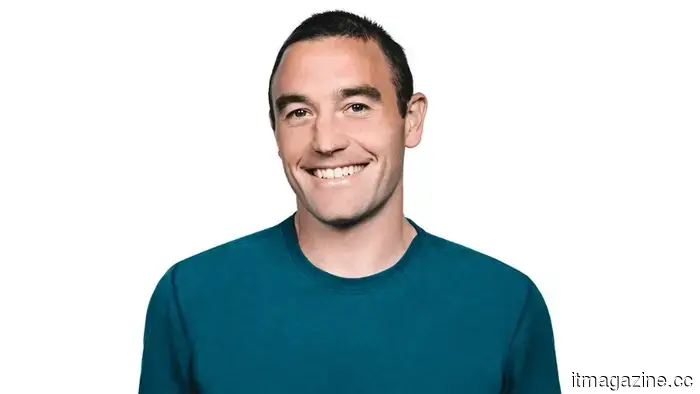 OpenAI experiences a triple departure in one day, losing its product chief, the head of Sora, and the enterprise CTO.
Kevin Weil, Bill Peebles, and Srinivas Narayanan depart from OpenAI as the organization disbands Sora and disassembles OpenAI for Science, marking the continuation of a leadership exodus that has lasted two years.
OpenAI experiences a triple departure in one day, losing its product chief, the head of Sora, and the enterprise CTO.
Kevin Weil, Bill Peebles, and Srinivas Narayanan depart from OpenAI as the organization disbands Sora and disassembles OpenAI for Science, marking the continuation of a leadership exodus that has lasted two years.
 Europe's €80 billion investment of public funds in venture capital and scale-ups encounters fundamental growth challenges.
The EIF's €15B ETCI 2 fund aims for €80B in scaleup financing, yet Europe's 80% scaleup shortfall and unprofitable unicorns indicate that merely providing capital will not suffice to bridge the gap with the US.
Europe's €80 billion investment of public funds in venture capital and scale-ups encounters fundamental growth challenges.
The EIF's €15B ETCI 2 fund aims for €80B in scaleup financing, yet Europe's 80% scaleup shortfall and unprofitable unicorns indicate that merely providing capital will not suffice to bridge the gap with the US.
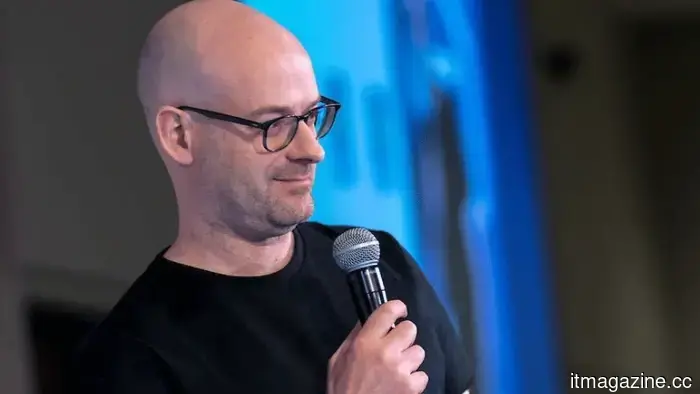 NVIDIA did not invest in Xanadu, yet it still turned its CEO into a billionaire.
Xanadu Quantum's stock skyrocketed nearly five times within six sessions following the validation of photonic quantum computing through NVIDIA's Ising AI models and NVQLink architecture, resulting in CEO Weedbrook becoming a billionaire.
NVIDIA did not invest in Xanadu, yet it still turned its CEO into a billionaire.
Xanadu Quantum's stock skyrocketed nearly five times within six sessions following the validation of photonic quantum computing through NVIDIA's Ising AI models and NVQLink architecture, resulting in CEO Weedbrook becoming a billionaire.
Europe's €80 billion investment in public funding for venture capital and scaleups encounters fundamental growth obstacles.
The EIF's €15 billion ETCI 2 fund aims for €80 billion in scaleup financing, yet the 80% scaleup shortfall in Europe and the presence of unprofitable unicorns indicate that simply providing capital may not be enough to bridge the gap with the US.