
Helical secures $10 million in seed funding to transform biological foundation models into systems.
The startup founded in Luxembourg is already producing for several top-20 global pharmaceutical companies, including a public partnership with Pfizer. Its initial funding round of $10 million is led by redalpine, with contributions from the CEOs of Cohere and HuggingFace among the angel investors.
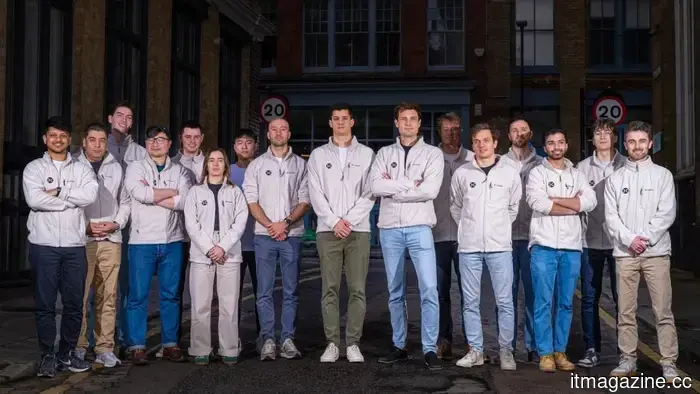
Helical, a London-based pharmaceutical AI company established by three childhood friends from Luxembourg, has secured $10 million in a seed funding round led by redalpine, with support from Gradient, BoxGroup, and Frst. Noteworthy angel investors include Aidan Gomez, CEO of Cohere; Clément Delangue, CEO of HuggingFace; and professional football player Mario Goetze.
This funding will facilitate Helical’s expansion into additional top-20 pharmaceutical programs and the growth of its science and engineering team. The company was founded by Rick Schneider, Maxime Allard, and Mathieu Klop, who were school friends and took different paths to address a common issue. Schneider developed technology at Amazon before assisting the German enterprise software firm Celonis in scaling its operations in France and Japan. Allard led data science teams at IBM before pursuing a PhD focusing on reinforcement learning and robotics, while Klop became a cardiologist and genomics researcher.
As biological foundation models began to emerge, the three recognized a shared gap: the models that could revolutionize drug discovery were progressing faster than the necessary application infrastructure to implement them on a large scale. Helical’s premise is that bio foundation models, which are AI systems trained on extensive genomic, transcriptomic, and proteomic datasets, have already reached a quality level that makes computational hypothesis testing valuable in pharmaceutical research.
However, the intermediary layer connecting a model’s output to scientific decisions has not advanced accordingly. This results in bench scientists and ML engineers working in isolation, teams recreating individual notebooks for each program, and analyses that are challenging to replicate or transfer across different disease areas. Helical develops the infrastructure to bridge this gap through its platform, which consists of two components: a Virtual Lab for biologists and translational scientists, and a Model Factory for ML engineers and data scientists. Both functions utilize shared data and models to generate consistent, auditable outcomes.
The company is currently in production with several top-20 global pharmaceutical firms. Its publicly acknowledged collaborations include projects with Pfizer focused on predictive blood-based safety biomarkers and with Tanabe Pharma America on AI-driven target discovery for neurodegenerative diseases like ALS. In these deployments, Helical claims teams have shortened discovery timelines from years to weeks. The broader industry landscape provides significant context for this ambition: global pharmaceutical R&D expenditures exceed $300 billion each year, the average cost to bring a single drug to market exceeds $2 billion, timelines can extend beyond a decade, and over 90% of candidates entering clinical trials fail to gain approval.
Daniel Graf, General Partner at redalpine, characterized the investment as a bet on the shift “from siloed AI models to integrated virtual AI labs” as biological foundation models and general language reasoning begin to merge. This funding round builds on a previous €2.2 million raised in 2024 from Frst, BoxGroup, and angels including Gomez and Delangue, who are also participating as investors in this latest round.
Other articles
 Beatbot Sora 70 Review: The Wireless 4-in-1 Robot That Effectively Cleans Your Tanning Ledge
The Beatbot Sora 70 avoids flashy technology and offers practical features that effectively ensure a clean pool.
Beatbot Sora 70 Review: The Wireless 4-in-1 Robot That Effectively Cleans Your Tanning Ledge
The Beatbot Sora 70 avoids flashy technology and offers practical features that effectively ensure a clean pool.
 Stanford's yearly AI report reveals a divide between those immersed in AI and the general public.
The 2026 AI Index from Stanford reveals a significant disagreement between AI specialists and the general public regarding almost all aspects of AI's future. Just 10% of Americans feel more enthusiasm than apprehension about it.
Stanford's yearly AI report reveals a divide between those immersed in AI and the general public.
The 2026 AI Index from Stanford reveals a significant disagreement between AI specialists and the general public regarding almost all aspects of AI's future. Just 10% of Americans feel more enthusiasm than apprehension about it.
 Europe's crucial industrial decarbonisation initiative receives a boost.
Stegra has obtained €1.4 billion in new funding, spearheaded by a consortium from Wallenberg Investments, providing complete financial backing for the completion of its Boden green steel facility.
Europe's crucial industrial decarbonisation initiative receives a boost.
Stegra has obtained €1.4 billion in new funding, spearheaded by a consortium from Wallenberg Investments, providing complete financial backing for the completion of its Boden green steel facility.
 TCL's upcoming gaming monitor may achieve an impressive refresh rate of 640Hz.
The suggested 640Hz dual-mode gaming panel from TCL CSOT represents a notable advance compared to the offerings of most monitors today, employing a unique 4x refresh rate multiplier that may provide competitive gamers with an advantage.
TCL's upcoming gaming monitor may achieve an impressive refresh rate of 640Hz.
The suggested 640Hz dual-mode gaming panel from TCL CSOT represents a notable advance compared to the offerings of most monitors today, employing a unique 4x refresh rate multiplier that may provide competitive gamers with an advantage.
 Microsoft has significantly increased the prices of Surface laptops and tablets.
Microsoft has raised prices for its existing Surface devices overall, attributing the increase to higher costs for memory and components, with flagship models seeing hikes of up to $500 compared to their original launch prices.
Microsoft has significantly increased the prices of Surface laptops and tablets.
Microsoft has raised prices for its existing Surface devices overall, attributing the increase to higher costs for memory and components, with flagship models seeing hikes of up to $500 compared to their original launch prices.
 France is wagering €500 million that quantum computing is the technological competition Europe can ultimately triumph in.
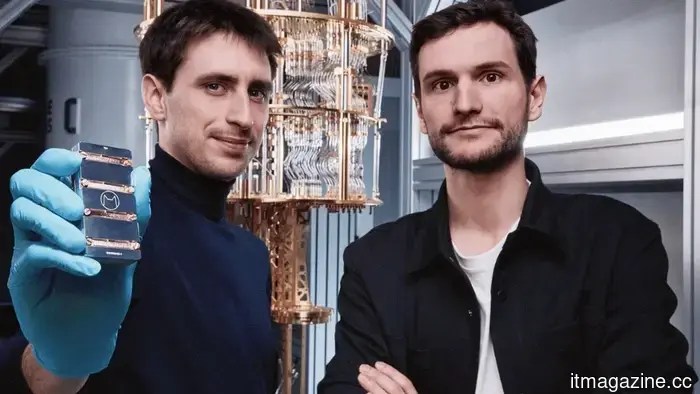
Five startups from France are vying for €500 million in government funding to develop fault-tolerant quantum computers, with Alice & Bob's cat qubits becoming a strong competitor against their US counterparts.
France is wagering €500 million that quantum computing is the technological competition Europe can ultimately triumph in.
Five startups from France are vying for €500 million in government funding to develop fault-tolerant quantum computers, with Alice & Bob's cat qubits becoming a strong competitor against their US counterparts.
Helical secures $10 million in seed funding to transform biological foundation models into systems.
Helical has secured $10 million to develop the application layer that enables the reproducibility of bio foundation models in pharmaceutical research and development. It is already in use with Pfizer.