
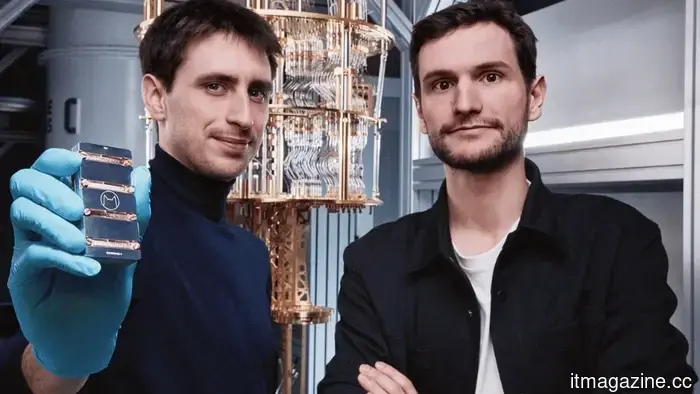
France is investing €500 million in the hope that quantum computing is the technological competition Europe can ultimately succeed in.
For the past decade, Europe has observed as American and Chinese firms have dominated major technological advancements such as cloud computing, mobile technologies, social media, and artificial intelligence. Quantum computing could be a notable exception. A group of French startups, supported by €500 million in government investment and anchored by top-tier physics research, is positioning France as a serious competitor in a field where traditional advantages matter less than one might think.
At the core of this French initiative is Alice & Bob, a startup located in Paris. Their unique “cat qubit” technology, inspired by Schrödinger’s thought experiment, addresses a key challenge in the quantum field: error management. Quantum computers process individual particles, which are extremely sensitive; any interaction with the environment can corrupt calculations. Most current solutions counteract this by employing significant redundancy, relying on thousands of physical qubits to yield a single dependable “logical” qubit. In contrast, Alice & Bob’s cat qubits are engineered to autonomously correct specific errors at the hardware level, potentially reducing the number of required physical qubits by a large margin.
“It’s not about speed,” explains co-founder and CEO Théau Peronnin, who established the company in 2020 alongside Raphaël Lescanne. “It’s about achieving such a substantial speed increase that it transforms what is possible.” In January 2025, the company secured €100 million in a Series B funding round, led by Future French Champions, AXA Venture Partners, and Bpifrance, bringing total investment to €130 million. They are now allocating $50 million toward a new laboratory north of Paris, which will feature a clean room for in-house chip production and a testing facility for progressively larger systems.
Five companies, five qubit designs
Alice & Bob is not alone in this endeavor. France’s PROQCIMA initiative, a government program aimed at developing a fault-tolerant quantum computer demonstrator with 128 logical qubits by 2030, and a commercial system featuring 2,048 logical qubits by 2035, has chosen five companies to participate in its initial €500 million phase: Alice & Bob (cat qubits), Pasqal (neutral atoms), Quandela (photonics), Quobly (silicon spin), and C12 Quantum Electronics (carbon nanotubes). The program unfolds as a competitive process: after four years, the top three approaches will be selected, and after eight years, only two will remain.
This diversity is a strategic choice. Rather than committing to a single qubit architecture, as effectively done by the US with superconducting circuits, France is investing in multiple parallel approaches, each offering distinct benefits. Pasqal, which intends to go public at a projected $2 billion value, already has neutral-atom quantum computers operational in high-performance computing settings across Europe. Quobly achieved a significant milestone in December 2025 when its isotopically enhanced silicon wafers began production on STMicroelectronics’ 300mm line in Crolles, marking the first integration into a large-scale commercial semiconductor facility. Quandela has collaborated with OVHcloud to make its processors accessible via a sovereign cloud infrastructure by mid-2026.
Olivier Ezratty, an academic whose extensive work “Understanding Quantum Technologies” has become a key reference, notes that the French firms hold a common advantage: lower machinery and energy expenses compared to American counterparts. In a domain where cryogenic cooling and error correction lead to high power consumption, this advantage could be more impactful than sheer qubit counts.
The competitive environment
France is not the sole European nation with quantum aspirations. Finland's IQM announced in February its plans to become the first publicly listed European quantum company through a $1.8 billion SPAC merger, with a primary listing on the NYSE and a potential secondary listing in Helsinki. IQM has raised over $600 million thus far and already operates superconducting quantum computers. The UK has entities like Oxford Quantum Circuits and Riverlane, with Riverlane focused on quantum operating systems.
American companies remain significant competitors. Google, which acquired the cat-qubit-adjacent startup Atlantic Quantum in October 2025, along with IBM and numerous well-capitalized rivals, possess deeper financial resources and larger engineering teams. However, Peronnin believes the playing field is less uneven than it seems. “Ultimately, it’s a mathematical challenge,” he remarks. “There’s no unfair advantage stemming from legacy technologies like classical computing, so we have no reason to hold back.”
The pipeline of physics talent bolsters his confidence. France has produced three Nobel Prize-winning physicists recently: Serge Haroche (2012) for quantum optics, Alain Aspect (2022) for experiments on quantum entanglement, and Albert Fert (2007) for achievements in spintronics, all from prestigious institutions like École Polytechnique and École Normale Supérieure that contribute directly to the country’s quantum ecosystem. Both founders
Other articles
 Amazon has reached an agreement to purchase Globalstar for $11.6 billion.
Amazon has consented to purchase Globalstar in a deal worth $11.6 billion and will handle the powering of Emergency SOS on the iPhone. The Amazon Leo D2D service is set to launch in 2028.
Amazon has reached an agreement to purchase Globalstar for $11.6 billion.
Amazon has consented to purchase Globalstar in a deal worth $11.6 billion and will handle the powering of Emergency SOS on the iPhone. The Amazon Leo D2D service is set to launch in 2028.
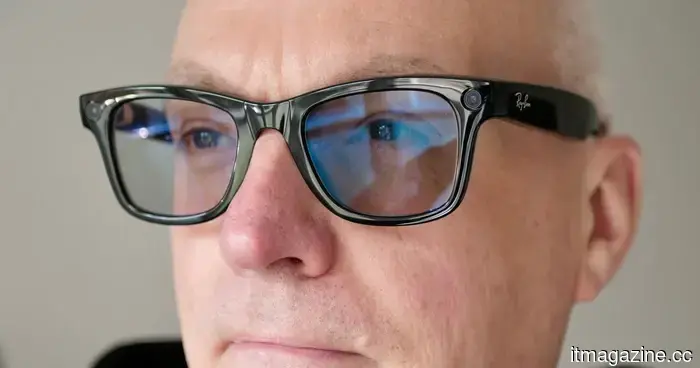 Meta is integrating facial recognition into its glasses, causing dissatisfaction among civil rights organizations.
More than 70 civil rights organizations are urging Meta to abandon its proposed facial recognition feature for Ray-Ban smart glasses before it launches, labeling it as a device for stalkers and surveillance.
Meta is integrating facial recognition into its glasses, causing dissatisfaction among civil rights organizations.
More than 70 civil rights organizations are urging Meta to abandon its proposed facial recognition feature for Ray-Ban smart glasses before it launches, labeling it as a device for stalkers and surveillance.
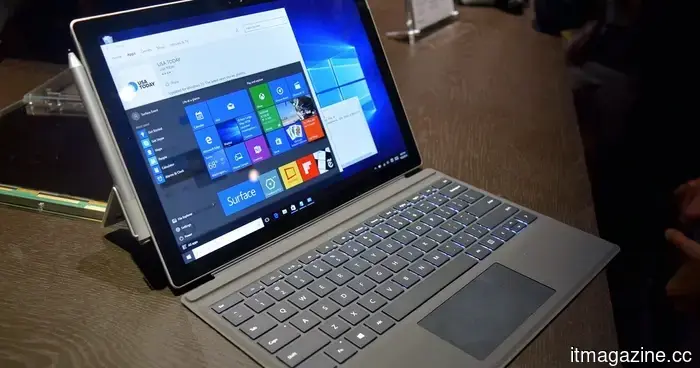 Microsoft has increased the prices of its Surface laptops, making the least expensive model now twice as costly as the MacBook Neo.
Ugh, welcome to the RAMpocalypse!
Microsoft has increased the prices of its Surface laptops, making the least expensive model now twice as costly as the MacBook Neo.
Ugh, welcome to the RAMpocalypse!
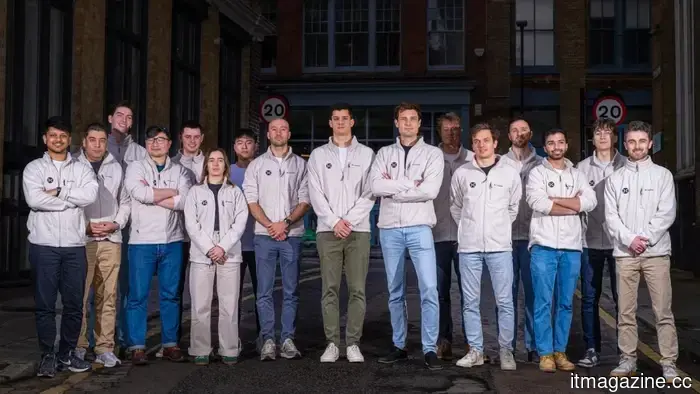 Helical secures $10 million in seed funding to develop bio foundation models into functional systems.
Helical has secured $10 million to develop the application layer that ensures the reproducibility of bio foundation models in pharmaceutical research and development. The application is already in use with Pfizer.
Helical secures $10 million in seed funding to develop bio foundation models into functional systems.
Helical has secured $10 million to develop the application layer that ensures the reproducibility of bio foundation models in pharmaceutical research and development. The application is already in use with Pfizer.
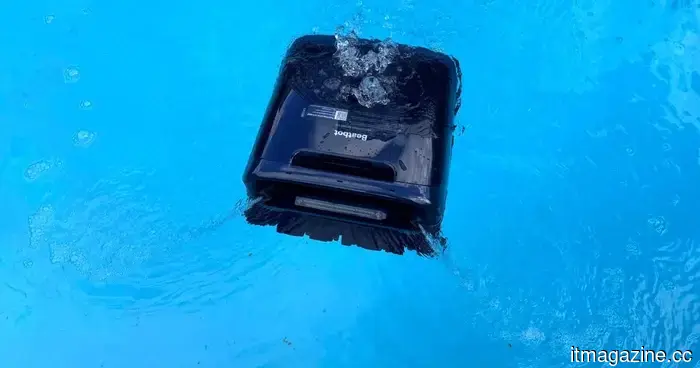 Beatbot Sora 70 Review: The Wireless 4-in-1 Robot That Effectively Cleans Your Tanning Ledge
The Beatbot Sora 70 avoids flashy technology and offers practical features that effectively ensure a clean pool.
Beatbot Sora 70 Review: The Wireless 4-in-1 Robot That Effectively Cleans Your Tanning Ledge
The Beatbot Sora 70 avoids flashy technology and offers practical features that effectively ensure a clean pool.
 Why contemporary workplaces are reconsidering hydration and its impact on employee performance
Explore the reasons behind the increasing emphasis on hydration in contemporary work environments and how enhanced access to water can boost employee productivity, concentration, and overall performance.
Why contemporary workplaces are reconsidering hydration and its impact on employee performance
Explore the reasons behind the increasing emphasis on hydration in contemporary work environments and how enhanced access to water can boost employee productivity, concentration, and overall performance.
France is investing €500 million in the hope that quantum computing is the technological competition Europe can ultimately succeed in.
Five French startups are in competition for €500 million in government funding to develop fault-tolerant quantum computers, with Alice & Bob's cat qubits standing out as a strong competitor against American rivals.