
Amazon has reached an agreement to purchase Globalstar for $11.6 billion.
Amazon and Apple have entered into a separate agreement allowing Amazon Leo to keep enabling satellite functions on the iPhone and Apple Watch. This arrangement provides Amazon with the spectrum, infrastructure, and operational know-how necessary to launch direct-to-device satellite services starting in 2028, effectively streamlining years of development into one deal.
On Tuesday, the companies announced an agreement for Amazon to acquire Globalstar in a deal valued at approximately $11.6 billion, confirming weeks of speculation regarding negotiations.
According to the agreement, Globalstar shareholders can choose to receive either $90 per share in cash or Amazon stock, limited to the same value, which represents a 23.5% premium over Globalstar's closing price on Monday. Cash options will be limited to 40% of total shares, with any excess automatically converted into stock. The transaction is anticipated to close in 2027, pending regulatory approvals.
Around 58% of Globalstar’s combined voting power has already given approval for the deal through written consent. In addition to the acquisition, Amazon and Apple have signed an agreement for Amazon Leo, the low Earth orbit satellite network, to continue powering satellite functionalities on the iPhone and Apple Watch, such as Emergency SOS via satellite, Messages, Find My, and Roadside Assistance.
Currently, Globalstar provides these services for the iPhone 14 and later models as well as the Apple Watch Ultra 3, thanks to a partnership formed following Apple’s $1.5 billion investment in Globalstar in 2024, which secured Apple a roughly 20% equity stake and access to 85% of Globalstar's network capacity.
The existing agreement with Apple was a key factor in the discussions leading up to this announcement: the acquisition could not proceed without addressing how the critical Emergency SOS feature on the iPhone would continue to operate. This dual announcement addresses that issue.
What Amazon is primarily acquiring is spectrum and time. Globalstar possesses globally harmonized L-band and S-band spectrum licenses, finite radio frequencies that cannot be easily duplicated by launching more satellites, and are vital for direct-to-device (D2D) services, enabling satellites to reach mobile phones directly without needing specialized hardware.
Currently, Amazon Leo has about 180 to 200 satellites in orbit. In contrast, SpaceX's Starlink operates more than 10,000 satellites. Amazon has committed nearly $17 billion in capital expenditures to develop Leo and is under pressure from the FCC regarding a deployment deadline set for mid-2026.
By acquiring Globalstar’s operational framework, which includes a ground station network spanning 24 global gateways and licensed spectrum across over 120 countries, Amazon condenses years of internal development into a single deal.
Starting in 2028, Amazon Leo will launch its own next-generation D2D satellite system intended to provide voice, data, and messaging directly to mobile phones and cellular devices with significantly greater spectrum efficiency compared to existing direct-to-cell services.
Globalstar’s current satellite fleet, along with new satellites being produced by MDA Space, will work in conjunction with Amazon Leo’s broadband network to create an integrated system. Amazon asserts that the complete Leo network will possess sufficient capacity to support hundreds of millions of customer endpoints worldwide.
Globalstar, which has been in operation for over 30 years, became profitable in 2025, reporting $273 million in revenue. Its CEO, Paul Jacobs, presented the deal as a natural outcome of the company's long-term vision of connecting users anytime and anywhere.
Apple’s Greg Joswiak highlighted the Emergency SOS service's successful track record, which has included saving lives in various situations, including a scout troop stranded during a winter hike in British Columbia and a woman who was rescued after her car fell down a 250-foot cliff in Colorado, and confirmed the longstanding relationship between Amazon and Apple through AWS.
Other articles
 Hexagon has purchased Waygate Technologies for $1.45 billion.
Hexagon has reached an agreement to purchase Waygate Technologies from Baker Hughes for $1.45 billion in cash. Waygate produces $630 million in revenue.
Hexagon has purchased Waygate Technologies for $1.45 billion.
Hexagon has reached an agreement to purchase Waygate Technologies from Baker Hughes for $1.45 billion in cash. Waygate produces $630 million in revenue.
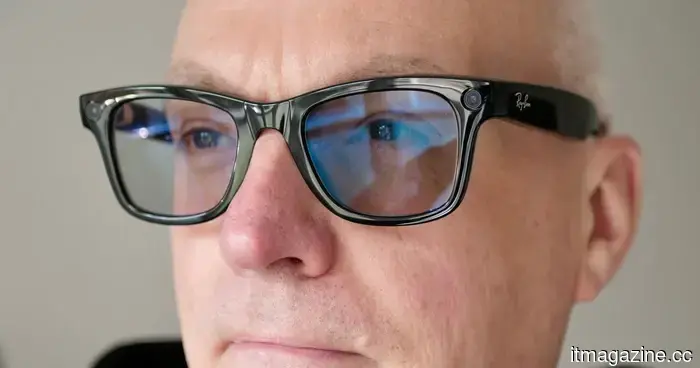 Meta is integrating facial recognition technology into its glasses, and civil rights organizations are expressing their dissatisfaction with this development.
More than 70 civil rights organizations are urging Meta to abandon its proposed facial recognition feature for Ray-Ban smart glasses before it is launched, labeling it as a device for stalkers and surveillance.
Meta is integrating facial recognition technology into its glasses, and civil rights organizations are expressing their dissatisfaction with this development.
More than 70 civil rights organizations are urging Meta to abandon its proposed facial recognition feature for Ray-Ban smart glasses before it is launched, labeling it as a device for stalkers and surveillance.
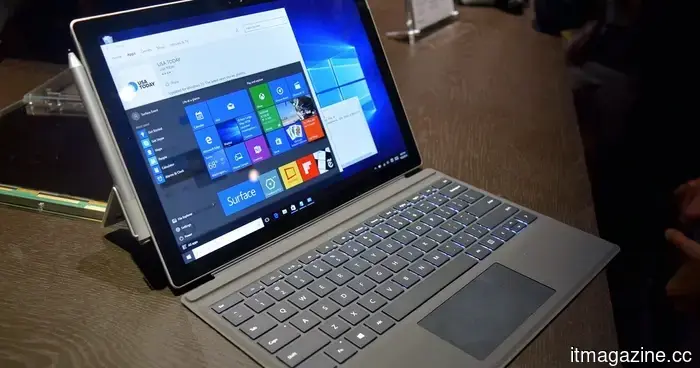 Microsoft has increased the prices of its Surface laptops, making the least expensive model now twice as costly as the MacBook Neo.
Ugh, welcome to the RAMpocalypse!
Microsoft has increased the prices of its Surface laptops, making the least expensive model now twice as costly as the MacBook Neo.
Ugh, welcome to the RAMpocalypse!
 Stanford's yearly AI report reveals a disparity between those within the AI field and the general public.
The 2026 AI Index from Stanford indicates that AI specialists and the general public have differing views on almost all aspects of AI's future. Merely 10% of Americans feel more excited than worried about it.
Stanford's yearly AI report reveals a disparity between those within the AI field and the general public.
The 2026 AI Index from Stanford indicates that AI specialists and the general public have differing views on almost all aspects of AI's future. Merely 10% of Americans feel more excited than worried about it.
 OpenAI's valuation of $852 billion is facing criticism from its investors.
Several investors in OpenAI are raising doubts about its $852 billion valuation as the company updates its plans. A confidential memo suggests that Anthropic has exaggerated its $30 billion run rate by $8 billion.
OpenAI's valuation of $852 billion is facing criticism from its investors.
Several investors in OpenAI are raising doubts about its $852 billion valuation as the company updates its plans. A confidential memo suggests that Anthropic has exaggerated its $30 billion run rate by $8 billion.
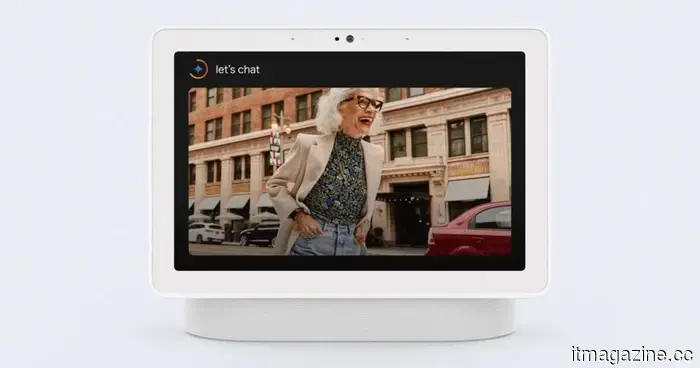 Google Home is receiving numerous enhancements to improve your interactions with Gemini.
Google is tackling the annoyance of being interrupted mid-sentence with the newest set of Gemini for Home updates, along with several useful enhancements.
Google Home is receiving numerous enhancements to improve your interactions with Gemini.
Google is tackling the annoyance of being interrupted mid-sentence with the newest set of Gemini for Home updates, along with several useful enhancements.
Amazon has reached an agreement to purchase Globalstar for $11.6 billion.
Amazon has consented to purchase Globalstar in a deal worth $11.6 billion and will handle the powering of Emergency SOS on the iPhone. The Amazon Leo D2D service is set to launch in 2028.