
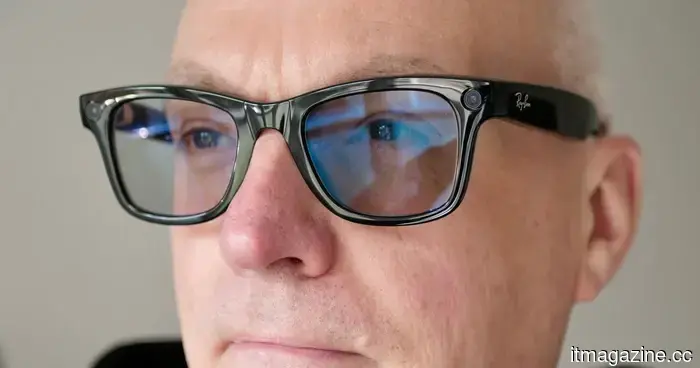
Meta is integrating facial recognition into its glasses, causing dissatisfaction among civil rights organizations.
Envision entering a room where someone's glasses are quietly determining your identity. This is precisely what civil liberties organizations are striving to halt.
A coalition comprising over 70 civil liberties, domestic violence, reproductive rights, and LGBTQ+ organizations, including the ACLU, Fight for the Future, and Access Now, among others, has addressed a letter to Meta CEO Mark Zuckerberg insisting that the company abandon a rumored facial recognition feature intended for its Meta Ray-Ban smart glasses before it is made available to consumers.
As reported by Wired, this feature, known internally as “Name Tag,” would enable wearers to direct their glasses towards a stranger and retrieve information about them through Meta’s AI assistant. Engineers are reportedly considering two versions: one that identifies individuals already connected to the wearer on Meta platforms, and a broader version that could recognize anyone with a public Facebook or Instagram account.
The civil rights coalition contends that no amount of design modifications or opt-out choices can render this feature safe. People on the street cannot provide consent for their identification, and the groups assert that this technology could be misused by stalkers, abusers, or federal law enforcement.
What raises suspicion about the timing?
The situation is further complicated by a leaked internal memo from Meta dated May 2025, which the NY Times reported on. In this memo, the company allegedly indicated plans to launch during a “dynamic political environment,” when civil society organizations might have their focus diverted. The coalition has deemed this “vile behavior,” and justifiably so.
The Meta Ray-Bans have already faced scrutiny after an investigation revealed that the smart glasses were capturing video recordings of users’ private moments for AI training. The proposed facial recognition feature represents another significant breach of customers’ privacy.
Should you be concerned?
If you possess a pair of Ray-Ban Meta glasses, the existing hardware can secretly record video. Integrating facial recognition would mean that anyone you pass could theoretically be silently identified and matched with a repository of personal data, and other Meta Ray-Ban users could do the same to you.
I don’t harbor much hope for privacy and security from a company like Meta, but this venture could lead to unprecedented risks and potentially harm individuals in the real world.
Meta has responded by stating that it does not currently offer this feature and would approach any rollout with careful consideration. Whether this promise will be maintained remains to be seen.
This Android smartwatch application is a blessing if your daily commute makes you weary and sleepy.
A new Wear OS transit alarm utilizes GPS and wrist alerts, allowing you to nap without missing your stop.
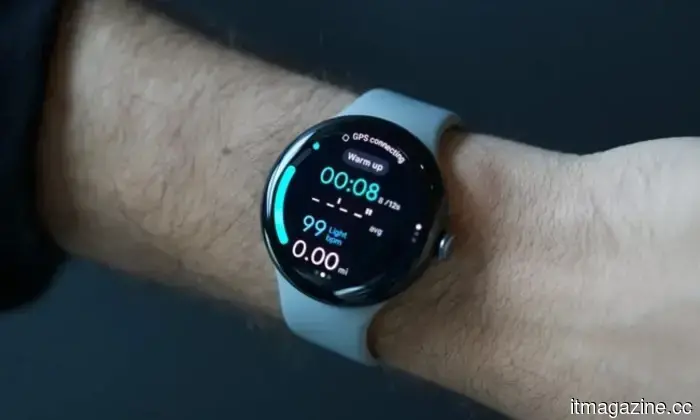
Long commutes can make it easy to doze off at the most inopportune moments, especially when delays and transfers disrupt your schedule. Sleep&Arrive, a new Android smartwatch application now available on Google Play, addresses this issue by using your location to awaken you close to your destination rather than depending on a fixed alarm.
This concept is especially useful on public transport, where arrival times can vary enough to render a standard alarm unreliable. The app also integrates with Wear OS, meaning the wake-up alert can occur on your wrist, which is far less intrusive than a phone suddenly ringing in a quiet train carriage.
Recent heart research presents yet another convincing reason to take smartwatches seriously.
Your smartwatch notifying you of an irregular heartbeat might be more significant than you realize.
Smartwatches have become proficient at detecting atrial fibrillation, the most prevalent heart rhythm disorder worldwide, affecting almost 38 million people globally. However, many individuals dismiss the alerts, reasoning that if they feel fine, it isn’t a serious issue. New research presented at EHRA 2026 in Paris suggests this perspective may need reevaluation.
The study is a post-hoc analysis of two large Swedish screening programs, STROKESTOP and STROKESTOP II, where adults aged 75 to 76 were screened for atrial fibrillation through ECG. Researchers monitored participants for several years to determine who went on to develop heart failure.
Apple's smart glasses may evade the unsettling reputation of Meta Ray-Bans with a subtle design choice.
I appreciate Apple’s approach to privacy — though it won’t address all concerns.
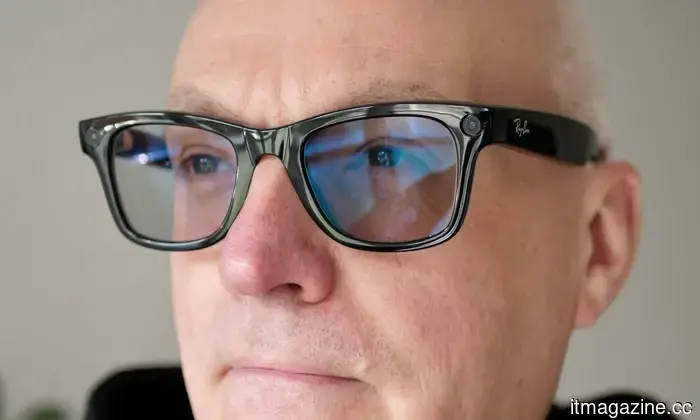
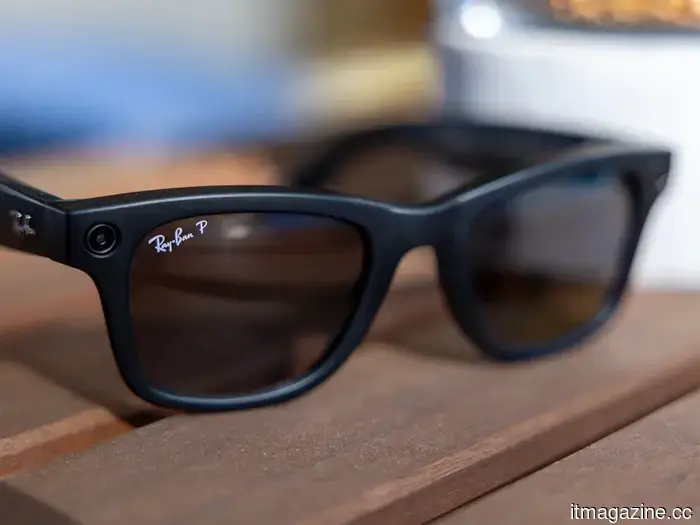
Apple’s forthcoming smart glasses could navigate one of the primary challenges facing this category—privacy worries—by reconsidering something as basic as the camera indicator light. A recent Bloomberg report suggests the company is developing display-free smart glasses emphasizing everyday functionality, with a design that may feel less intrusive than current models.
Internally codenamed N50, the device is projected to launch around 2026 or 2027 and is designed to function more as an accessory to the iPhone rather than a standalone augmented reality device. Instead of a display, the glasses will offer features such as photo and video capture, voice interactions via Siri, notifications, and media playback.




Other articles
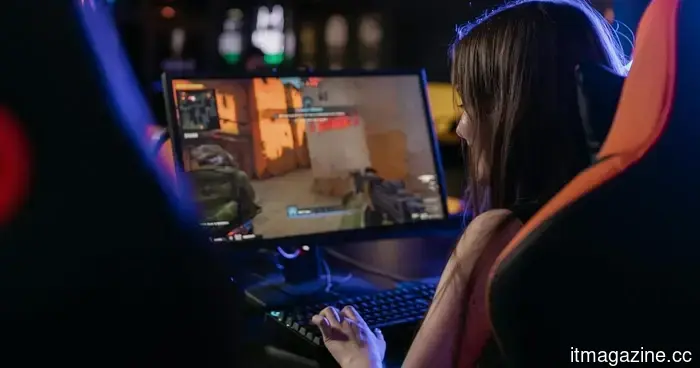 TCL's upcoming gaming monitor may achieve an impressive refresh rate of 640Hz.
The suggested 640Hz dual-mode gaming panel from TCL CSOT represents a notable advance compared to the offerings of most monitors today, employing a unique 4x refresh rate multiplier that may provide competitive gamers with an advantage.
TCL's upcoming gaming monitor may achieve an impressive refresh rate of 640Hz.
The suggested 640Hz dual-mode gaming panel from TCL CSOT represents a notable advance compared to the offerings of most monitors today, employing a unique 4x refresh rate multiplier that may provide competitive gamers with an advantage.
 The $852 billion valuation of OpenAI is being questioned by its own investors.
Certain investors in OpenAI are raising doubts about its $852 billion valuation as the company updates its roadmap. A leaked memo alleges that Anthropic has exaggerated its $30 billion run rate by $8 billion.
The $852 billion valuation of OpenAI is being questioned by its own investors.
Certain investors in OpenAI are raising doubts about its $852 billion valuation as the company updates its roadmap. A leaked memo alleges that Anthropic has exaggerated its $30 billion run rate by $8 billion.
 Amazon has reached an agreement to purchase Globalstar in a deal valued at $11.6 billion.
Amazon has reached an agreement to purchase Globalstar for $11.6 billion and will assume responsibility for powering the Emergency SOS feature on the iPhone. The Amazon Leo D2D service is set to launch in 2028.
Amazon has reached an agreement to purchase Globalstar in a deal valued at $11.6 billion.
Amazon has reached an agreement to purchase Globalstar for $11.6 billion and will assume responsibility for powering the Emergency SOS feature on the iPhone. The Amazon Leo D2D service is set to launch in 2028.
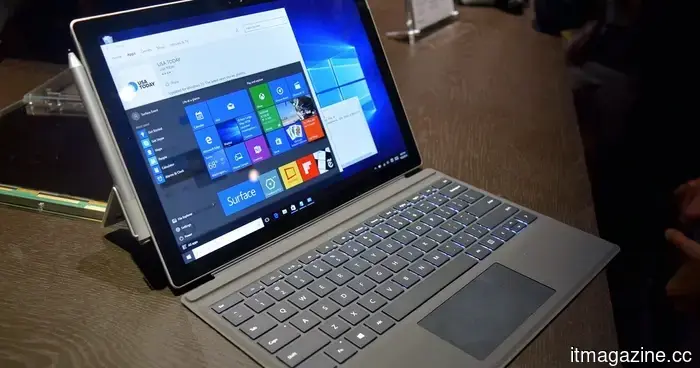 Microsoft has increased the prices of its Surface laptops, making the least expensive model now twice as costly as the MacBook Neo.
Ugh, welcome to the RAMpocalypse!
Microsoft has increased the prices of its Surface laptops, making the least expensive model now twice as costly as the MacBook Neo.
Ugh, welcome to the RAMpocalypse!
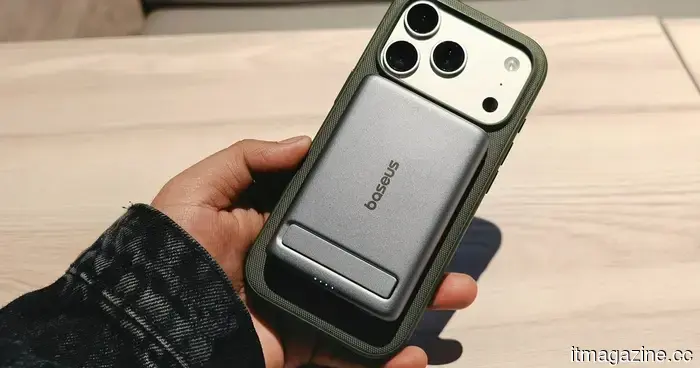 Baseus PicoGo AM31 Qi2 power bank review: I've finally discovered my ideal companion for the iPhone.
The Baseus Picogo AM31 Qi2 Power Bank provides sufficient power to get your phone through the final hours of the day, along with numerous additional features and a compact design.
Baseus PicoGo AM31 Qi2 power bank review: I've finally discovered my ideal companion for the iPhone.
The Baseus Picogo AM31 Qi2 Power Bank provides sufficient power to get your phone through the final hours of the day, along with numerous additional features and a compact design.
 Amazon has reached an agreement to purchase Globalstar in a deal valued at $11.6 billion.
Amazon has reached an agreement to purchase Globalstar in a deal valued at $11.6 billion and will assume control of the Emergency SOS feature on iPhone. The Amazon Leo D2D service is set to launch in 2028.
Amazon has reached an agreement to purchase Globalstar in a deal valued at $11.6 billion.
Amazon has reached an agreement to purchase Globalstar in a deal valued at $11.6 billion and will assume control of the Emergency SOS feature on iPhone. The Amazon Leo D2D service is set to launch in 2028.
Meta is integrating facial recognition into its glasses, causing dissatisfaction among civil rights organizations.
More than 70 civil rights organizations are urging Meta to abandon its proposed facial recognition feature for Ray-Ban smart glasses before it launches, labeling it as a device for stalkers and surveillance.