
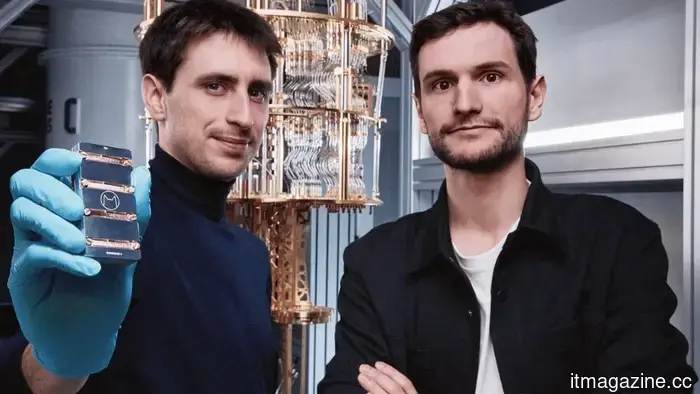
France is investing €500 million, believing that quantum computing is the technological competition that Europe can ultimately succeed in.
Europe has spent the last decade observing American and Chinese companies dominate every major technology trend, including cloud, mobile, social, and AI. Quantum computing may be a notable exception. A group of French startups, supported by €500 million in government funding and bolstered by some of the strongest physics research globally, is positioning France as a formidable competitor in this field where established advantages mean little.
At the forefront of France’s initiative is Alice & Bob, a startup based in Paris that employs “cat qubit” technology, inspired by Schrödinger’s thought experiment, taking a fundamentally different approach to a key issue in the field: errors. Quantum computers manipulate individual particles whose states are so delicate that any interaction with the external environment can disrupt the computation. Most methods counteract this by using massive redundancy, utilizing thousands of physical qubits to create a single reliable “logical” qubit. Alice & Bob’s cat qubits are designed to autonomously correct specific errors at the hardware level, which could significantly reduce the number of required physical qubits.
“It’s not just about being faster,” states co-founder and CEO Théau Peronnin, who launched the company in 2020 alongside Raphaël Lescanne. “It’s about being so dramatically faster that it changes what can be achieved.” The company secured €100 million in a Series B funding round in January 2025, led by Future French Champions, AXA Venture Partners, and Bpifrance, bringing its total funding to €130 million. It is now investing $50 million in a new laboratory north of Paris that will include a clean room for in-house chip fabrication and a testing facility for larger machines.
Five companies, five qubit architectures
Alice & Bob is not operating alone. France’s PROQCIMA program, a government initiative aimed at developing a fault-tolerant quantum computer demonstrator with 128 logical qubits by 2030 and a commercial system with 2,048 logical qubits by 2035, has chosen five companies for its €500 million initial phase: Alice & Bob (cat qubits), Pasqal (neutral atoms), Quandela (photonics), Quobly (silicon spin), and C12 Quantum Electronics (carbon nanotubes). The program is designed as a competition where, after four years, the three most promising strategies will advance, and after eight, only two will remain.
The strategy hinges on diversity. Instead of focusing on a single qubit architecture, as the U.S. has effectively done with superconducting circuits, France is funding multiple approaches, each with its unique benefits. Pasqal, which is planning for a public listing at a valuation of around $2 billion, already has neutral-atom quantum computers in high-performance computing settings throughout Europe. Quobly reached a significant milestone in December 2025 when its isotopically enriched silicon wafers entered STMicroelectronics’ 300mm production line in Crolles, marking the first integration into a high-volume commercial semiconductor fabrication facility. Quandela has teamed up with OVHcloud to make its processors accessible through sovereign cloud infrastructure by mid-2026.
Olivier Ezratty, an academic whose extensive work "Understanding Quantum Technologies" has become a standard reference, points out that French companies share a common advantage: lower machine and energy costs compared to their American counterparts. In a sector where cryogenic cooling and error correction lead to substantial power consumption, this advantage could be more significant than mere qubit counts.
The competitive landscape
France is not the only European nation pursuing quantum ambitions. Finland's IQM announced in February that it would become the first publicly listed European quantum company through a $1.8 billion SPAC merger, with a primary listing on the NYSE and a potential dual listing in Helsinki. IQM has raised over $600 million to date and is already deploying superconducting quantum computers. The UK has companies such as Oxford Quantum Circuits and Riverlane, with the latter focusing on quantum operating systems.
American giants remain significant competitors. Google, which acquired cat-qubit-related startup Atlantic Quantum in October 2025, along with IBM and other well-funded entities, possess larger financial resources and engineering teams. Nevertheless, Peronnin contends that the playing field is more equitable than it seems. “Ultimately, it’s a mathematical challenge,” he comments. “There’s no inherent advantage due to legacy technology like classical computing, so there’s no reason to hold back.”
The pipeline of physics talent reinforces his confidence. France has produced three Nobel Prize-winning physicists in recent years: Serge Haroche (2012) for quantum optics, Alain Aspect (2022) for quantum entanglement experiments, and Albert Fert (2007) for spintronics, all hailing from institutions like École Polytechnique and École Normale Supérieure, which contribute directly to the nation’s quantum ecosystem. Both founders of Alice & Bob are products of this ecosystem.
The gap between promise
Other articles
 We use our phones constantly throughout the day, and researchers have evaluated which ones are the most exhausting.
Scientists developed an AI model that mimics the amount of physical effort exerted by your finger when using a smartphone, and the findings could be quite surprising.
We use our phones constantly throughout the day, and researchers have evaluated which ones are the most exhausting.
Scientists developed an AI model that mimics the amount of physical effort exerted by your finger when using a smartphone, and the findings could be quite surprising.
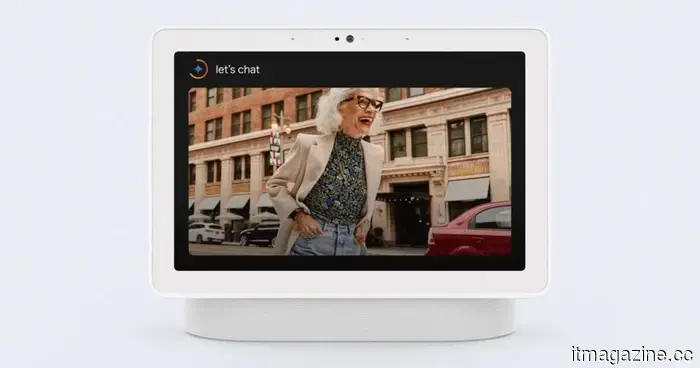 Google Home is receiving numerous enhancements to improve your interactions with Gemini.
Google is tackling the annoyance of being interrupted mid-sentence with the newest set of Gemini for Home updates, along with several useful enhancements.
Google Home is receiving numerous enhancements to improve your interactions with Gemini.
Google is tackling the annoyance of being interrupted mid-sentence with the newest set of Gemini for Home updates, along with several useful enhancements.
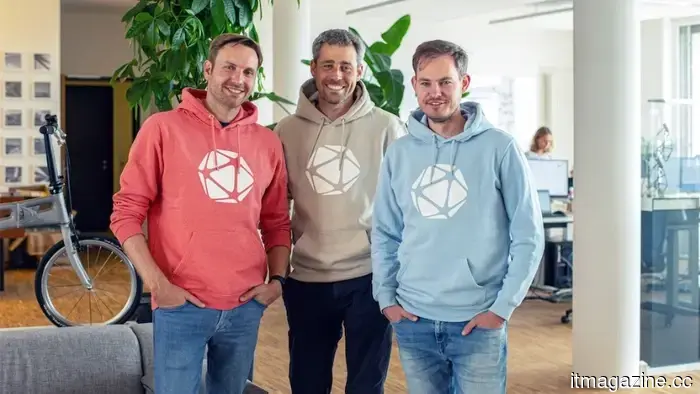 Synera secures $40 million to integrate agentic AI into engineering processes.
Synera has secured $40 million in a Series B funding round to enhance its agentic AI platform for engineering, which is currently being utilized by NASA, BMW, Airbus, Volvo Trucks, and Hyundai.
Synera secures $40 million to integrate agentic AI into engineering processes.
Synera has secured $40 million in a Series B funding round to enhance its agentic AI platform for engineering, which is currently being utilized by NASA, BMW, Airbus, Volvo Trucks, and Hyundai.
 Baseus PicoGo AM31 Qi2 power bank review: I've finally discovered the ideal companion for my iPhone.
The Baseus Picogo AM31 Qi2 Power Bank provides sufficient power to carry your phone through the final hours of the day, accompanied by numerous conveniences and a minimalistic design.
Baseus PicoGo AM31 Qi2 power bank review: I've finally discovered the ideal companion for my iPhone.
The Baseus Picogo AM31 Qi2 Power Bank provides sufficient power to carry your phone through the final hours of the day, accompanied by numerous conveniences and a minimalistic design.
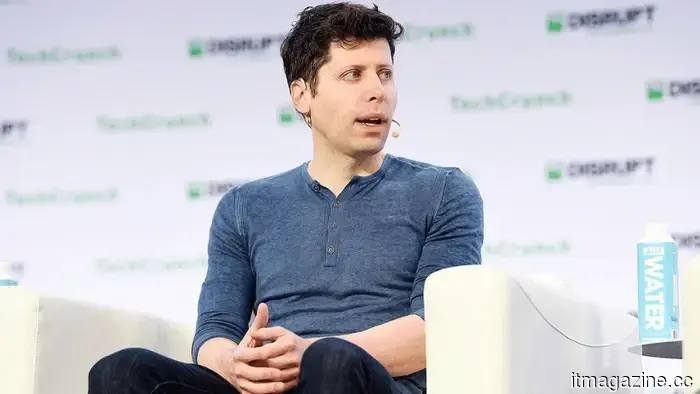 OpenAI's valuation of $852 billion is being questioned by its investors.
Certain investors in OpenAI are raising concerns about its valuation of $852 billion as the company updates its strategic plan. A leaked memo claims that Anthropic has exaggerated its run rate of $30 billion by $8 billion.
OpenAI's valuation of $852 billion is being questioned by its investors.
Certain investors in OpenAI are raising concerns about its valuation of $852 billion as the company updates its strategic plan. A leaked memo claims that Anthropic has exaggerated its run rate of $30 billion by $8 billion.
 Stanford's yearly AI report reveals a divide between those immersed in AI and the general public.
The 2026 AI Index from Stanford reveals a significant disagreement between AI specialists and the general public regarding almost all aspects of AI's future. Just 10% of Americans feel more enthusiasm than apprehension about it.
Stanford's yearly AI report reveals a divide between those immersed in AI and the general public.
The 2026 AI Index from Stanford reveals a significant disagreement between AI specialists and the general public regarding almost all aspects of AI's future. Just 10% of Americans feel more enthusiasm than apprehension about it.
France is investing €500 million, believing that quantum computing is the technological competition that Europe can ultimately succeed in.
Five French startups are vying for €500 million in government funding to develop fault-tolerant quantum computers, with Alice & Bob's cat qubits proving to be a strong competitor against their US counterparts.