
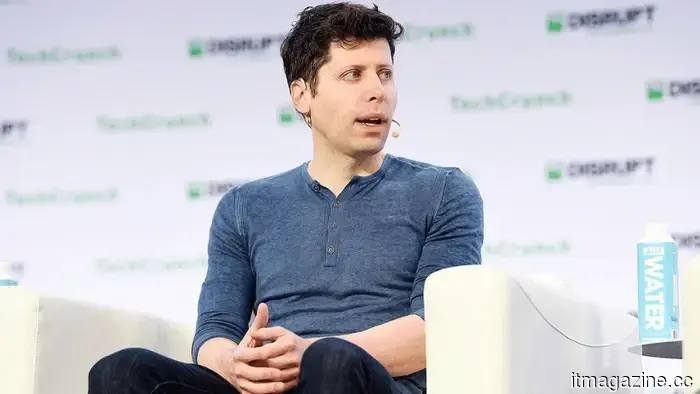
OpenAI's valuation of $852 billion is being questioned by its investors.
Some investors express concern that OpenAI has changed its product roadmap twice within six months, risking a loss of focus ahead of a potential IPO anticipated as soon as the fourth quarter of 2026. The new Chief Revenue Officer of OpenAI has accused Anthropic of exaggerating its $30 billion run rate by $8 billion through questionable accounting practices regarding revenue from cloud partners. Both companies maintain that they adhere to standard accounting techniques.
According to a report from the Financial Times on Tuesday, OpenAI’s $852 billion valuation is drawing scrutiny from some of its investors as the organization shifts its strategy towards the enterprise market. The concerns arise from a period marked by visible strategic instability: OpenAI has revised its product roadmap twice within six months, initially reacting to competitive pressures from Google and later from Anthropic, while also abandoning several initiatives such as its Sora video generation launch and an 'adult' chatbot.
Some investors revealed to the FT that these rapid shifts could expose the company to threats from Anthropic and a resurgent Google, even as it prepares for a potential IPO as early as Q4 2026. The criticism is direct. An early investor commented to the FT, saying, “You have ChatGPT, a billion-user business growing 50-100 percent annually; why are you discussing enterprise and code? It’s a company lacking focus.”
Jai Das, president of Sapphire Ventures, who does not invest in either OpenAI or Anthropic, went so far as to describe OpenAI to the FT as “the Netscape of AI,” making a comparison to the once-dominant browser company that was ultimately surpassed by Microsoft and absorbed by AOL. One investor who has supported both companies remarked that to back OpenAI’s latest funding round, they would need to project an IPO valuation of $1.2 trillion or higher.
OpenAI's leadership responded firmly to the critique. Chief Financial Officer Sarah Friar highlighted the $122 billion fundraising completed last month, described as the largest private round in Silicon Valley's history, with backing from SoftBank, Amazon, Nvidia, Andreessen Horowitz, Sequoia Capital, and Thrive Capital, among over 25 investors, as proof of investor confidence.
“The notion that investors are not supporting our strategy contradicts the facts,” said Friar. “Our fundraising, the largest ever, was oversubscribed, completed in record time, and supported by a diverse group of global investors.”
In a separate statement to CNBC, Friar noted that the enterprise sector now comprises 40% of OpenAI’s total revenue and is on track to equal its consumer business by the close of 2026.
OpenAI is also aiming for 30 gigawatts of computing capacity by 2030, and last week informed investors that it has already secured 8 gigawatts, claiming that Anthropic will not reach that level until the end of 2027.
Central to the competitive concerns is Anthropic's revenue trajectory. The annualized run rate of the Claude-maker jumped from around $9 billion at the end of 2025 to $30 billion by the end of March 2026, primarily driven by the demand for its coding tools.
By its own account, OpenAI achieved $25 billion in annualized revenue in February. The apparent discrepancy prompted a notably strong response from OpenAI’s new Chief Revenue Officer, Denise Dresser, who was appointed in December 2025 after serving as CEO of Slack.
In an internal memo sent to employees on Sunday, Dresser accused Anthropic of inflating its run rate by approximately $8 billion. This accusation is based on a well-established accounting distinction: Anthropic records the full value of revenue generated through its cloud distribution partners, Amazon Web Services and Google Cloud, on a gross basis, while OpenAI reports its revenue share from Microsoft on a net basis, subtracting the partner’s percentage before recognizing it. Both methods are valid under US GAAP. If Dresser’s analysis is accurate, it would suggest that Anthropic’s actual run rate is closer to $22 billion rather than $30 billion.
Anthropic has contested this characterization. A source close to the company informed the FT that Anthropic “recognizes gross revenue from sales through partners because it is the principal in the transaction and the cloud partners serve as the distribution channel,” which is a standard rationale for gross recognition in accounting standards.
Dresser’s memo acknowledged that Anthropic’s “focus on coding provided them with an initial advantage” in the enterprise sector but contended that a narrow, developer-centric approach may become a liability as AI evolves beyond engineering teams. “You do not want to be a single-product entity in a platform competition,” the memo asserted. Additionally, the memo outlined OpenAI’s second-quarter priorities: securing the enterprise model layer with a new model, codenamed ‘Spud’, establishing its Frontier agent platform, expanding through a recently announced partnership with Amazon, and constructing a deployment engine named DeployCo.
Other articles
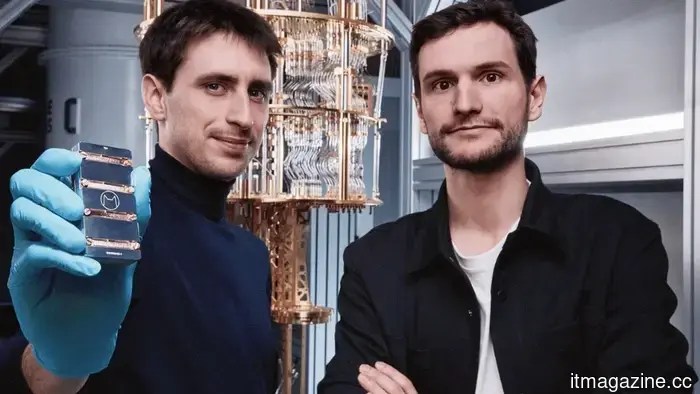 France is wagering €500 million that quantum computing is the technological competition Europe can ultimately triumph in.
Five startups from France are vying for €500 million in government funding to develop fault-tolerant quantum computers, with Alice & Bob's cat qubits becoming a strong competitor against their US counterparts.
France is wagering €500 million that quantum computing is the technological competition Europe can ultimately triumph in.
Five startups from France are vying for €500 million in government funding to develop fault-tolerant quantum computers, with Alice & Bob's cat qubits becoming a strong competitor against their US counterparts.
 Stanford's yearly AI report identifies a divide between AI experts and the general public.
According to Stanford's 2026 AI Index, there is a significant disagreement between AI experts and the general public regarding the future of AI. Merely 10% of Americans feel more optimistic than apprehensive about it.
Stanford's yearly AI report identifies a divide between AI experts and the general public.
According to Stanford's 2026 AI Index, there is a significant disagreement between AI experts and the general public regarding the future of AI. Merely 10% of Americans feel more optimistic than apprehensive about it.
 Hexagon has purchased Waygate Technologies for $1.45 billion.
Hexagon has reached an agreement to purchase Waygate Technologies from Baker Hughes for $1.45 billion in cash. Waygate produces $630 million in revenue.
Hexagon has purchased Waygate Technologies for $1.45 billion.
Hexagon has reached an agreement to purchase Waygate Technologies from Baker Hughes for $1.45 billion in cash. Waygate produces $630 million in revenue.
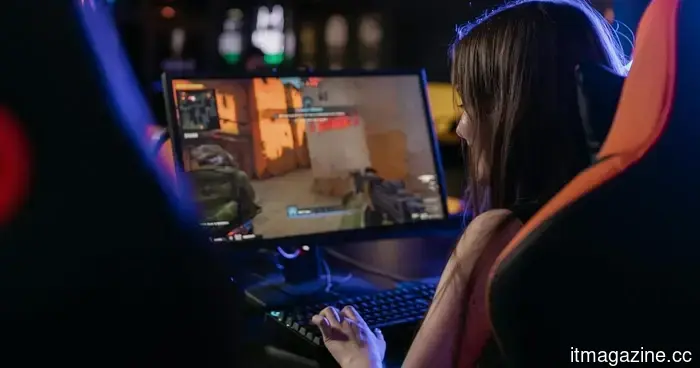 TCL's upcoming gaming monitor may achieve an impressive refresh rate of 640Hz.
The suggested 640Hz dual-mode gaming panel from TCL CSOT represents a notable advance compared to the offerings of most monitors today, employing a unique 4x refresh rate multiplier that may provide competitive gamers with an advantage.
TCL's upcoming gaming monitor may achieve an impressive refresh rate of 640Hz.
The suggested 640Hz dual-mode gaming panel from TCL CSOT represents a notable advance compared to the offerings of most monitors today, employing a unique 4x refresh rate multiplier that may provide competitive gamers with an advantage.
 Why contemporary work environments are reconsidering hydration and its impact on employee performance.
Learn why ensuring proper hydration is increasingly important in today's work environments and how enhanced access to water can boost employee productivity, concentration, and overall effectiveness.
Why contemporary work environments are reconsidering hydration and its impact on employee performance.
Learn why ensuring proper hydration is increasingly important in today's work environments and how enhanced access to water can boost employee productivity, concentration, and overall effectiveness.
 Amazon has finalized an agreement to purchase Globalstar in a deal worth $11.6 billion.
Amazon has reached an agreement to purchase Globalstar for $11.6 billion and will handle the powering of Emergency SOS features on iPhone. The Amazon Leo D2D service is set to launch in 2028.
Amazon has finalized an agreement to purchase Globalstar in a deal worth $11.6 billion.
Amazon has reached an agreement to purchase Globalstar for $11.6 billion and will handle the powering of Emergency SOS features on iPhone. The Amazon Leo D2D service is set to launch in 2028.
OpenAI's valuation of $852 billion is being questioned by its investors.
Certain investors in OpenAI are raising concerns about its valuation of $852 billion as the company updates its strategic plan. A leaked memo claims that Anthropic has exaggerated its run rate of $30 billion by $8 billion.