
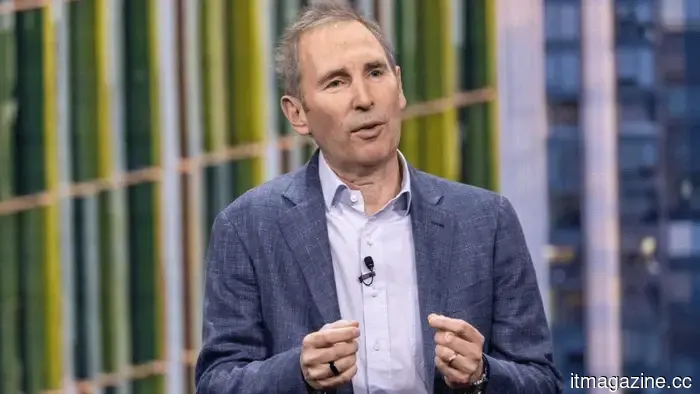
Amazon Leo aims for a commercial launch in mid-2026 as the enterprise beta is now operational.
In summary: Amazon's satellite internet service, which was renamed from Project Kuiper to Amazon Leo in November 2025, started its enterprise beta on April 8, 2026, with plans for commercial availability in mid-2026 according to Andy Jassy's annual letter to shareholders. The service features three tiers of terminals that provide up to 1 Gbps for enterprise clients, with beta partners including Verizon, AT&T, Vodafone, JetBlue, and NASA. Currently, Amazon has around 210 to 241 satellites in orbit, which falls short of the Federal Communications Commission mandate of 1,618 satellites by July 30, 2026, for which Amazon has sought a two-year extension and has arranged 22 additional launches to meet the goal.
From Project Kuiper to Amazon Leo: The rebranding and beta launch
In 2020, Amazon secured approval from the Federal Communications Commission for a constellation of 3,236 satellites in low Earth orbit, subsequently dedicating five years to building the necessary hardware, regulatory framework, and partnerships to make it commercially viable. The first production satellites were launched in April 2025 using an Atlas V rocket by United Launch Alliance, and by November 2025, enough operational satellites were in place to transition from Project Kuiper to Amazon Leo, marking a significant change from a development project to a commercial offering. A preview program was initiated for select enterprise partners shortly after the rebranding, with the full enterprise beta commencing on April 8, 2026. Jassy's annual letter to shareholders highlighted mid-2026 as the target for commercial launch, aligning Leo with Amazon's $50 billion investment in the Trainium chip as a key focus of the company’s current capital allocation. Beta clients include Verizon and AT&T in North America, Vodafone and Vodacom in Europe and Africa, JetBlue for in-flight connectivity, NBN Co in Australia, Vrio in Latin America, and NASA, as well as logistics firms Hunt Energy and Crane Worldwide Logistics.
Three terminal models, three speed levels
Amazon has developed three terminal versions tailored to different market segments without compromising on hardware. The Leo Nano caters to consumers and light enterprise, measuring seven inches square, weighing 2.2 pounds, and featuring a 100 Mbps download capability. The Leo Pro is designed for small businesses, rural operators, and mobile backhaul applications, measuring eleven inches square, weighing 5.3 pounds, priced under $400, and supporting 400 Mbps downloads. The Leo Ultra is the flagship for enterprises, with a 20-by-30-inch installation that weighs 43 pounds and provides 1 Gbps downloads with 400 Mbps uploads, targeting commercial aircraft, maritime vessels, and large campus deployments. Jassy asserted in his shareholder letter that Leo terminals offer six to eight times better uplink performance and double the downlink performance compared to existing satellite internet options for enterprises, a claim that will be closely examined once commercial operations begin and independent assessments can be conducted.
FCC deadline and launch shortfall
Amazon's FCC license for its Generation 1 satellite constellation mandates that half of the planned 3,236 satellites, or 1,618, must be operational and in orbit by July 30, 2026. However, as of early April 2026, Amazon has only between 210 and 241 satellites in orbit, rendering the original deadline impractical. The company submitted a formal request for a two-year extension to the FCC in January 2026, citing a lack of available launch vehicles. Along with the extension request, Amazon announced ten additional Falcon 9 launch contracts with SpaceX and twelve contracts with Blue Origin for New Glenn launches. Bezos is making significant investments in orbital infrastructure beyond Leo: Blue Origin has filed proposals for a 51,600-satellite Project Sunrise constellation and a 5,408-satellite TeraWave optical backhaul network, linking the New Glenn launch schedule to various overlapping objectives. Additionally, the FCC approved Amazon's Generation 2 constellation in February 2026, paving the way for a potential 7,727-satellite network once current launch delays are addressed. The range of contracted launch vehicles now includes Atlas V and Vulcan Centaur (United Launch Alliance), Falcon 9 (SpaceX), Ariane 6 (Arianespace), and New Glenn (Blue Origin).
Competing with Starlink and the Globalstar acquisition
Starlink is not an easy competitor. SpaceX’s satellite internet service earned $10.6 billion in revenue in 2025 at a 54 percent EBITDA margin and has over 10 million paying subscribers across more than 100 countries, operating a constellation of 7,600 to over 8,000 satellites. SpaceX is seeking to execute the largest IPO in history to raise $75 billion at an estimated valuation of up to $1.75 trillion, potentially by June 2026, solidifying Starlink's status as a validated infrastructure business before Amazon Leo's
Other articles
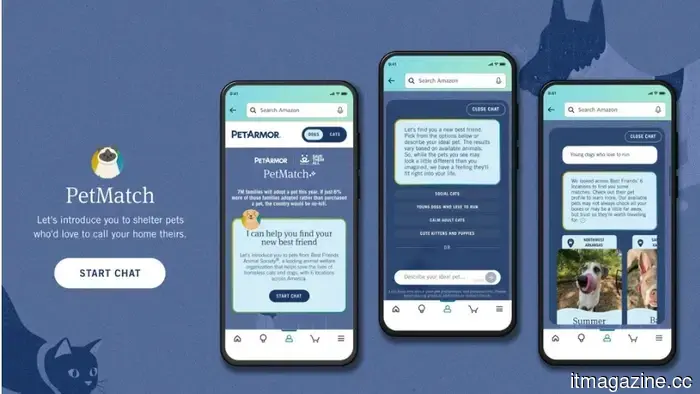 Amazon's AI tool pairs shelter dogs and cats with adopters as part of the Protect Playtime campaign.
Amazon, PetArmor, and Best Friends Animal Society have introduced an AI-driven pet-matching tool and a generative video campaign aimed at decreasing shelter euthanasia rates in the US.
Amazon's AI tool pairs shelter dogs and cats with adopters as part of the Protect Playtime campaign.
Amazon, PetArmor, and Best Friends Animal Society have introduced an AI-driven pet-matching tool and a generative video campaign aimed at decreasing shelter euthanasia rates in the US.
 A new free Borderlands game has just been silently released on the iPhone.
Borderlands Mobile has quietly launched on the App Store as a free-to-play game for iPhone users by Zynga, but an official Android version is not yet available.
A new free Borderlands game has just been silently released on the iPhone.
Borderlands Mobile has quietly launched on the App Store as a free-to-play game for iPhone users by Zynga, but an official Android version is not yet available.
 Microsoft wants you to understand that Copilot AI serves purposes beyond just entertainment.
Microsoft seems to be working to resolve a troubling inconsistency regarding its Copilot AI. This comes after a recent internal document portrayed the AI as significantly less effective than what the company's advertising implies. Users have pointed out that the terms of use for Microsoft’s Copilot contained a disclaimer stating that the service is intended for “entertainment purposes only,” which added […]
Microsoft wants you to understand that Copilot AI serves purposes beyond just entertainment.
Microsoft seems to be working to resolve a troubling inconsistency regarding its Copilot AI. This comes after a recent internal document portrayed the AI as significantly less effective than what the company's advertising implies. Users have pointed out that the terms of use for Microsoft’s Copilot contained a disclaimer stating that the service is intended for “entertainment purposes only,” which added […]
 Top 10 SOC 2 Compliance Software for 2026
Examine the top SOC 2 compliance software for 2026. Discover how automation tools facilitate audits, minimize risks, and assist you in maintaining ongoing compliance.
Top 10 SOC 2 Compliance Software for 2026
Examine the top SOC 2 compliance software for 2026. Discover how automation tools facilitate audits, minimize risks, and assist you in maintaining ongoing compliance.
 Tired of dull email apps? Avec transforms your inbox into an easy-to-navigate, swipe-friendly organizer.
Avec est une nouvelle application de messagerie pour iOS qui transforme le nettoyage de la boîte de réception en une routine de glissement de cartes, tout en offrant des réponses vocales et des fonctionnalités d'IA pour rendre la gestion des emails moins contraignante.
Tired of dull email apps? Avec transforms your inbox into an easy-to-navigate, swipe-friendly organizer.
Avec est une nouvelle application de messagerie pour iOS qui transforme le nettoyage de la boîte de réception en une routine de glissement de cartes, tout en offrant des réponses vocales et des fonctionnalités d'IA pour rendre la gestion des emails moins contraignante.
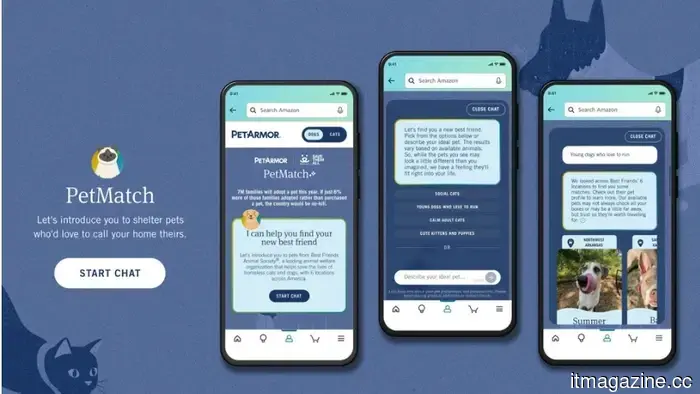 Amazon's AI tool connects shelter dogs and cats with potential adopters as part of the Protect Playtime campaign.
Amazon, PetArmor, and Best Friends Animal Society have unveiled an AI pet-matching tool along with a generative video campaign aimed at decreasing the number of killings in US shelters.
Amazon's AI tool connects shelter dogs and cats with potential adopters as part of the Protect Playtime campaign.
Amazon, PetArmor, and Best Friends Animal Society have unveiled an AI pet-matching tool along with a generative video campaign aimed at decreasing the number of killings in US shelters.
Amazon Leo aims for a commercial launch in mid-2026 as the enterprise beta is now operational.
Amazon Leo, previously known as Project Kuiper, began its enterprise beta on April 8, aiming for a commercial launch in mid-2026. The initiative includes three tiers of terminals and 22 new rocket contracts.