

YouTubers are taking legal action against Amazon for reportedly using their videos to train Nova Reel without permission.
In summary: Three YouTube content creators, including the company behind H3H3 Productions, a solo golf presenter, and a golf channel, have initiated a proposed class action lawsuit in Seattle. They claim that Amazon circumvented YouTube's technical safeguards by employing virtual machines and rotating IP addresses to scrape their videos without permission. This footage was reportedly used for training datasets for Nova Reel, Amazon's generative video AI model available via Amazon Bedrock. The lawsuit invokes the anti-circumvention clauses of the Digital Millennium Copyright Act (DMCA) and is part of a series of similar cases that this group has brought against Nvidia, Meta, ByteDance, Snap, OpenAI, and Apple.
Ted Entertainment Inc., the entity behind H3H3 Productions and the H3 Podcast Highlights channels operated by Ethan and Hila Klein, filed the complaint in the US District Court for the Western District of Washington alongside Matt Fisher, who manages the MrShortGame Golf channel, and Golfholics Inc. Together, they represent over 2.6 million YouTube subscribers, approximately four billion total views, and more than 5,800 original videos. Amazon is named as the defendant, specifically targeting Nova Reel for being partially based on their content.
The legal foundation of the complaint is rooted in Section 1201 of the Digital Millennium Copyright Act, which prohibits the circumvention of technological protection measures that copyright holders have established to safeguard their works. The plaintiffs contend that YouTube's systems are such protective measures, and that Amazon intentionally bypassed them on a large scale to harvest training data. If this argument prevails in court, it could establish that downloading YouTube videos for AI training violates the DMCA, regardless of the content’s public accessibility, as circumventing the technical protections that uphold the terms of service would be deemed unlawful.
The plaintiffs emphasize the lasting damage caused: “Once AI ingests content, it is entrenched in its neural network and cannot be deleted or retracted.” They are seeking damages as well as injunctive relief, which could compel Amazon to cease distributing a model that has been trained using their content or to retrain that model without the disputed material.
The complaint focuses on two academic datasets: HD-VILA-100M, created by Microsoft Research Asia in 2021, and HD-VG-130M, developed by researchers from Peking University and Microsoft. Both datasets were made available for academic purposes and consist of URL identifiers pointing to YouTube videos, not the videos themselves. This distinction is legally important because using these datasets for AI model training necessitates the downloading of the actual video files from YouTube, which the plaintiffs allege Amazon executed.
According to the complaint, Amazon did not merely download the videos but utilized automated programs along with virtual machines that consistently rotated IP addresses to avoid detection and blocking by YouTube. The complaint describes this combination of automated mass downloading, virtual machine usage, and IP rotation as a calculated effort to circumvent YouTube's technological safeguards. A similar allegation regarding this evasion strategy was included in earlier litigation against Nvidia by this same group, which claimed that Nvidia downloaded 38.5 million video URLs using comparable techniques.
Nova Reel is Amazon’s generative AI model for creating video content from text prompts, launched in December 2024 via Amazon Bedrock. It generates video clips lasting from six seconds to two minutes and features watermarking as a content authenticity measure. This model is part of the broader Nova model family that Amazon has been expanding across different media formats in response to growing competition in enterprise AI.
The competitive pressure on Amazon to develop efficient video AI capabilities is profound. Nova Reel symbolizes the company’s effort to rival other text-to-video systems, like Sora and Google Veo, for enterprise applications. Amazon's extensive investments in AI infrastructure, including collaboration with Uber for deploying custom Trainium chips for expansive model training via AWS, illustrate the company's aspirations across the AI landscape, from cloud computing to generative media. The influx of capital available to leading AI developers has heightened the urgency to quickly acquire training data on a large scale, as evidenced by SoftBank's $40 billion bridge loan to OpenAI.
This group of plaintiffs has previous litigation experience. The year 2025 marked a significant shift as AI training data practices became a central issue, leading to coordinated legal actions. In December 2025, Ted Entertainment, Fisher, and Golfholics filed a class action lawsuit against Nvidia in California, claiming that Nvidia scraped their YouTube videos using the same datasets and infrastructure. In January 2026, they expanded this strategy by filing suits against Meta, ByteDance, and Snap. In April, simultaneous complaints against OpenAI and Apple were submitted in Northern California. The Amazon lawsuit, filed in Seattle, is the most recent addition to this series.
These lawsuits coincide with a growing wave of copyright litigation against AI developers, with the number of US copyright cases against AI companies now exceeding 100. This includes a March 2026 complaint

Other articles
 X’s Grok AI now overcomes language barriers and allows you to edit photos with easy prompts.
X is launching Grok-powered automatic translation along with an AI photo editor that allows users to adjust images using straightforward prompts.
X’s Grok AI now overcomes language barriers and allows you to edit photos with easy prompts.
X is launching Grok-powered automatic translation along with an AI photo editor that allows users to adjust images using straightforward prompts.
 The new ASUS Zenbook A14 and Zenbook A16 have been launched, featuring Snapdragon X2 series processors and OLED screens.
Asus has revealed that its new Zenbook A14 and A16 laptops will be available in the US, with prices beginning at $1,349.99.
The new ASUS Zenbook A14 and Zenbook A16 have been launched, featuring Snapdragon X2 series processors and OLED screens.
Asus has revealed that its new Zenbook A14 and A16 laptops will be available in the US, with prices beginning at $1,349.99.
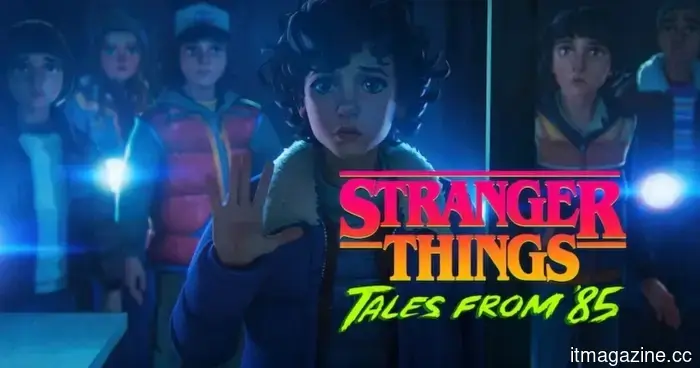 Stranger Things: Tales from '85 – release date, episodes, new characters, and timeline details explained.
Stranger Things: Tales from '85 is an animated spinoff on Netflix that takes place in winter 1985, featuring Eleven, Mike, and their friends, along with a new character named Nikki Baxter and a new creature known as the Snowshark.
Stranger Things: Tales from '85 – release date, episodes, new characters, and timeline details explained.
Stranger Things: Tales from '85 is an animated spinoff on Netflix that takes place in winter 1985, featuring Eleven, Mike, and their friends, along with a new character named Nikki Baxter and a new creature known as the Snowshark.
 The new ASUS Zenbook A14 and A16 have been released featuring Snapdragon X2 series processors and OLED displays.
Asus has revealed that its new Zenbook A14 and A16 laptops will be available in the US, with starting prices of $1,349.99.
The new ASUS Zenbook A14 and A16 have been released featuring Snapdragon X2 series processors and OLED displays.
Asus has revealed that its new Zenbook A14 and A16 laptops will be available in the US, with starting prices of $1,349.99.
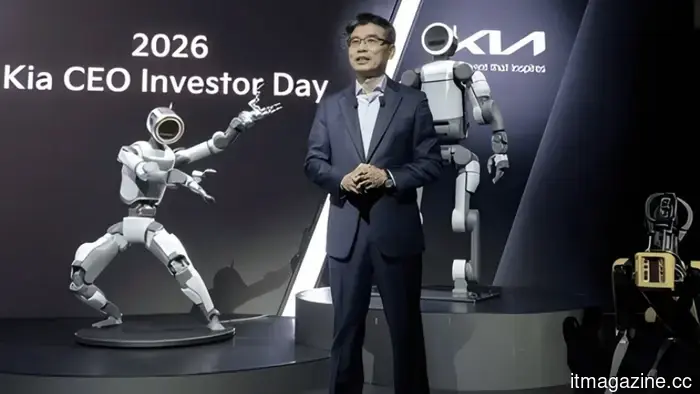 Kia reduces its EV target, announces an electric pickup, and intends to deploy Atlas robots in its factories in Georgia.
Kia's investor day in 2026 has revised its 2030 electric vehicle goal to 1 million units, announced the introduction of an electric pickup truck for North America, and established 2028 as the timeline for deploying the Atlas robot.
Kia reduces its EV target, announces an electric pickup, and intends to deploy Atlas robots in its factories in Georgia.
Kia's investor day in 2026 has revised its 2030 electric vehicle goal to 1 million units, announced the introduction of an electric pickup truck for North America, and established 2028 as the timeline for deploying the Atlas robot.
 A leak regarding the Razr 70 Ultra reveals Motorola's intentions to captivate users with striking new designs.
Leaked images of the Razr 70 Ultra indicate striking new finishes, such as Alcantara and wood textures.
A leak regarding the Razr 70 Ultra reveals Motorola's intentions to captivate users with striking new designs.
Leaked images of the Razr 70 Ultra indicate striking new finishes, such as Alcantara and wood textures.
YouTubers are taking legal action against Amazon for reportedly using their videos to train Nova Reel without permission.
H3H3 Productions and two golf channels claim that Amazon circumvented YouTube’s safeguards by utilizing rotating IPs and virtual machines to develop its Nova Reel video AI model.