

QR code traffic scams may seem clever, but they raise significant concerns.
Here’s why you should reconsider scanning unfamiliar codes
Cybercriminals are once again adapting their strategies, launching a new series of phishing scams that utilize QR codes in fake traffic violation text messages. Security experts have cautioned that these scams, recently identified in various U.S. states, aim to deceive users into providing sensitive personal and financial information by imitating official government communications.
The scam typically initiates with a text message stating that the recipient has an outstanding traffic violation or a "Notice of Default." In contrast to older versions that included clickable links, these recent messages feature an image of an official-looking notice containing a QR code. Victims are encouraged to scan the code to avoid penalties, legal repercussions, or additional charges.
Why caution is necessary
Once the QR code is scanned, users are redirected to a phishing site masquerading as a legitimate government portal, like a Department of Motor Vehicles (DMV) page. These fraudulent sites often request a small payment—usually around $6.99—but their real intent is to gather sensitive information such as names, addresses, phone numbers, and credit card details.
This transition to QR codes represents a notable advancement in phishing strategies. Dubbed “quishing,” this QR-based phishing technique allows perpetrators to bypass conventional security filters that typically scan links in emails or texts. Since QR codes are more challenging to examine visually and are generally trusted for everyday activities like payments and menus, individuals are more prone to engage with them without raising suspicion.
For consumers, the consequences are significant
These scams exploit feelings of urgency and fear—two potent psychological motivators—by threatening fines or legal actions. As a result, even prudent individuals may react hastily without confirming the legitimacy of the notification. Authorities consistently advise that courts and government entities never request payments or sensitive data through unsolicited text messages or QR codes.
The increasing prevalence of QR codes in scams also mirrors broader digital trends. As QR-based interactions gain traction in payments, ticketing, and authentication processes, they are being increasingly weaponized by cybercriminals. This makes vigilance and skepticism more crucial than ever.
Looking ahead, cybersecurity professionals anticipate that these attacks will become progressively sophisticated, potentially incorporating more convincing branding and targeted messaging. Law enforcement agencies are urging people to refrain from scanning unknown QR codes, verify any traffic violations through official government websites, and report suspicious messages immediately.
As phishing tactics continue to evolve, the message is clear: convenience tools like QR codes can also pose security threats if used carelessly.
Moinak Pal has been active in the technology sector, covering consumer-centric tech as well as automotive technology.
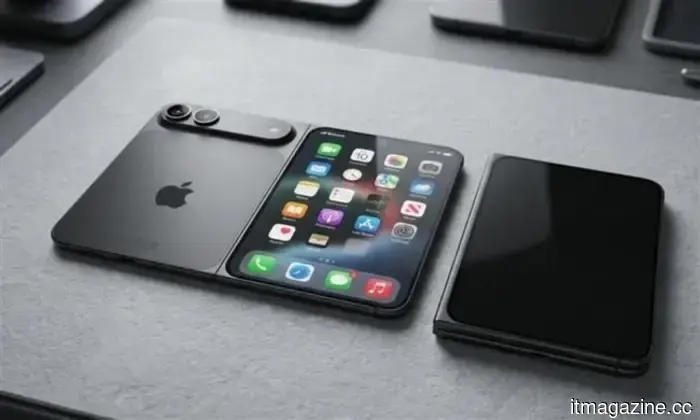
Apple's iPhone Fold might actually debut at the September launch event
According to one of the most reliable sources in the industry, Apple’s most transformative iPhone since the original is on the horizon. After years of speculation and leaks, Apple’s iPhone Fold is reportedly nearing a launch, with Bloomberg’s Mark Gurman—widely recognized as a credible Apple insider—indicating that the foldable is scheduled for a September 2026 release.
Earlier this week, Nikkei Asia raised concerns about development issues with the iPhone Fold, particularly regarding testing. However, Gurman counters that despite the device's intricate design, Apple is still committed to its target launch timeframe.
Moto G Stylus (2026) finally empowers the pen over the phone
Motorola’s stylus phone has always stood out—positively. While competitors in the mid-range market are focused on megapixel counts and benchmark scores, the Moto G Stylus (2026) continues to prioritize a more personal experience: equipping you with a pen and asking, "What would you like to create today?" This year, it’s not merely about having a stylus; it’s about enhancing its functionality to make it feel smarter.
The stylus matures and gains character, too.
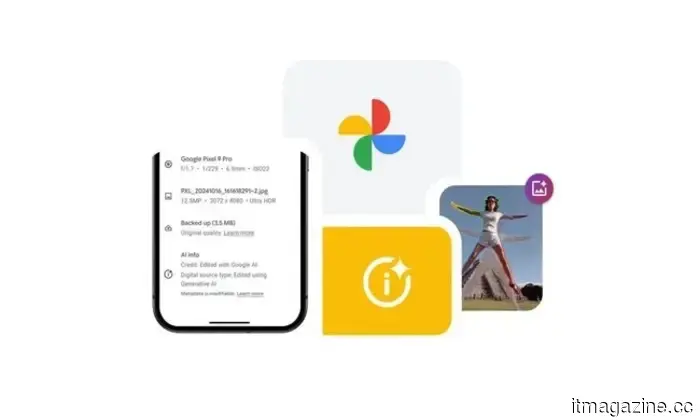
Google Photos introduces AI Enhance and video playback speed settings
New features aim to streamline editing and enhance video viewing on Android devices.
Google Photos is rolling out an Android update that focuses on faster editing and improved video controls. The update features a one-tap AI editing option and long-anticipated playback speed settings, both of which are starting to be made available.
The update introduces an “AI Enhance” button designed to simplify photo editing. Instead of navigating through various sliders, it automatically makes adjustments to lighting and contrast with a single tap, minimizing the need for manual tweaks while still enhancing image quality.





Other articles
 Anthropic is in discussions to invest $200 million in a private equity initiative aimed at promoting Claude within the enterprise sector.
Anthropic is in discussions for a joint venture with Blackstone, H&F, and Permira to integrate Claude into private equity portfolio companies while competing with OpenAI for a share of the enterprise market.
Anthropic is in discussions to invest $200 million in a private equity initiative aimed at promoting Claude within the enterprise sector.
Anthropic is in discussions for a joint venture with Blackstone, H&F, and Permira to integrate Claude into private equity portfolio companies while competing with OpenAI for a share of the enterprise market.
 AI has significantly accelerated coding but has also created its own set of challenges.
Nowadays, thanks to AI, everyone has become a coder. However, an increase in code results in more bugs and vulnerabilities, along with a shortage of engineers to address them.
AI has significantly accelerated coding but has also created its own set of challenges.
Nowadays, thanks to AI, everyone has become a coder. However, an increase in code results in more bugs and vulnerabilities, along with a shortage of engineers to address them.
 Anthropic is in discussions to invest $200 million in a private equity venture aimed at promoting Claude for enterprise use.
Anthropic is in discussions for a joint venture with Blackstone, H&F, and Permira to integrate Claude into their private equity portfolio companies, as they compete with OpenAI for market share in the enterprise sector.
Anthropic is in discussions to invest $200 million in a private equity venture aimed at promoting Claude for enterprise use.
Anthropic is in discussions for a joint venture with Blackstone, H&F, and Permira to integrate Claude into their private equity portfolio companies, as they compete with OpenAI for market share in the enterprise sector.
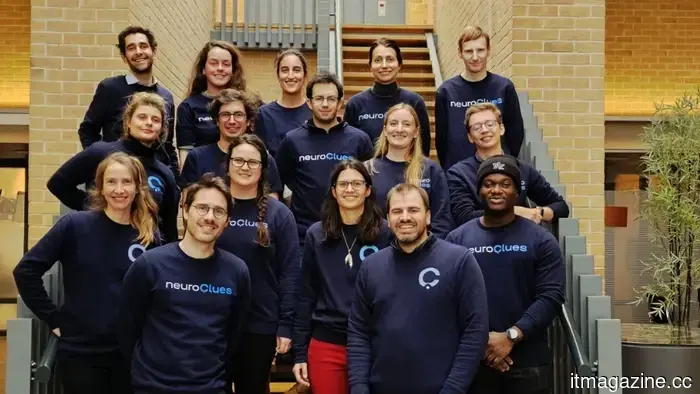 neuroClues has secured €10M to aid in the diagnosis of Parkinson's disease.
neuroClues has secured €10 million in a Series A funding round to commercialize its CE-marked eye-tracking device aimed at aiding early diagnosis of Parkinson’s and Alzheimer’s diseases.
neuroClues has secured €10M to aid in the diagnosis of Parkinson's disease.
neuroClues has secured €10 million in a Series A funding round to commercialize its CE-marked eye-tracking device aimed at aiding early diagnosis of Parkinson’s and Alzheimer’s diseases.
 Google's special edition Pixel 10a in Isai Blue is truly remarkable.
Dear Google, kindly introduce this color to other countries.
Google's special edition Pixel 10a in Isai Blue is truly remarkable.
Dear Google, kindly introduce this color to other countries.
 Anthropic is in discussions to invest $200 million in a private equity initiative aimed at advancing Claude in the enterprise sector.
Anthropic is in discussions for a joint venture with Blackstone, H&F, and Permira to implement Claude within their private equity portfolio companies as it competes with OpenAI for a share of the enterprise market.
Anthropic is in discussions to invest $200 million in a private equity initiative aimed at advancing Claude in the enterprise sector.
Anthropic is in discussions for a joint venture with Blackstone, H&F, and Permira to implement Claude within their private equity portfolio companies as it competes with OpenAI for a share of the enterprise market.
QR code traffic scams may seem clever, but they raise significant concerns.
Fresh phishing schemes are employing QR codes in fraudulent traffic violation messages to acquire personal and financial information.