
Anthropic is in discussions to invest $200 million in a private equity initiative aimed at promoting Claude within the enterprise sector.
In summary: Anthropic is currently in discussions to establish a new joint venture with Blackstone, Hellman & Friedman, and Permira, aimed at integrating its Claude model across private equity portfolio companies. The plan involves Anthropic investing approximately $200 million of its own capital into a fund that could potentially raise up to $1 billion from buyout firms, with the intention of modeling the venture after Palantir’s forward-deployed engineer approach.
As reported by the Wall Street Journal, Anthropic is working to secure around $200 million for a private-equity-backed joint venture that seeks to enhance the enterprise adoption of its Claude models. The arrangement would allow buyout firms like Blackstone, Hellman & Friedman, and Permira to acquire equity stakes totaling roughly $1 billion within the venture, which would function as a consulting and implementation service aiding businesses in integrating Claude into their operations.
No final agreements have been reached, and no timeline has been publicized. However, these discussions mark Anthropic's most aggressive effort to transform its leadership in AI models into a distribution network, coinciding with intensifying competition from OpenAI for enterprise clients, whose choices will ultimately shape the economic viability of advanced AI.
What the venture would entail
The proposed joint venture is said to be modeled after Palantir’s forward-deployment strategy. This involves placing engineers within client organizations to not only boost adoption but also facilitate workflow transformation. Rather than depending solely on software subscriptions, Anthropic plans to combine model access with advisory and implementation services, which are essential for generating the stable and recurring revenue that AI firms need to validate their infrastructure investments.
The strategic rationale for utilizing private equity as a distribution layer is straightforward. PE firms manage thousands of portfolio companies, allowing Anthropic to access entire portfolios through a single negotiation rather than approaching each enterprise individually. In this setup, buyout firms would serve as channel partners with a vested interest in promoting the adoption of Claude while having direct operational influence over the companies deploying it.
Blackstone already has a stake in Anthropic, holding about $1 billion in equity after investing $200 million at a $350 billion valuation in February 2026 during Anthropic’s Series G round. This investment gives Blackstone both a strategic and financial incentive to promote the widespread integration of Claude within the corporate landscape, which could be perceived as either a conflict of interest or an alignment of interests, depending on one’s perspective.
The comparison with OpenAI
Anthropic finds itself in competition with OpenAI, which is simultaneously in talks with firms like Advent International, Bain Capital, Brookfield Asset Management, and TPG for a similar enterprise AI venture, reportedly targeting around $4 billion in fundraising. The structural distinctions between the two proposals are significant.
OpenAI is presenting private equity firms with a guaranteed minimum return of 17.5%, an incentive aimed at simplifying the investment proposition for limited partners and investment committees that might otherwise find an AI joint venture too risky. In contrast, Anthropic is offering standard equity in the venture without a minimum return guarantee. This difference indicates either that Anthropic is more confident in the commercial potential or less inclined to absorb investor risk, as well as reflecting a cultural stance: a company founded on AI safety principles may be uncomfortable prioritizing investor protection over genuine shared risk.
An Axios analysis of the competitive situation succinctly states: “Teaming up with PE firms is much faster for OpenAI and Anthropic than trying to reach each of their portfolio companies separately.” The race for enterprise AI adoption suggests that distribution, not just the quality of models, will determine market share, leading both companies to conclude that private equity provides the quickest path to scale.
Building on existing enterprise infrastructure
Should the new venture be finalized, it would mark the third significant enterprise initiative launched by Anthropic within a single quarter. In March 2026, the company dedicated $100 million to the Claude Partner Network, which is anchored by firms like Accenture, Deloitte, Cognizant, and Infosys. This program offers implementation support, technical architecture, and co-marketing for enterprise deployments of Claude. Additionally, Xero has directly integrated Claude into its accounting platform, demonstrating how deeply the model is being woven into software products well beyond just chat interfaces.
By April 2026, over 1,000 businesses were reportedly allocating more than $1 million annually for Anthropic's services, up from about 500 just two months prior. Current enterprise customers account for approximately 80% of Anthropic’s revenue, according to internal company figures. The proposed PE venture aims to accelerate this trend and reach segments of the enterprise market, particularly mid-market companies owned by private equity, that the Claude Partner Network typically does not encompass.
The IPO context
This background is significant: Anthropic is reportedly in talks with Goldman Sachs and JPMorgan Chase regarding a public offering slated for October 2026, with anticipated fundraising around $60 billion. At a $380 billion valuation post-money from the Series G, a successful IPO would
Other articles
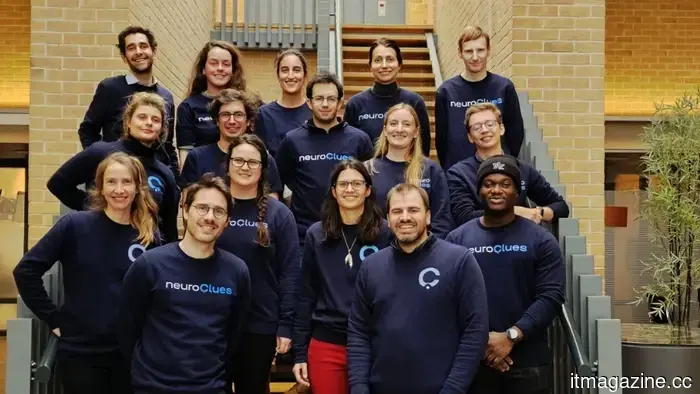 neuroClues has secured €10M to aid in the diagnosis of Parkinson's disease.
neuroClues has secured €10 million in a Series A funding round to commercialize its CE-marked eye-tracking device aimed at aiding early diagnosis of Parkinson’s and Alzheimer’s diseases.
neuroClues has secured €10M to aid in the diagnosis of Parkinson's disease.
neuroClues has secured €10 million in a Series A funding round to commercialize its CE-marked eye-tracking device aimed at aiding early diagnosis of Parkinson’s and Alzheimer’s diseases.
 Anthropic is in discussions to invest $200 million in a private equity venture aimed at promoting Claude for enterprise use.
Anthropic is in discussions for a joint venture with Blackstone, H&F, and Permira to integrate Claude into their private equity portfolio companies, as they compete with OpenAI for market share in the enterprise sector.
Anthropic is in discussions to invest $200 million in a private equity venture aimed at promoting Claude for enterprise use.
Anthropic is in discussions for a joint venture with Blackstone, H&F, and Permira to integrate Claude into their private equity portfolio companies, as they compete with OpenAI for market share in the enterprise sector.
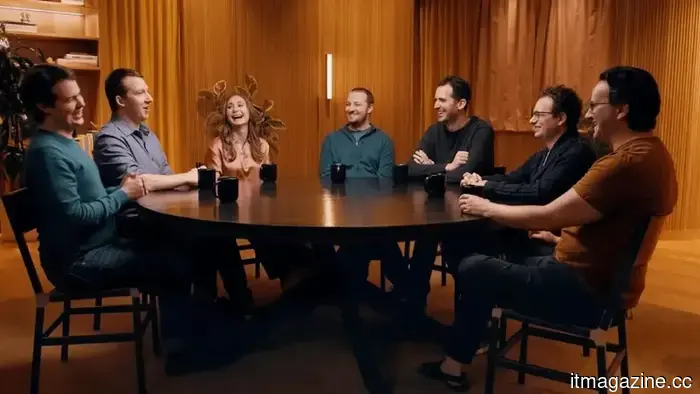 Anthropic is in discussions to invest $200 million in a private equity initiative aimed at advancing Claude in the enterprise sector.
Anthropic is in discussions for a joint venture with Blackstone, H&F, and Permira to implement Claude within their private equity portfolio companies as it competes with OpenAI for a share of the enterprise market.
Anthropic is in discussions to invest $200 million in a private equity initiative aimed at advancing Claude in the enterprise sector.
Anthropic is in discussions for a joint venture with Blackstone, H&F, and Permira to implement Claude within their private equity portfolio companies as it competes with OpenAI for a share of the enterprise market.
 Hermeus has secured $350 million, achieving a valuation of $1 billion.
Hermeus has secured $350 million at a valuation of $1 billion to advance the development of autonomous hypersonic aircraft. A demonstrator comparable in size to an F-16 took flight in March.
Hermeus has secured $350 million, achieving a valuation of $1 billion.
Hermeus has secured $350 million at a valuation of $1 billion to advance the development of autonomous hypersonic aircraft. A demonstrator comparable in size to an F-16 took flight in March.
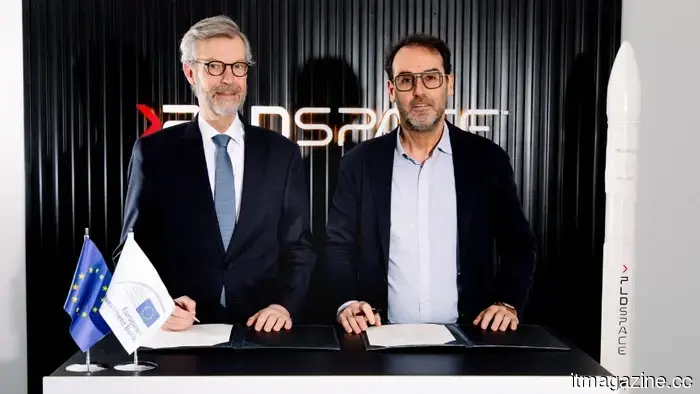 EIB provides PLD Space with a loan of €30 million to complete the construction of its MIURA 5 rocket.
EIB has agreed to a €30M venture debt loan with PLD Space, marking its initial direct investment in a small satellite launcher, in anticipation of MIURA 5's first test flight.
EIB provides PLD Space with a loan of €30 million to complete the construction of its MIURA 5 rocket.
EIB has agreed to a €30M venture debt loan with PLD Space, marking its initial direct investment in a small satellite launcher, in anticipation of MIURA 5's first test flight.
 AI has significantly accelerated coding but has also created its own set of challenges.
Nowadays, thanks to AI, everyone has become a coder. However, an increase in code results in more bugs and vulnerabilities, along with a shortage of engineers to address them.
AI has significantly accelerated coding but has also created its own set of challenges.
Nowadays, thanks to AI, everyone has become a coder. However, an increase in code results in more bugs and vulnerabilities, along with a shortage of engineers to address them.
Anthropic is in discussions to invest $200 million in a private equity initiative aimed at promoting Claude within the enterprise sector.
Anthropic is in discussions for a joint venture with Blackstone, H&F, and Permira to integrate Claude into private equity portfolio companies while competing with OpenAI for a share of the enterprise market.