
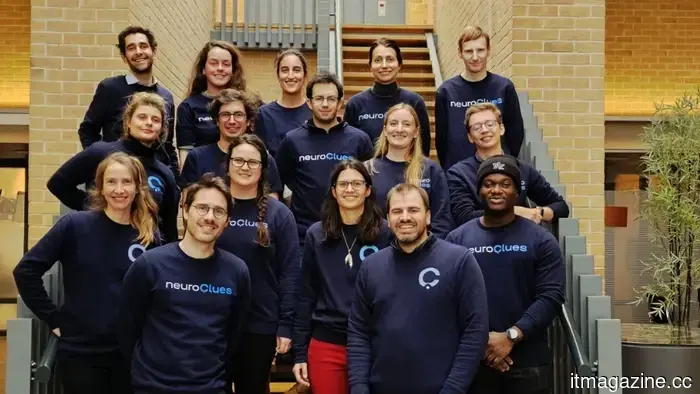
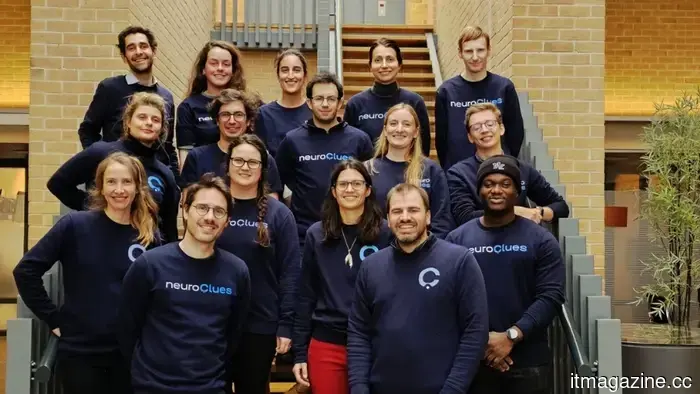
neuroClues has secured €10M to aid in the diagnosis of Parkinson's disease.
The French-Belgian medtech company offers a portable headset capable of capturing up to 800 infrared images per eye every second, which extracts oculomotor biomarkers that may indicate Parkinson’s, Alzheimer’s, and multiple sclerosis years prior to the appearance of clinical symptoms. It achieved CE certification in January 2025 and is aiming for FDA approval in 2026.
neuroClues, the medtech firm developing an AI-driven eye-tracking tool for the early identification of neurological disorders, has successfully completed a €10 million Series A funding round. This investment follows the company obtaining CE certification for its Class IIa medical device in January 2025, allowing it to operate in the European market, and brings the total funding raised since its inception in 2020 to over €22 million, inclusive of grants.
The neuroClues device is a compact, connected headset that captures up to 800 infrared images per eye each second while the patient tracks a moving target displayed on a screen. Its AI models extract oculomotor biomarkers within minutes, providing neurologists with objective and measurable data that can reveal potential neurological disorders such as Parkinson’s disease, Alzheimer’s disease, and multiple sclerosis, sometimes years before clinical symptoms like memory loss or tremors are noticeable. The device does not require calibration and is built to seamlessly fit into standard clinical consultations.
Founded in 2020 as P3Lab by Antoine Pouppez, Pierre Daye, and Pierre Pouget—both of whom have extensive experience in neuroscience focused on oculomotor function—the company draws on a long history of research linking eye movements to neurological diagnosis. Pouppez has pointed out that the earliest scientific paper establishing this connection dates back to 1905. Despite significant research proving its clinical relevance across thousands of patients, the technique has not been widely adopted in clinical practice, primarily due to past hardware limitations regarding cost and precision.
neuroClues is leveraging this research foundation with a device meant for the 2.3 million physicians globally who currently evaluate brain health using the traditional ‘follow my finger’ test. The diagnostic gap the company aims to address is critical for Parkinson’s disease. One in four patients with Parkinson’s is misdiagnosed, and the average wait for a confirmed diagnosis is 13 months. Research indicates that by this time, patients typically lose 50 to 70 percent of their dopamine-producing neurons. The number of individuals with Parkinson’s is projected to double to 13 million by 2040. The neuroClues device is being utilized in the Iceberg cohort study at the Paris Brain Institute at La Salpêtrière Hospital, led by Professors Marie Vidailhet and Stéphane Lehéricy, which focuses on identifying biomarkers for early detection of Parkinson’s.
Earlier presentations at the Society for Neuroscience conference presented preliminary evidence for a test that could detect a preclinical Parkinson’s marker five years ahead of an imaging-confirmed diagnosis.
Prior to the Series A funding, neuroClues had secured €4.7 million in a seed round in 2021, €2.5 million in grants from the European Commission’s EIC Accelerator program (with an additional commitment of up to €9 million in future EIC equity), and €5 million in a pre-Series A funding round in April 2024, led by White Fund and the EIC Accelerator, with contributions from Invest.BW and business angels including Fiona du Monceau and Olivier Legrain, CEO of IBA.
The newly raised capital will be allocated towards expanding the commercial team, seeking FDA clearance in the United States by 2026, and growing its presence in European markets. The company is headquartered and manufactures in Louvain-la-Neuve, Belgium, and maintains an office at the iPEPS incubator in La Salpêtrière Hospital, Paris.
Other articles
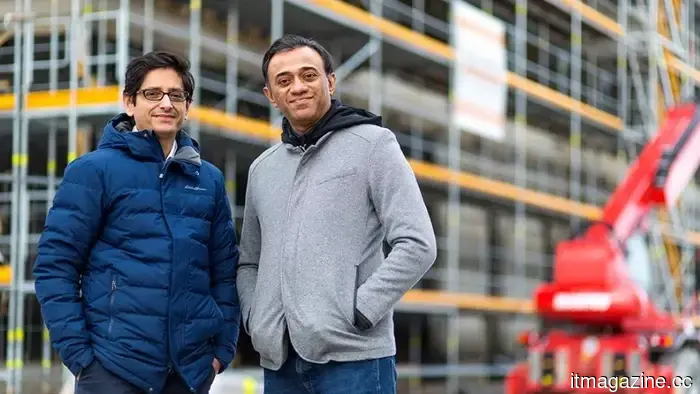 Conxai secures €5M to introduce agentic AI in the construction sector.
Conxai has secured €5 million for its agentic AI platform designed for the AEC industry. The platform gathers data from photos taken at job sites, as well as from sensors and documents.
Conxai secures €5M to introduce agentic AI in the construction sector.
Conxai has secured €5 million for its agentic AI platform designed for the AEC industry. The platform gathers data from photos taken at job sites, as well as from sensors and documents.
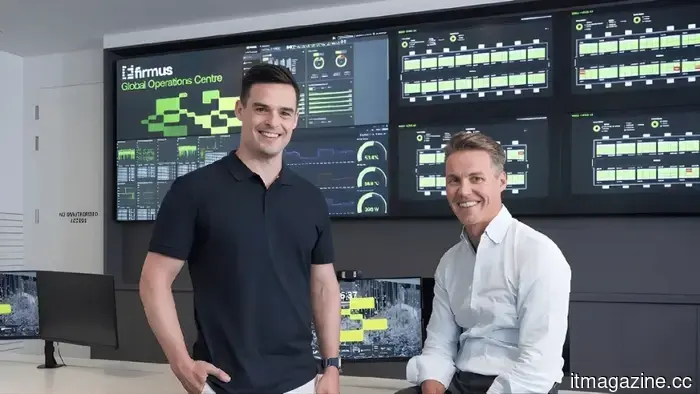 Firmus, supported by Nvidia, aims for a $2 billion IPO on the ASX following a $505 million fundraising and a $10 billion debt from Blackstone.
Firmus is on track for a $2 billion ASX initial public offering after securing $505 million at a valuation of $5.5 billion and a $10 billion debt package from Blackstone to construct 1.6GW of AI factories throughout Australia.
Firmus, supported by Nvidia, aims for a $2 billion IPO on the ASX following a $505 million fundraising and a $10 billion debt from Blackstone.
Firmus is on track for a $2 billion ASX initial public offering after securing $505 million at a valuation of $5.5 billion and a $10 billion debt package from Blackstone to construct 1.6GW of AI factories throughout Australia.
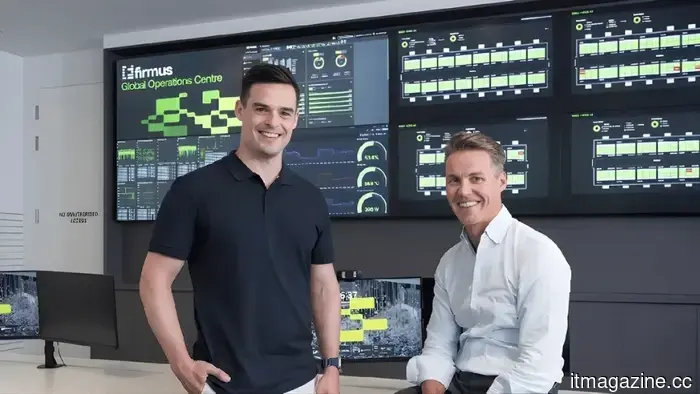 Nvidia-supported Firmus aims for a $2 billion IPO on the ASX following a $505 million fundraising and a $10 billion debt from Blackstone.
Firmus is on track for a $2 billion IPO on the ASX after securing $505 million at a $5.5 billion valuation, along with a $10 billion debt package from Blackstone to construct 1.6GW of AI factories throughout Australia.
Nvidia-supported Firmus aims for a $2 billion IPO on the ASX following a $505 million fundraising and a $10 billion debt from Blackstone.
Firmus is on track for a $2 billion IPO on the ASX after securing $505 million at a $5.5 billion valuation, along with a $10 billion debt package from Blackstone to construct 1.6GW of AI factories throughout Australia.
 Google's special edition Pixel 10a in Isai Blue is truly remarkable.
Dear Google, kindly introduce this color to other countries.
Google's special edition Pixel 10a in Isai Blue is truly remarkable.
Dear Google, kindly introduce this color to other countries.
 HexemBio secures $10.4 million for a stem cell rejuvenation treatment.
HexemBio has initiated operations with a seed funding round spearheaded by Draper Associates to further develop a blood stem cell rejuvenation treatment supported by Robert Langer.
HexemBio secures $10.4 million for a stem cell rejuvenation treatment.
HexemBio has initiated operations with a seed funding round spearheaded by Draper Associates to further develop a blood stem cell rejuvenation treatment supported by Robert Langer.
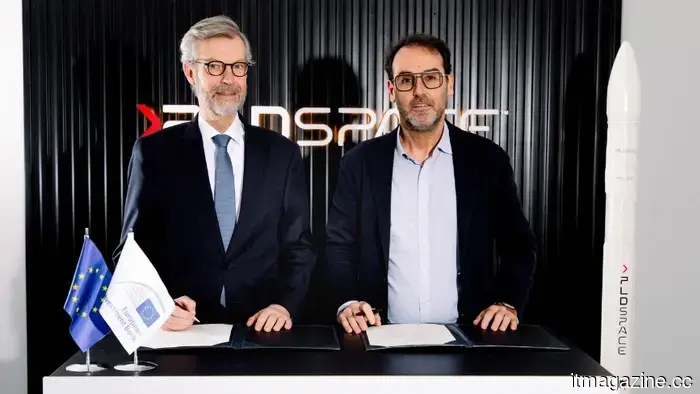 EIB provides PLD Space with a €30 million loan to complete the construction of its MIURA 5 rocket.
The EIB has finalized a €30 million venture debt loan agreement with PLD Space, marking its initial direct investment in a small satellite launch vehicle, in anticipation of the first test flight of MIURA 5.
EIB provides PLD Space with a €30 million loan to complete the construction of its MIURA 5 rocket.
The EIB has finalized a €30 million venture debt loan agreement with PLD Space, marking its initial direct investment in a small satellite launch vehicle, in anticipation of the first test flight of MIURA 5.
neuroClues has secured €10M to aid in the diagnosis of Parkinson's disease.
neuroClues has secured €10 million in a Series A funding round to commercialize its CE-marked eye-tracking device aimed at aiding early diagnosis of Parkinson’s and Alzheimer’s diseases.