
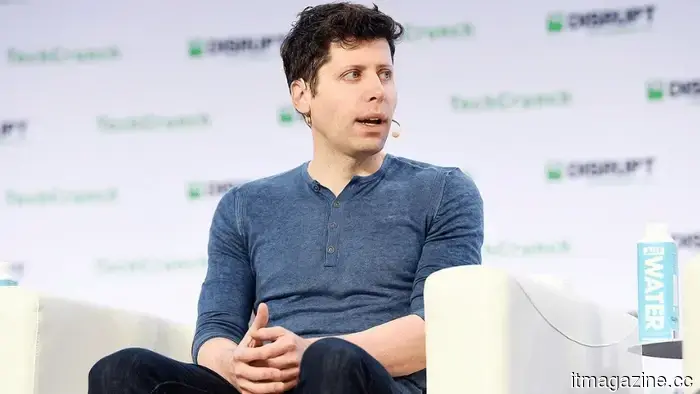
OpenAI advocates for implementing taxes on robots, establishing a public wealth fund, and adopting a four-day workweek.
Sam Altman’s 13-page policy document, titled ‘Industrial Policy for the Intelligence Age,’ outlines proposals for auto-triggering safety nets, strategies for managing rogue AI, and direct citizen dividends arising from AI-fueled economic growth. He mentioned to Axios that this is meant to serve as an initial framework, rather than a definitive set of guidelines.
OpenAI's report advocates for significant economic reforms to address the challenges posed by what it calls imminent superintelligence. These reforms include taxes on automated labor, a national public wealth fund partially funded by AI companies, and trials for a 32-hour work week.
The release of this document coincides with Congress gearing up to discuss AI legislation. In an exclusive interview with Axios, CEO Sam Altman compared the upcoming changes driven by AI to the transformations seen during the Progressive Era and the New Deal, warning that the most pressing threats include cyberattacks and biological weapons that could be facilitated by advanced AI.
The most groundbreaking suggestion in the paper is the establishment of a public wealth fund. OpenAI proposes that the government create a nationally managed fund, partly funded by contributions from AI firms, that would invest in AI businesses and other companies embracing the technology, distributing profits directly to American citizens. This model is reminiscent of Alaska’s Permanent Fund, which provides annual dividends to residents from oil revenues.
Regarding labor, the document proposes taxing automated work and shifting the tax focus from payroll to capital gains and corporate income, recognizing that AI could undermine the wage and payroll revenue currently supporting Social Security.
The 32-hour workweek is presented as an ‘efficiency dividend’ stemming from productivity increases due to AI.
Additionally, the document discusses ‘containment playbooks’ for situations where dangerous AI systems achieve autonomy and self-replication. OpenAI admits there are scenarios in which these systems ‘cannot be easily recalled’ and suggests coordinated government action as a response.
The blueprint also anticipates automatic safety net adjustments: as AI-driven displacement metrics reach set thresholds, benefits such as unemployment assistance and wage insurance would automatically increase, gradually phasing out once conditions stabilize.
Altman expressed to Axios that a significant cyberattack facilitated by forthcoming AI models is ‘totally possible’ within a year, and the creation of novel pathogens using AI is now ‘no longer theoretical.’
He candidly acknowledged the dual nature of the document, noting that OpenAI is simultaneously developing the very technology it is cautioning against while also trying to establish itself as a responsible entity proposing solutions. Anthropic is pursuing a similar approach.
This policy paper comes at a time when OpenAI is preparing for an IPO, has secured $110 billion in private funding, and is facing scrutiny over its transition from a non-profit organization.
Whether the motivations behind these proposals are truly altruistic or strategic, Altman stated, ‘Some will be good. Some will be bad. But we do feel a sense of urgency, and we want to see the debate of these issues really start to happen with seriousness.’
Other articles
 Bolt is introducing its Hopp ride-hailing brand to the Canadian corporate travel market.
Hopp for Business has been introduced in 17 municipalities within the Greater Toronto Area, while Bolt expands into corporate accounts one year after its launch for consumers in Toronto.
Bolt is introducing its Hopp ride-hailing brand to the Canadian corporate travel market.
Hopp for Business has been introduced in 17 municipalities within the Greater Toronto Area, while Bolt expands into corporate accounts one year after its launch for consumers in Toronto.
 The iPhone 17 Pro Max captures breathtaking images from a Moon mission.
NASA's Artemis II mission demonstrates the iPhone 17 Pro Max capturing actual images from space, marking a transition as consumer devices start to enhance traditional cameras in extreme conditions outside of Earth.
The iPhone 17 Pro Max captures breathtaking images from a Moon mission.
NASA's Artemis II mission demonstrates the iPhone 17 Pro Max capturing actual images from space, marking a transition as consumer devices start to enhance traditional cameras in extreme conditions outside of Earth.
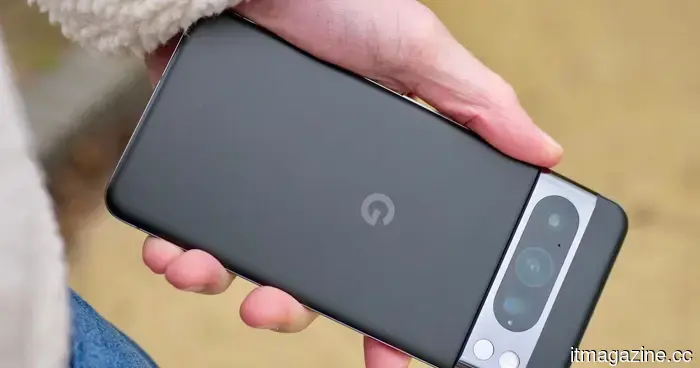 Following the Pixel 10 series, users of the Pixel 8 Pro are experiencing connectivity issues that require an ice pack to resolve.
Owners of the Pixel 8 Pro are experiencing extensive Wi-Fi issues following the March update, with attempted fixes proving ineffective and support responses lacking.
Following the Pixel 10 series, users of the Pixel 8 Pro are experiencing connectivity issues that require an ice pack to resolve.
Owners of the Pixel 8 Pro are experiencing extensive Wi-Fi issues following the March update, with attempted fixes proving ineffective and support responses lacking.
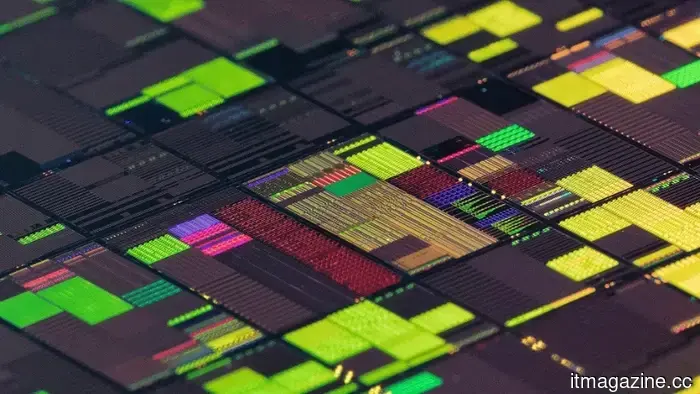 IBM and Arm have teamed up to operate AI software on mainframes, but a date has not been specified yet.
IBM and Arm have revealed a partnership to operate Arm-based AI software on IBM Z mainframes through virtualization. No specific shipping date has been provided, as this is more of a roadmap than a product announcement.
IBM and Arm have teamed up to operate AI software on mainframes, but a date has not been specified yet.
IBM and Arm have revealed a partnership to operate Arm-based AI software on IBM Z mainframes through virtualization. No specific shipping date has been provided, as this is more of a roadmap than a product announcement.
 Baseus has introduced an ultra-thin wireless power bank that is expected to arrive in the US shortly.
Baseus has introduced the PicoGo Air in China, a sleek magnetic power bank measuring 6.9mm thick, featuring a capacity of 5,000mAh, offering 15W wireless charging and 22.5W wired charging.
Baseus has introduced an ultra-thin wireless power bank that is expected to arrive in the US shortly.
Baseus has introduced the PicoGo Air in China, a sleek magnetic power bank measuring 6.9mm thick, featuring a capacity of 5,000mAh, offering 15W wireless charging and 22.5W wired charging.
 The iPhone 17 Pro Max captures breathtaking images from a lunar mission.
NASA’s Artemis II mission demonstrates the iPhone 17 Pro Max capturing actual images from space, indicating a transition where consumer devices start to enhance traditional cameras in extreme conditions beyond our planet.
The iPhone 17 Pro Max captures breathtaking images from a lunar mission.
NASA’s Artemis II mission demonstrates the iPhone 17 Pro Max capturing actual images from space, indicating a transition where consumer devices start to enhance traditional cameras in extreme conditions beyond our planet.
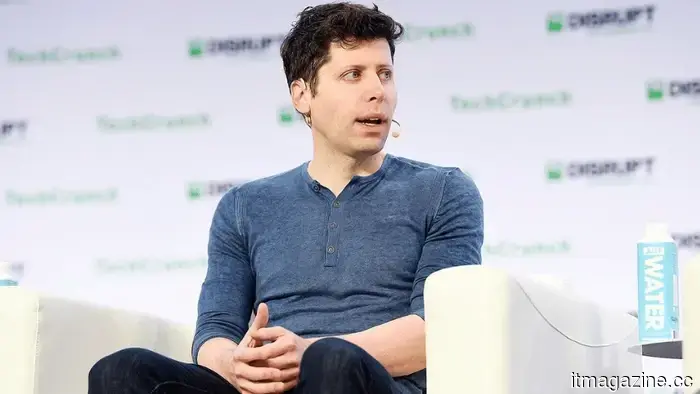
OpenAI advocates for implementing taxes on robots, establishing a public wealth fund, and adopting a four-day workweek.
OpenAI is advocating for robot taxes, the establishment of a public wealth fund, and a 32-hour workweek. Altman suggests that the imminent arrival of superintelligence makes all three measures necessary.