
Tesla surpasses BYD in electric vehicle sales for Q1 2026, but rising inventory and a downturn in Europe overshadow the achievement.
In the first quarter of 2026, Tesla delivered 358,023 battery electric vehicles, surpassing BYD’s 310,389 pure electric sales to regain its position as the global leader in quarterly BEV sales, a title it lost throughout 2025. The difference of around 48,000 units made headlines, but it did not quell the growing concerns surrounding Elon Musk’s automotive company.
The 358,023 total, announced on Thursday, fell short of Wall Street's expectation of 365,645 by approximately 7,600 vehicles, causing Tesla’s stock to drop more than 5 percent—the largest single-day decline of the year. Since January, the company has lost about 20 percent of its market value. More concerning than the shortfall was the disparity between production and deliveries: Tesla manufactured 408,386 vehicles during the quarter but delivered only 358,023, resulting in an increase of over 50,000 units in inventory during that time. This suggests a demand issue rather than a logistical problem.
Compared to the previous year, deliveries increased by 6.3 percent from Q1 2025’s 336,681 units. However, Q1 2025 was Tesla’s weakest quarter in years, affected by production halts at all four factories while transitioning to the refreshed “Juniper” Model Y. Recovering from a low point doesn't equate to demonstrating genuine recovery. The Model 3 and Model Y comprised 341,893 of the quarter's deliveries, with their production totaling 394,611, indicating that the inventory build was mainly in Tesla’s flagship models. The Cybertruck was a notable exception, showing a remarkable 111 percent annual increase to 38,500 deliveries.
BYD’s quarterly decline also comes with caveats. The Chinese New Year holidays occur in Q1 and typically hinder domestic sales, making this period BYD’s weakest for pure electric sales annually. During the quarter, BYD sold a total of 700,463 new energy vehicles, nearly double Tesla’s production, but that figure was approximately 30 percent lower than Q1 2025 and highlights a strategic shift: both consumers and BYD are moving towards the company's DM-i and DM-p plug-in hybrid platforms, which are more appealing in China’s expansive interior markets compared to pure electric models.
Examining the full-year context renders the quarterly headline less convincing as a reflection of a trend reversal. In 2025, BYD sold 2,254,714 BEVs compared to Tesla’s 1,636,129—a gap of over 600,000 units that seasonal variations won’t close. Although BYD’s domestic market share decreased from 27 percent to 17 percent in the first two months of 2026 due to a fierce price war and the end of government purchase subsidies at the close of 2025, the company is actively compensating with an aggressive international strategy: overseas shipments reached 120,083 vehicles in March alone, a 65 percent year-on-year increase, making it so that about 40 percent of BYD's monthly sales now come from exports, a significant change that Europe’s technology and industrial leaders have struggled to match at a similar rate.
Tesla’s position in Europe has declined more dramatically than in any other major market. Registrations in the EU, EFTA, and UK dropped by 17 percent in January from an already weak previous year, with a staggering 88 percent drop in Norway after the nation ended long-standing EV tax exemptions on January 1. Other declines included 67 percent in the Netherlands and 42 percent in France. These issues are structural rather than cyclical. Musk's involvement in the Trump administration's Department of Government Efficiency triggered a global boycott movement, leading to protests at Tesla showrooms in over 250 cities. Analyst Dan Ives from Wedbush Securities, known for his support of Tesla, forecasted that demand would be permanently reduced by about 10 percent, suggesting that the damage to the brand from Musk's political actions would hinder its reputation in Europe and the US indefinitely.
In March, there was slight improvement, with Tesla's European registrations tripling in France and more than doubling in the Nordic countries, although they still stemmed from exceedingly low bases established in January and February. Whether this upward trend continues largely depends on whether European consumers can separate the product from its CEO, a question that Chinese competitors relocating their manufacturing to Europe are not allowing them much time to consider.
The current tariff landscape is intensifying competitive pressures. EU tariffs on Chinese-made electric vehicles can be as high as 28.8 percent for some manufacturers, compounded by additional US duties. This situation has prompted Chinese carmakers such as Geely and BYD to localize production in Europe and Southeast Asia, a strategy that, once fully operational, will eliminate the tariff disadvantage while maintaining the cost benefits of a vertically integrated Chinese battery supply chain that European manufacturers have struggled to replicate. BYD is already establishing
Other articles
 The Emergence of AI in Penetration Testing: Analyzing the Future of Cybersecurity
Artificial intelligence has transitioned from being merely a laboratory experiment to increasingly integrating into everyday software. It is subtly assisting developers in writing code, supporting analysts with research, and driving tools within banks, hospitals, and technology firms. In recent years, large language models (LLMs) have evolved from a point of interest to essential components of numerous digital products. However, as companies have hurried to create [...]
The Emergence of AI in Penetration Testing: Analyzing the Future of Cybersecurity
Artificial intelligence has transitioned from being merely a laboratory experiment to increasingly integrating into everyday software. It is subtly assisting developers in writing code, supporting analysts with research, and driving tools within banks, hospitals, and technology firms. In recent years, large language models (LLMs) have evolved from a point of interest to essential components of numerous digital products. However, as companies have hurried to create [...]
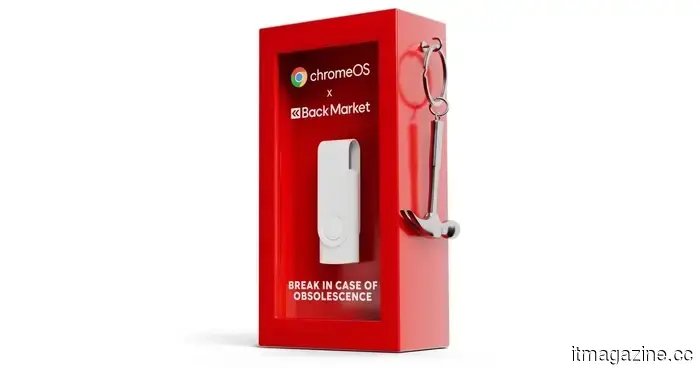 For only $3, Google’s magic stick can rejuvenate your outdated PC.
Google and Back Market have introduced a $3 ChromeOS Flex USB Kit aimed at revitalizing old Windows 10 computers. This kit comes with the complimentary operating system, along with guides and video tutorials, offering a more affordable solution compared to purchasing a new laptop.
For only $3, Google’s magic stick can rejuvenate your outdated PC.
Google and Back Market have introduced a $3 ChromeOS Flex USB Kit aimed at revitalizing old Windows 10 computers. This kit comes with the complimentary operating system, along with guides and video tutorials, offering a more affordable solution compared to purchasing a new laptop.
 For the first time, YouTube will broadcast Coachella in 4K, and there will also be a feed filmed on Pixel devices.
YouTube will be streaming Coachella 2026 for free beginning April 10, featuring seven stages running at the same time, 4K streams for the first time, a vertical feed captured with Pixel, and a Multiview option that allows viewers to watch four stages simultaneously.
For the first time, YouTube will broadcast Coachella in 4K, and there will also be a feed filmed on Pixel devices.
YouTube will be streaming Coachella 2026 for free beginning April 10, featuring seven stages running at the same time, 4K streams for the first time, a vertical feed captured with Pixel, and a Multiview option that allows viewers to watch four stages simultaneously.
 Space Data Centers: SpaceX and Blue Origin Compete for Orbital Position as Scientists Raise Questions About the Physics
SpaceX has submitted an application for 1 million data center satellites, while Blue Origin has applied for 51,600. According to scientists, factors such as cooling physics, radiation, and expenses indicate that orbital computing is still several decades in the future.
Space Data Centers: SpaceX and Blue Origin Compete for Orbital Position as Scientists Raise Questions About the Physics
SpaceX has submitted an application for 1 million data center satellites, while Blue Origin has applied for 51,600. According to scientists, factors such as cooling physics, radiation, and expenses indicate that orbital computing is still several decades in the future.
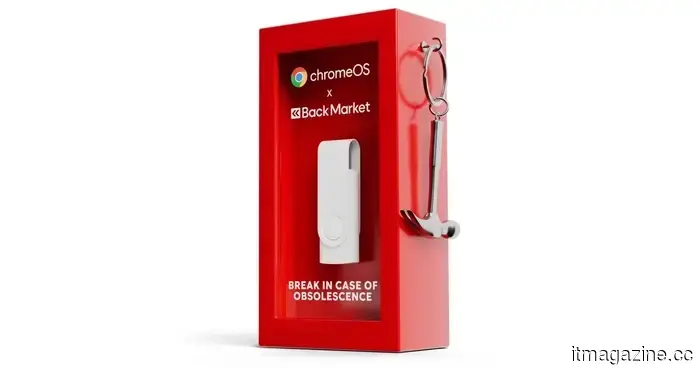 For only $3, Google's magic stick can revive your old PC.
Google and Back Market have introduced a $3 ChromeOS Flex USB Kit aimed at reviving older Windows 10 computers. This kit comes with the free operating system, instructional guides, and video tutorials, offering a more affordable solution than purchasing a new laptop.
For only $3, Google's magic stick can revive your old PC.
Google and Back Market have introduced a $3 ChromeOS Flex USB Kit aimed at reviving older Windows 10 computers. This kit comes with the free operating system, instructional guides, and video tutorials, offering a more affordable solution than purchasing a new laptop.
 Space data centers: SpaceX and Blue Origin compete for orbital dominance as scientists raise questions about the underlying physics.
SpaceX has submitted a proposal for one million data center satellites, while Blue Origin has aimed for 51,600. Experts indicate that the principles of cooling, radiation, and expenses render orbital computing a prospect that is decades away.
Space data centers: SpaceX and Blue Origin compete for orbital dominance as scientists raise questions about the underlying physics.
SpaceX has submitted a proposal for one million data center satellites, while Blue Origin has aimed for 51,600. Experts indicate that the principles of cooling, radiation, and expenses render orbital computing a prospect that is decades away.
Tesla surpasses BYD in electric vehicle sales for Q1 2026, but rising inventory and a downturn in Europe overshadow the achievement.
In Q1 2026, Tesla delivered 358,023 electric vehicles, surpassing BYD's 310,389. However, the company fell short of Wall Street expectations, produced 50,000 more vehicles than planned, and experienced a significant drop in European registrations.