

Space data centers: SpaceX and Blue Origin compete for orbital dominance as scientists raise questions about the underlying physics.
The appeal of the idea is in its straightforwardness: artificial intelligence demands more energy than Earth-based power grids can provide, so the proposal is to relocate data centers to orbit, where sunlight is constant and electricity is abundant. SpaceX, Blue Origin, and a growing number of startups are now in a race to bring that scenario to reality. However, scientists and engineers point out that this vision overlooks critical aspects of thermodynamics, economics, and orbital mechanics that remain unexplored.
On January 30, SpaceX applied to the Federal Communications Commission (FCC) for authorization to launch up to one million satellites into low Earth orbit, each equipped with computing equipment designed to create what the company calls a constellation with "unprecedented computing capacity for advanced artificial intelligence models." These satellites would operate at altitudes of 500 to 2,000 kilometers, positioned in orbits that maximize sunlight exposure, and would route data through SpaceX's existing Starlink network. SpaceX also sought a waiver from the FCC's typical deployment requirements, which generally mandate that half of a satellite constellation be active within six years.
Seven weeks later, Blue Origin submitted its own application. Project Sunrise plans for 51,600 satellites in sun-synchronous orbits between 500 and 1,800 kilometers, enhanced by the previously announced TeraWave constellation of 5,408 satellites that will offer ultra-high-speed optical backhaul. While SpaceX focused on sheer scale in its application, Blue Origin highlighted the architectural aspects: its system would conduct computations in orbit and transmit results back to Earth via TeraWave's mesh network.
The startup scene is progressing even more rapidly. Starcloud, previously known as Lumen Orbit, secured $170 million at a $1.1 billion valuation in March, becoming the fastest unicorn in Y Combinator’s history just 17 months after completing the program. The company launched its first satellite equipped with an Nvidia H100 GPU in November 2025 and filed with the FCC in February for a constellation of up to 88,000 satellites. Aethero, a defense-oriented startup developing space-grade computers with Nvidia Orin NX chips shielded from radiation, raised $8.4 million and is testing hardware in orbit this year.
The commercial rationale is based on a real issue. Global electricity consumption by data centers reached approximately 415 terawatt-hours in 2024, and the International Energy Agency forecasts it could exceed 1,000 TWh by 2026, driven by accelerated growth in AI server usage at about 30 percent annually. In Virginia, data centers account for 26 percent of the electrical supply, while Ireland's share could reach 32 percent by the year’s end. There are genuine grid limitations, permitting delays, and significant political opposition to expanding terrestrial capacity.
However, scientists argue, the challenges posed by physics make orbital computing extraordinarily difficult at any significant scale. The primary issue is heat. In space, there’s no air to disperse heat from processors; only radiative cooling is available, which necessitates large surface areas. To dissipate one megawatt of thermal energy while maintaining electronics at a stable 20 degrees Celsius, about 1,200 square meters of radiator space are required—about four tennis courts. A data center operating at several hundred megawatts, the minimum for commercial viability, would need radiators thousands of times larger than those utilized on the International Space Station.
Radiation presents another major hurdle. Low Earth orbit subjects unshielded chips to cosmic rays and trapped particles that can cause bit flips and permanent circuit damage. Hardening against radiation increases hardware costs by 30 to 50 percent and decreases performance by 20 to 30 percent. An alternative approach, known as triple modular redundancy, would necessitate launching three copies of each chip, along with three times the cooling, electricity, and mass. Starcloud's strategy of using commercial GPUs with external shielding is an intriguing test, but no one has proven its effectiveness at a large scale or over hardware lifetimes that span years instead of months.
Latency is another limitation. A million satellites distributed among orbital shells from 500 to 2,000 kilometers cannot achieve the tight connectivity necessary for cutting-edge model training, where communication delays between nodes must remain in the microsecond range. Low Earth orbit results in minimum latencies of several milliseconds for inter-satellite links and 60 to 190 milliseconds for ground-to-orbit round trips, in contrast to 10 to 50 milliseconds for terrestrial content delivery networks. This suggests that orbital infrastructure may work for inference workloads, but not for training, which currently represents the majority of AI computing demand.
Cost is yet another factor. IEEE Spectrum estimated that a one-gigawatt orbital data center could cost over $50 billion, about three times the price of a similar terrestrial facility including five years of operation. Google has stated that launch costs must drop below $200 per kilogram for space-based computing to be financially viable. Currently, SpaceX
Other articles
 The Emergence of AI in Penetration Testing: Analyzing the Future of Cybersecurity
Artificial intelligence has transitioned from being merely a laboratory experiment to increasingly integrating into everyday software. It is subtly assisting developers in writing code, supporting analysts with research, and driving tools within banks, hospitals, and technology firms. In recent years, large language models (LLMs) have evolved from a point of interest to essential components of numerous digital products. However, as companies have hurried to create [...]
The Emergence of AI in Penetration Testing: Analyzing the Future of Cybersecurity
Artificial intelligence has transitioned from being merely a laboratory experiment to increasingly integrating into everyday software. It is subtly assisting developers in writing code, supporting analysts with research, and driving tools within banks, hospitals, and technology firms. In recent years, large language models (LLMs) have evolved from a point of interest to essential components of numerous digital products. However, as companies have hurried to create [...]
 Space Data Centers: SpaceX and Blue Origin Compete for Orbit as Scientists Scrutinize the Physics
SpaceX has submitted a request for 1 million data center satellites, while Blue Origin has applied for 51,600. Experts indicate that the challenges related to cooling, radiation, and expenses suggest that orbital computing is still many years off.
Space Data Centers: SpaceX and Blue Origin Compete for Orbit as Scientists Scrutinize the Physics
SpaceX has submitted a request for 1 million data center satellites, while Blue Origin has applied for 51,600. Experts indicate that the challenges related to cooling, radiation, and expenses suggest that orbital computing is still many years off.
 Tesla surpasses BYD in electric vehicle sales for Q1 2026, but rising inventory and a downturn in Europe overshadow the achievement.
In Q1 2026, Tesla delivered 358,023 electric vehicles, surpassing BYD's 310,389. However, the company fell short of Wall Street expectations, produced 50,000 more vehicles than planned, and experienced a significant drop in European registrations.
Tesla surpasses BYD in electric vehicle sales for Q1 2026, but rising inventory and a downturn in Europe overshadow the achievement.
In Q1 2026, Tesla delivered 358,023 electric vehicles, surpassing BYD's 310,389. However, the company fell short of Wall Street expectations, produced 50,000 more vehicles than planned, and experienced a significant drop in European registrations.
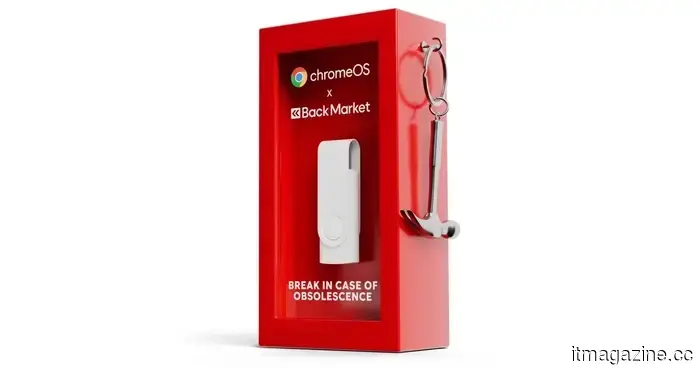 For only $3, Google's magic stick can revive your old PC.
Google and Back Market have introduced a $3 ChromeOS Flex USB Kit aimed at reviving older Windows 10 computers. This kit comes with the free operating system, instructional guides, and video tutorials, offering a more affordable solution than purchasing a new laptop.
For only $3, Google's magic stick can revive your old PC.
Google and Back Market have introduced a $3 ChromeOS Flex USB Kit aimed at reviving older Windows 10 computers. This kit comes with the free operating system, instructional guides, and video tutorials, offering a more affordable solution than purchasing a new laptop.
 Thinking AI can improve your dating life? This actor's experience suggests otherwise.
Actor and writer Rhik Samadder asked AI to generate his dating profile, messages, and conversation starters, but soon discovered that the chatbot's confidence quickly crumbles in actual dating situations.
Thinking AI can improve your dating life? This actor's experience suggests otherwise.
Actor and writer Rhik Samadder asked AI to generate his dating profile, messages, and conversation starters, but soon discovered that the chatbot's confidence quickly crumbles in actual dating situations.
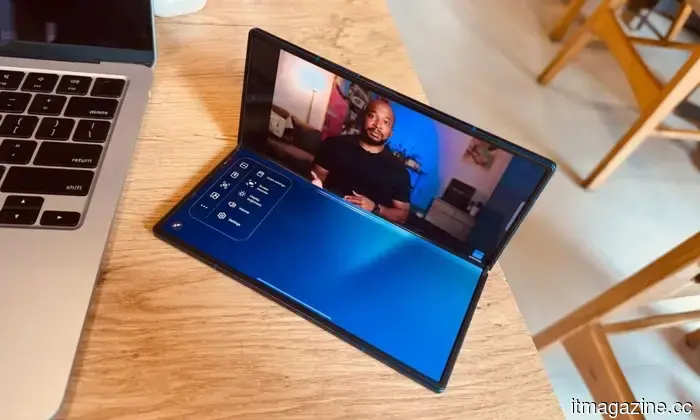 Don't expect any display upgrade surprises with Samsung's upcoming Galaxy Z foldables.
The display enhancement of the Galaxy Z Fold 8 has bypassed a generation since the existing version is already excellent.
Don't expect any display upgrade surprises with Samsung's upcoming Galaxy Z foldables.
The display enhancement of the Galaxy Z Fold 8 has bypassed a generation since the existing version is already excellent.
Space data centers: SpaceX and Blue Origin compete for orbital dominance as scientists raise questions about the underlying physics.
SpaceX has submitted a proposal for one million data center satellites, while Blue Origin has aimed for 51,600. Experts indicate that the principles of cooling, radiation, and expenses render orbital computing a prospect that is decades away.