
Tesla surpasses BYD in electric vehicle sales for Q1 2026, but an increase in inventory and a decline in Europe overshadow the victory.
In the first quarter of 2026, Tesla delivered 358,023 battery electric vehicles, surpassing BYD's 310,389 pure electric vehicle sales and reclaiming the global quarterly lead in BEVs that it had lost throughout 2025. The difference, approximately 48,000 units, was significant but did not eliminate the rising concerns about Elon Musk's company.
The 358,023 figure, reported on Thursday, fell short of Wall Street's expectation of 365,645 by around 7,600 vehicles, leading to a drop of more than 5 percent in Tesla's stock, marking its largest single-day decline of the year. Since January, the company has experienced a loss of nearly 20 percent in market value. More worrying than the delivery miss was the discrepancy between production and deliveries; Tesla manufactured 408,386 vehicles in the quarter but only delivered 358,023, resulting in an addition of over 50,000 units to inventory in that period. This signals a demand issue rather than a logistics problem.
Compared to the same period last year, deliveries increased by 6.3 percent from 336,681 units in Q1 2025. However, Q1 2025 was Tesla's weakest quarter in recent years, impacted by production halts at all four factories due to the transition to the updated “Juniper” Model Y. Exceeding a low point does not equate to a sign of recovery. The Model 3 and Model Y together made up 341,893 deliveries for the quarter, with production for these models reaching 394,611, indicating that the inventory increase was primarily in Tesla's main offerings. The Cybertruck was a notable exception, showing a substantial year-on-year increase of 111 percent to 38,500 deliveries.
BYD's quarterly decline also comes with its own caveats. The Chinese New Year holidays occur in Q1, consistently lowering domestic sales volumes and making this period BYD's weakest for pure electric sales annually. In total, BYD sold 700,463 new energy vehicles in the quarter, nearly doubling Tesla’s output, but this was about a 30 percent decrease compared to Q1 2025 and reflects a strategic shift. Consumers and BYD itself are increasingly moving toward the company's DM-i and DM-p plug-in hybrid platforms, which provide extended-range options that pure electric vehicles cannot offer in China's vast interior markets.
When considering the full-year context, the quarterly results seem even less convincing as a sign of trend reversal. In 2025, BYD delivered 2,254,714 BEVs to Tesla's 1,636,129, a gap exceeding 600,000 units that won't be bridged by seasonal variations. Although BYD’s domestic market share contracted from 27 percent to 17 percent in the first two months of 2026 due to a price war and the end of government purchase subsidies, the company is compensating with a strong international strategy: overseas shipments reached 120,083 vehicles in March alone, a 65 percent year-on-year increase, contributing to nearly 40 percent of BYD's monthly sales from export markets for the first time. This rapid geographic diversification is something Europe’s technology and industrial leaders have struggled to achieve.
Tesla's position in Europe has declined more sharply than in any other major market. Registrations in the EU, EFTA, and UK dropped 17 percent in January from an already low previous year, with Norway down 88 percent following the end of long-standing EV tax exemptions on January 1, the Netherlands falling 67 percent, and France declining 42 percent. The causes are structural, not cyclical. Musk's involvement in the Trump administration's Department of Government Efficiency sparked a global boycott movement, leading to protests at Tesla showrooms in over 250 cities. Dan Ives, a Wedbush Securities analyst considered a leading proponent of Tesla on Wall Street, cautioned that demand could be permanently reduced by about 10 percent, asserting that the brand damage from Musk's political actions will have lasting effects in Europe and the US.
March brought some relief, with Tesla's European registrations tripling in France and more than doubling in the Nordic countries, albeit from the exceptionally low figures established in January and February. The sustainability of this upward trend largely depends on whether European consumers can separate the product from its CEO, as competitors from China are rapidly repositioning their manufacturing within Europe.
The tariff situation adds to the competitive pressure. EU tariffs on Chinese-made electric vehicles can reach as high as 28.8 percent for certain manufacturers, with the United States imposing additional duties. This has prompted Chinese automakers like Geely and BYD to localize production in Europe and Southeast Asia, a strategy that will eliminate the tariff disadvantage while maintaining the benefits of a vertically integrated Chinese battery supply chain that European manufacturers have struggled to replicate. BYD is already establishing factories in Hungary, Turkey, and Thailand, and
Other articles
 Space data centers: SpaceX and Blue Origin compete for orbit as scientists raise questions about the physics involved.
SpaceX submitted an application for 1 million data center satellites, while Blue Origin filed for 51,600. Experts indicate that the challenges of cooling, radiation, and expenses suggest that orbital computing is still several decades away.
Space data centers: SpaceX and Blue Origin compete for orbit as scientists raise questions about the physics involved.
SpaceX submitted an application for 1 million data center satellites, while Blue Origin filed for 51,600. Experts indicate that the challenges of cooling, radiation, and expenses suggest that orbital computing is still several decades away.
 For only $3, Google’s magic stick can rejuvenate your outdated PC.
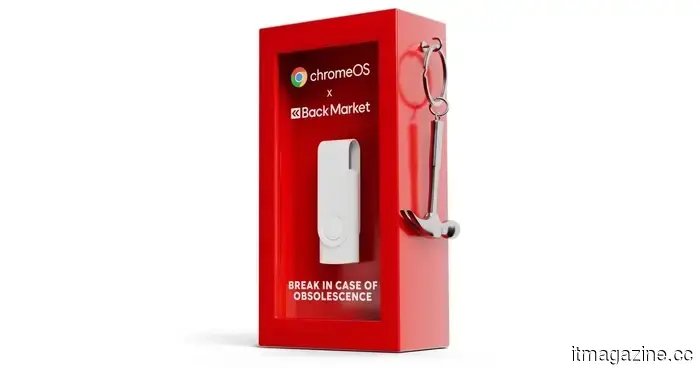
Google and Back Market have introduced a $3 ChromeOS Flex USB Kit aimed at revitalizing old Windows 10 computers. This kit comes with the complimentary operating system, along with guides and video tutorials, offering a more affordable solution compared to purchasing a new laptop.
For only $3, Google’s magic stick can rejuvenate your outdated PC.
Google and Back Market have introduced a $3 ChromeOS Flex USB Kit aimed at revitalizing old Windows 10 computers. This kit comes with the complimentary operating system, along with guides and video tutorials, offering a more affordable solution compared to purchasing a new laptop.
 For only $3, Google's magic stick can revive your old PC.
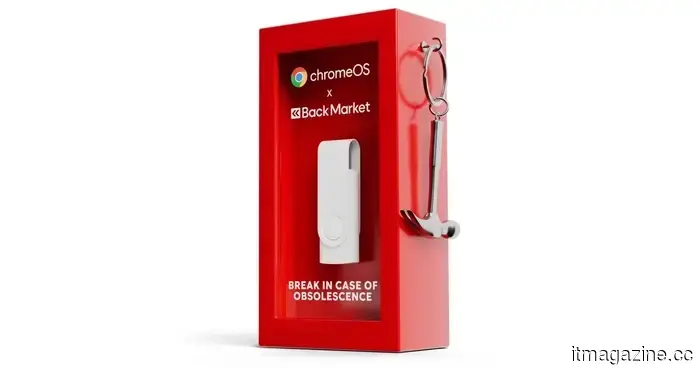
Google and Back Market have introduced a $3 ChromeOS Flex USB Kit aimed at reviving older Windows 10 computers. This kit comes with the free operating system, instructional guides, and video tutorials, offering a more affordable solution than purchasing a new laptop.
For only $3, Google's magic stick can revive your old PC.
Google and Back Market have introduced a $3 ChromeOS Flex USB Kit aimed at reviving older Windows 10 computers. This kit comes with the free operating system, instructional guides, and video tutorials, offering a more affordable solution than purchasing a new laptop.
 Microsoft introduces three proprietary AI models as a direct competitor to OpenAI.
Microsoft launched MAI-Transcribe-1, MAI-Voice-1, and MAI-Image-2 through Foundry, developed by Mustafa Suleyman's superintelligence team. These models directly rival those of OpenAI.
Microsoft introduces three proprietary AI models as a direct competitor to OpenAI.
Microsoft launched MAI-Transcribe-1, MAI-Voice-1, and MAI-Image-2 through Foundry, developed by Mustafa Suleyman's superintelligence team. These models directly rival those of OpenAI.
 Thinking AI can improve your dating life? This actor's experience suggests otherwise.
Actor and writer Rhik Samadder asked AI to generate his dating profile, messages, and conversation starters, but soon discovered that the chatbot's confidence quickly crumbles in actual dating situations.
Thinking AI can improve your dating life? This actor's experience suggests otherwise.
Actor and writer Rhik Samadder asked AI to generate his dating profile, messages, and conversation starters, but soon discovered that the chatbot's confidence quickly crumbles in actual dating situations.
 AI is handling the tedious tasks for insurance companies, and the situation is worsening.
Artificial intelligence is now determining the approval of your insurance claims, and denial rates are rising rapidly. Here’s what’s going on and why your physician's perspective may no longer hold significant weight.
AI is handling the tedious tasks for insurance companies, and the situation is worsening.
Artificial intelligence is now determining the approval of your insurance claims, and denial rates are rising rapidly. Here’s what’s going on and why your physician's perspective may no longer hold significant weight.
Tesla surpasses BYD in electric vehicle sales for Q1 2026, but an increase in inventory and a decline in Europe overshadow the victory.
In the first quarter of 2026, Tesla delivered 358,023 electric vehicles, surpassing BYD's 310,389, yet fell short of Wall Street predictions. The company produced 50,000 more vehicles than needed and experienced a significant decline in European registrations.