
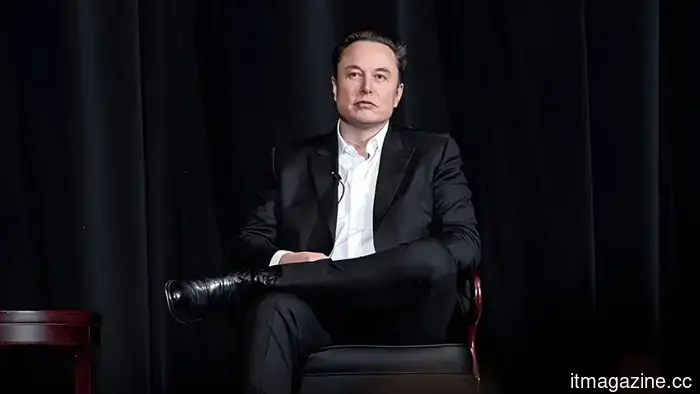
SpaceX submits application for unprecedented $75 billion IPO amid rising conflicts of interest.
SpaceX has submitted confidential documentation to the Securities and Exchange Commission for a potential public share sale, as reported by multiple sources familiar with the application. This move could pave the way for the largest initial public offering (IPO) ever, likely positioning Elon Musk as the world's first trillionaire. Internally referred to as Project Apex, the offering may occur as soon as June and aims to generate up to $75 billion, with a valuation reaching as high as $1.75 trillion. Such an amount would more than double the existing record set by Saudi Aramco’s $29 billion listing in 2019 and would value SpaceX at approximately 94 times its projected 2025 revenue.
Twenty-one banks are set to manage the offering, including Goldman Sachs, JPMorgan Chase, Morgan Stanley, Bank of America, and Citigroup in leading roles, according to CNBC. Musk, who possesses around 42 percent of SpaceX, has a current estimated net worth of $823 billion according to Forbes. At a $1.75 trillion valuation, Musk's share would be valued at over $730 billion, pushing his total wealth past the trillion-dollar threshold and placing him further ahead of any individual in modern history.
However, this listing represents more than just a rocket company. In February, SpaceX integrated Musk's artificial intelligence firm xAI in an all-stock deal that valued the combined company at $1.25 trillion. This merger, which raised immediate concerns regarding governance, optics, and valuation, included a company that was reportedly losing around $1 billion each month and merged it with one that generates substantial cash flow. Additionally, SpaceX brought Musk's social media platform X, formerly known as Twitter, under its corporate umbrella, creating a conglomerate that encompasses orbital launches, satellite internet, defense contracts, artificial intelligence, and social media — all controlled by a single person who also supports the current U.S. president financially.
The primary driver for this valuation is Starlink, the satellite internet service that has emerged as the most successful commercial space endeavor ever. In 2025, Starlink achieved $10.6 billion in revenue with 54 percent EBITDA margins, representing about two-thirds of SpaceX's total revenue of $16 billion. The subscriber base has expanded from 10,000 beta users in 2021 to over 10 million paying customers across 150 nations by February 2026. The Federal Aviation Administration's approval in January 2026 for up to 44 annual Starship launches has given investors the confidence needed to support such a significant public valuation.
The xAI aspect of the public entity is, however, still under development. Musk stated in March that xAI "was not built right the first time" and required a complete rebuild. Following the merger, all 11 original co-founders of xAI have left, including researchers from Google DeepMind, Google Brain, and Microsoft Research. Critics have characterized the merger as a financial lifeline that allows xAI's increasing losses to be covered by Starlink's profits ahead of the IPO, a claim that Musk has dismissed.
The conflicts of interest surrounding this offering are unprecedented in U.S. capital markets. In the last five years, SpaceX has secured $6 billion in contracts from NASA, the Department of Defense, and other federal agencies, according to USAspending.gov. The company serves as NASA’s main launch provider for crewed missions to the International Space Station and holds over $4 billion in contracts for the Artemis lunar-landing project. Reports indicate that the Pentagon is preparing to grant SpaceX a $2 billion contract to create a 600-satellite constellation for missile tracking as part of the Golden Dome missile-defense initiative.
Musk has been the largest individual contributor to Trump’s 2024 presidential campaign and headed the Department of Government Efficiency, or DOGE, a temporary body responsible for cancelling over 10,000 federal contracts it saw as unnecessary. Observers have noted that none of these cancellations affected Musk’s companies. Among SpaceX’s current investors is Donald Trump Jr., the president’s eldest son, who holds shares through 1789 Capital, a venture firm that partnered with him shortly after his father's second presidential victory. This fund, which manages over $1 billion in assets, has invested around $50 million in SpaceX and xAI and has backed several companies that received government contracts under the current administration. The White House has consistently denied any conflicts of interest regarding the presidency and the Trump family's business dealings.
Governance risks extend beyond politics. SpaceX has operated as a private company with minimal public disclosure for over two decades. Going public will require the company to file quarterly earnings reports, disclose executive pay, open its books to audits, and face shareholder lawsuits similar to those Tesla routinely faces. Tesla shareholders are currently suing Musk concerning the company’s $2 billion investment in xAI, claiming he directed shareholder capital to his personal venture. The SpaceX-xAI merger, where both the buyer and seller were
Other articles
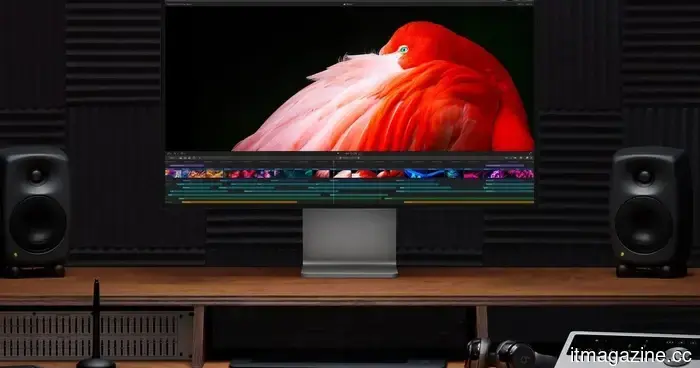 Apple made an unexpected move by reducing the price of the Studio Display XDR.
A sense of pricing rationality has joined the conversation.
Apple made an unexpected move by reducing the price of the Studio Display XDR.
A sense of pricing rationality has joined the conversation.
 Swiss finance minister brings criminal charges regarding abuse generated by Grok on X.
Karin Keller-Sutter, the former president of Switzerland, has initiated defamation proceedings after Grok was activated to produce sexist insults regarding her on X. This case may establish the first legal precedent concerning the liability of AI platforms.
Swiss finance minister brings criminal charges regarding abuse generated by Grok on X.
Karin Keller-Sutter, the former president of Switzerland, has initiated defamation proceedings after Grok was activated to produce sexist insults regarding her on X. This case may establish the first legal precedent concerning the liability of AI platforms.
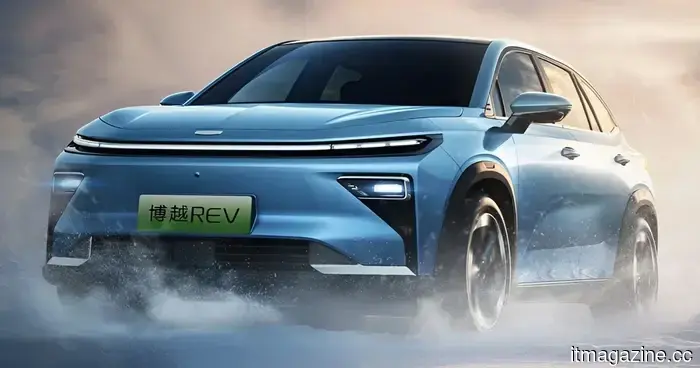 Volvo's parent company has just announced a $15,000 extended-range electric vehicle, highlighting the significant value disparity in the US market.
Geely's latest Boyue EREV is priced starting at only $14,900 in China, highlighting once again that the most competitive pricing for electrified vehicles is taking place far from the U.S. market.
Volvo's parent company has just announced a $15,000 extended-range electric vehicle, highlighting the significant value disparity in the US market.
Geely's latest Boyue EREV is priced starting at only $14,900 in China, highlighting once again that the most competitive pricing for electrified vehicles is taking place far from the U.S. market.
 Android 17 is significantly enhancing location privacy.
I appreciate the offer, but I don’t require a shadow!
Android 17 is significantly enhancing location privacy.
I appreciate the offer, but I don’t require a shadow!
 AI faces a unique type of bias issue, yet it is a commonly recurring problem.
Recent studies indicate that AI bias extends beyond just algorithms. Women are utilizing AI technology less frequently, receiving diminished support, and are lagging in its adoption within the workplace.
AI faces a unique type of bias issue, yet it is a commonly recurring problem.
Recent studies indicate that AI bias extends beyond just algorithms. Women are utilizing AI technology less frequently, receiving diminished support, and are lagging in its adoption within the workplace.
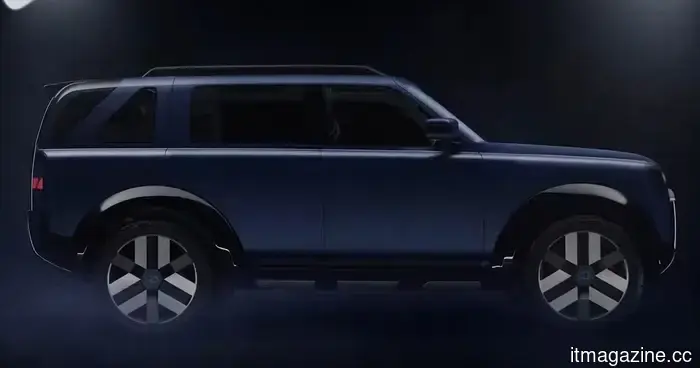 Land Rover reintroduces the Freelander as an electric vehicle brand with plans for six models.
Land Rover is bringing back Freelander as an independent electric vehicle brand, with plans for six models. The inaugural model will debut this year in China, marking a quick and technology-focused entry into the premium electric car market.
Land Rover reintroduces the Freelander as an electric vehicle brand with plans for six models.
Land Rover is bringing back Freelander as an independent electric vehicle brand, with plans for six models. The inaugural model will debut this year in China, marking a quick and technology-focused entry into the premium electric car market.
SpaceX submits application for unprecedented $75 billion IPO amid rising conflicts of interest.
SpaceX has submitted a confidential application for an IPO that has the potential to generate $75 billion and value the company at $1.75 trillion, which would make Musk the world's first trillionaire. The connections with Trump, NASA, and the defense sector are extensive.