

AI faces a unique type of bias issue, yet it is a commonly recurring problem.
Women are lagging behind in the adoption of AI, which could have long-term consequences.
Discussions around AI bias typically focus on algorithms, including skewed datasets, inaccurate outputs, and entrenched stereotypes within models. However, recent research indicates a more subtle issue regarding who is utilizing AI in the first place. A report by Lean In reveals that women are less likely than men to leverage AI tools in their workplaces, and when they do, they often receive less recognition and support.
The statistics are telling. Men are more inclined to use AI regularly (33% compared to 27%), are more often reported to have used it at work, and are significantly more likely to receive encouragement from managers to adopt it. This issue extends beyond mere access to the technology; it also pertains to perceptions. Women tend to express greater concerns about the risks associated with AI, question its reliability, and sometimes fear being judged for employing it, fearing it may be perceived as “cheating.”
The significance of this issue goes beyond its apparent implications.
This disparity could exacerbate rapidly. As AI becomes an essential skill in the workplace, early adopters are likely to gain better job prospects. If one demographic consistently utilizes these tools less and receives less acknowledgment for it, this divide may evolve into genuine career setbacks over time. Furthermore, this phenomenon is not happening in isolation. Broader studies indicate women are underrepresented in tech and AI positions, suggesting they not only use these technologies less frequently but are also less involved in their development.
What makes this situation noteworthy is its familiarity. This isn't a new form of bias; it's an existing one manifesting in a different context. The same historical patterns of diminished recognition, lack of encouragement, and increased scrutiny seen in workplaces over decades are emerging in the adoption and application of AI.
Identical bias, fresh technology?
With AI becoming a fundamental workplace skill, even minor discrepancies like these can escalate into lost opportunities, stunted career advancement, and reduced representation in shaping technology itself. Consequently, if the users of AI aren't equally represented, the future they create will lack diversity as well.
Varun is a seasoned technology journalist and editor with more than eight years of experience in the consumer tech media landscape.
I’m tired of the chaotic internet, but I’ve discovered a cleanup tool that makes it easy to read.
No ads, no clutter, just clear text.
Let’s face it, the modern internet is chaotic. Between pop-ups, autoplay videos, cookie banners, and ads all over, reading online can feel like a struggle. Enter Textise, a tool that serves as a "strip everything away" button for the web. Textise transforms any webpage into a simplified, text-only version, eliminating ads, images, scripts, and unnecessary clutter. What remains is pure content: no distractions, no slow loading times, and no fuss. It’s quick, lightweight, and provides a nostalgic return to a simpler version of the internet.
Read more
Researchers have developed a chip that operates at temperatures exceeding those of lava.
This breakthrough occurred by chance and could represent one of the most significant chip innovations in decades.
Heat has traditionally limited our ability to create electronic devices capable of functioning in extreme conditions. Electronics tend to begin thermal throttling at elevated temperatures and can fail entirely if temperatures exceed 200 degrees Celsius. However, this may be changing, as a team from the University of Southern California appears to have surpassed this thermal barrier. Their study, published in Science, outlines a new memory chip that continues to function reliably at 700 degrees Celsius, which is hotter than molten lava.
Read more
Slack is adding a multitude of new features.
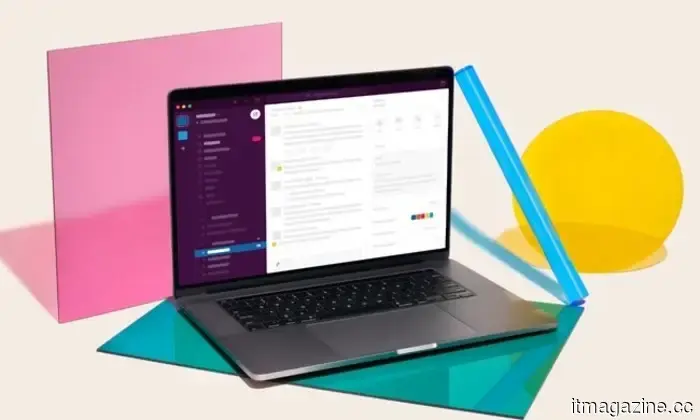
Slack is not just a messaging app; it’s a web-based workspace aimed at unifying your entire team. Rather than juggling multiple emails, switching between various project tools, or tracking down team members in direct messages, Slack consolidates everything into one organized platform. What is particularly exciting now is its increasing integration of AI. Slackbot, which was once a basic assistant, is evolving into a more capable tool. It can send reminders, respond to common inquiries, automate simple tasks, and help teams manage their work without constant communication hassles. While Slack was already effective at synchronizing discussions and collaborations, these enhancements aim to transform Slackbot into a more reliable team member.
What’s new here?
Read more






Other articles
 Land Rover is reintroducing the Freelander as an electric vehicle brand, with plans for six models.
Land Rover is bringing back Freelander as an independent electric vehicle brand, with six models in the pipeline. The initial model will be introduced this year in China, marking a swift and technology-driven entry into the premium electric market.
Land Rover is reintroducing the Freelander as an electric vehicle brand, with plans for six models.
Land Rover is bringing back Freelander as an independent electric vehicle brand, with six models in the pipeline. The initial model will be introduced this year in China, marking a swift and technology-driven entry into the premium electric market.
 Apple executed an unexpected move by reducing the price of the Studio Display XDR.
Pricing rationality has joined the conversation.
Apple executed an unexpected move by reducing the price of the Studio Display XDR.
Pricing rationality has joined the conversation.
 Stay informed quicker with Google Home's latest feature, Gemini Live.
The Gemini Live upgrade for Google Home introduces interactive news that can be explored through voice commands, transforming brief updates into more extensive discussions that adjust to your inquiries in real-time.
Stay informed quicker with Google Home's latest feature, Gemini Live.
The Gemini Live upgrade for Google Home introduces interactive news that can be explored through voice commands, transforming brief updates into more extensive discussions that adjust to your inquiries in real-time.
 SpaceX submits application for a record $75 billion initial public offering as various conflicts of interest increase.
SpaceX has submitted a confidential application for an IPO that could generate $75 billion, valuing the company at $1.75 trillion and potentially making Musk the first trillionaire. The connections with Trump, NASA, and the defense sector are significant.
SpaceX submits application for a record $75 billion initial public offering as various conflicts of interest increase.
SpaceX has submitted a confidential application for an IPO that could generate $75 billion, valuing the company at $1.75 trillion and potentially making Musk the first trillionaire. The connections with Trump, NASA, and the defense sector are significant.
 Legora has just reached $100 million in revenue, a milestone achieved in 18 months.
Swedish legal AI company Legora reports that it has surpassed $100 million in annual recurring revenue, rising from $1 million just 18 months ago, as it competes with Harvey for leadership in law-firm AI.
Legora has just reached $100 million in revenue, a milestone achieved in 18 months.
Swedish legal AI company Legora reports that it has surpassed $100 million in annual recurring revenue, rising from $1 million just 18 months ago, as it competes with Harvey for leadership in law-firm AI.
 Legora has just reached $100 million in revenue, achieving this milestone in 18 months.
Swedish legal AI startup Legora reports that it has surpassed $100 million in annual recurring revenue, a significant increase from $1 million just 18 months prior, as it vies with Harvey for leadership in law-firm AI.
Legora has just reached $100 million in revenue, achieving this milestone in 18 months.
Swedish legal AI startup Legora reports that it has surpassed $100 million in annual recurring revenue, a significant increase from $1 million just 18 months prior, as it vies with Harvey for leadership in law-firm AI.
AI faces a unique type of bias issue, yet it is a commonly recurring problem.
Recent studies indicate that AI bias extends beyond just algorithms. Women are utilizing AI technology less frequently, receiving diminished support, and are lagging in its adoption within the workplace.