
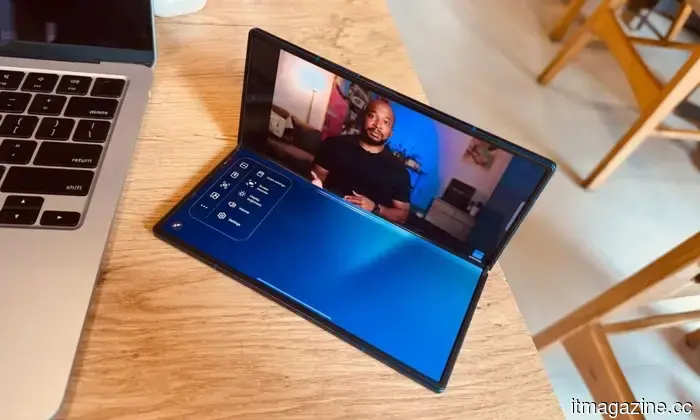
Don't expect any display upgrade surprises with Samsung's upcoming Galaxy Z foldables.
For the third consecutive year, Samsung's foldable smartphones will utilize M13 OLEDs. While this might seem like a missed chance for innovation, industry analysts believe it is a strategic, budget-conscious decision indicative of a maturing market.
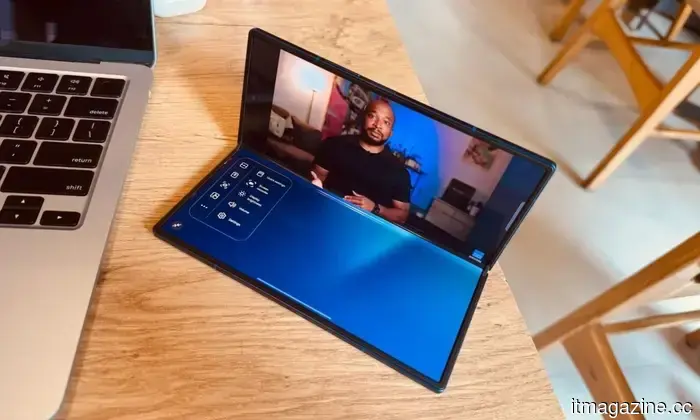
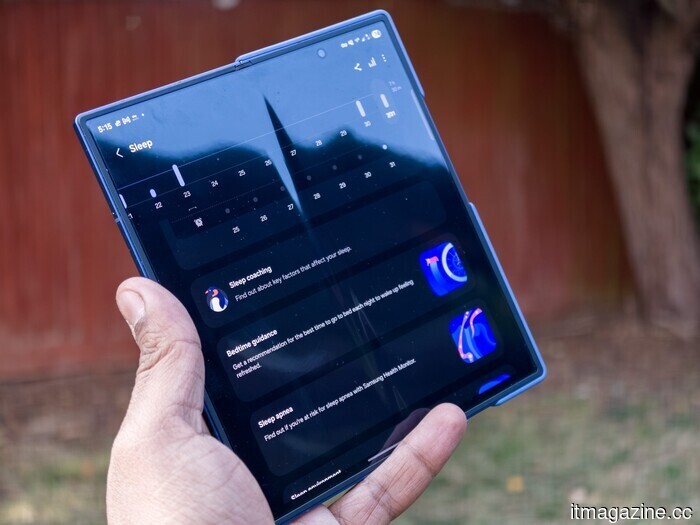
Samsung's upcoming foldable devices are set to be announced in the next few months, but if you anticipated a significant advancement in display technology, you may need to adjust your expectations. The Galaxy Z Fold 8, Flip 8, and the Wide Fold are expected to use the same M13 OLED panel found in the Fold 7 (and also the Fold 6).
To provide some background on OLED panels, they are manufactured by layering various light-emitting materials, such as dopants, hosts, and premises, along with commonly utilized layer materials. Samsung Display refers to these combinations as "material sets."
These material sets are identified by a capital 'M' followed by a number. The Galaxy S24 was the first to feature the M13 OLED panel. Since then, Samsung has used this same panel in the Fold 6, Flip 6, Fold 7, and Flip 7. Even the Galaxy S26 and S26 Plus come equipped with this two-year-old OLED panel.
The Galaxy S26 Ultra is the only model in the latest series to have been upgraded to the more recent M14 OLED panel. Now, according to reports, the foldables anticipated to launch in the third quarter of 2026 may still utilize the M13 panel.
The reasons behind Samsung's decision to continue using the M13 panel could be threefold. First, display technology has reached a performance plateau, meaning they are already bright enough, can effectively switch between refresh rates, and consume less power than before. Hence, changing materials or combinations every year no longer yields any substantial advancements.
Second, with the smartphone market becoming increasingly saturated by 2026, the introduction of flashy new technology (referring to the new panel) does not guarantee improved sales—a key concern for any company.
Finally, retaining the M13 OLED panel in the new foldables will allow Samsung to maintain competitive pricing. Similar to other components in a smartphone, rolling out a new material set would likely drive up costs.
For more than five years, Shikhar has been adept at simplifying advancements in consumer technology and conveying them succinctly.
In related news, Xiaomi has openly disclosed the substantial price increases for components due to the ongoing DRAM crisis, a rarity among tech giants. Lu Weibing, president of Xiaomi's smartphone division, shared insights on Weibo regarding the impact of rising memory prices on manufacturing costs.
Additionally, Honor is teasing its forthcoming smartphone, aiming to revitalise the affordable flagship market. The teaser suggests that the upcoming series, likely the Honor 600 Series, could present a strong competitor to existing flagships.
Meanwhile, early leaks regarding the Pixel 11 Pro XL indicate a larger device, but with a design that remains consistent with Google's current aesthetic, making it a familiar, yet bigger model.


Other articles
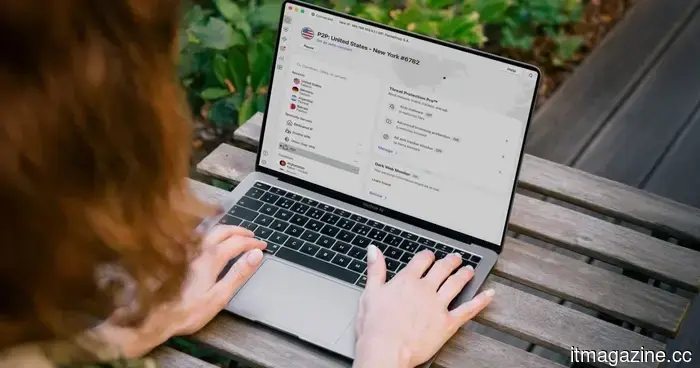 NordVPN has introduced a new complimentary tool that reveals the extent of your location data exposure on the internet.
NordVPN has introduced My Location, a complimentary tool that displays your actual physical location alongside your IP-based virtual location, assisting you in understanding what information websites have regarding your whereabouts.
NordVPN has introduced a new complimentary tool that reveals the extent of your location data exposure on the internet.
NordVPN has introduced My Location, a complimentary tool that displays your actual physical location alongside your IP-based virtual location, assisting you in understanding what information websites have regarding your whereabouts.
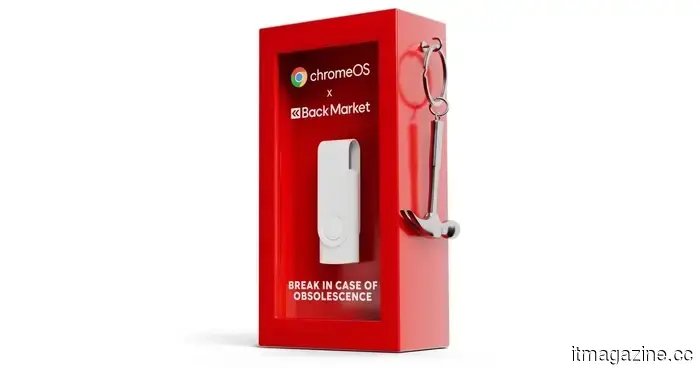 For only $3, Google’s magic stick can rejuvenate your outdated PC.
Google and Back Market have introduced a $3 ChromeOS Flex USB Kit aimed at revitalizing old Windows 10 computers. This kit comes with the complimentary operating system, along with guides and video tutorials, offering a more affordable solution compared to purchasing a new laptop.
For only $3, Google’s magic stick can rejuvenate your outdated PC.
Google and Back Market have introduced a $3 ChromeOS Flex USB Kit aimed at revitalizing old Windows 10 computers. This kit comes with the complimentary operating system, along with guides and video tutorials, offering a more affordable solution compared to purchasing a new laptop.
 Space data centers: SpaceX and Blue Origin compete for orbit as scientists raise questions about the physics involved.
SpaceX submitted an application for 1 million data center satellites, while Blue Origin filed for 51,600. Experts indicate that the challenges of cooling, radiation, and expenses suggest that orbital computing is still several decades away.
Space data centers: SpaceX and Blue Origin compete for orbit as scientists raise questions about the physics involved.
SpaceX submitted an application for 1 million data center satellites, while Blue Origin filed for 51,600. Experts indicate that the challenges of cooling, radiation, and expenses suggest that orbital computing is still several decades away.
 If you're relying on AI to improve your dating life, this actor's experience suggests otherwise.
Actor and writer Rhik Samadder allowed AI to create his dating profile, messages, and conversation starters, only to discover that the chatbot's confidence quickly crumbles in actual dating situations.
If you're relying on AI to improve your dating life, this actor's experience suggests otherwise.
Actor and writer Rhik Samadder allowed AI to create his dating profile, messages, and conversation starters, only to discover that the chatbot's confidence quickly crumbles in actual dating situations.
 Microsoft introduces three proprietary AI models as a direct competitor to OpenAI.
Microsoft launched MAI-Transcribe-1, MAI-Voice-1, and MAI-Image-2 through Foundry, developed by Mustafa Suleyman's superintelligence team. These models directly rival those of OpenAI.
Microsoft introduces three proprietary AI models as a direct competitor to OpenAI.
Microsoft launched MAI-Transcribe-1, MAI-Voice-1, and MAI-Image-2 through Foundry, developed by Mustafa Suleyman's superintelligence team. These models directly rival those of OpenAI.
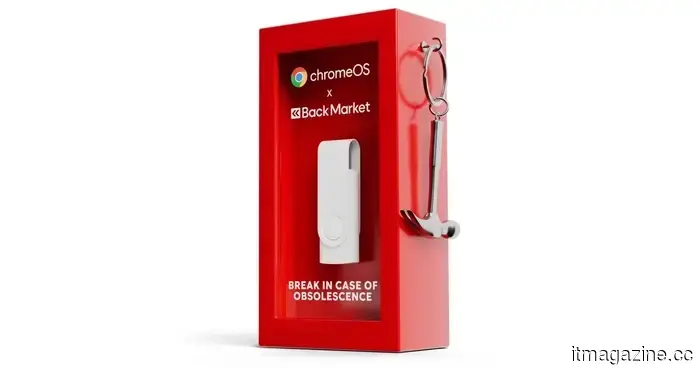 For only $3, Google's magic stick can revive your old PC.
Google and Back Market have introduced a $3 ChromeOS Flex USB Kit aimed at reviving older Windows 10 computers. This kit comes with the free operating system, instructional guides, and video tutorials, offering a more affordable solution than purchasing a new laptop.
For only $3, Google's magic stick can revive your old PC.
Google and Back Market have introduced a $3 ChromeOS Flex USB Kit aimed at reviving older Windows 10 computers. This kit comes with the free operating system, instructional guides, and video tutorials, offering a more affordable solution than purchasing a new laptop.
Don't expect any display upgrade surprises with Samsung's upcoming Galaxy Z foldables.
The display enhancement of the Galaxy Z Fold 8 has bypassed a generation since the existing version is already excellent.