
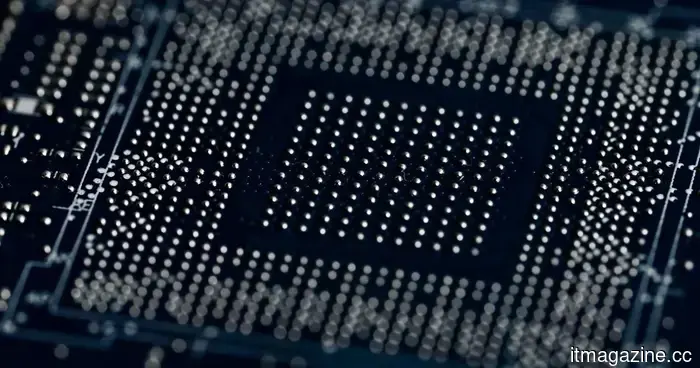
Researchers developed a chip capable of functioning at temperatures exceeding those of lava.
It occurred by chance, and it could be one of the most significant chip discoveries in recent decades.
Heat has been the major barrier preventing the creation of electronic devices that can withstand extreme conditions. Electronic devices not only start to experience thermal throttling at elevated temperatures, but if the temperature exceeds 200 degrees, they cease to function entirely.
However, this situation may change, as a research team from the University of Southern California appears to have shattered the thermal barrier. In a study published in Science, the researchers designed a new memory chip that continued to operate reliably at 700 degrees Celsius. To provide some context, that temperature is higher than molten lava.
The device exhibited no signs of failure. Seven hundred degrees was simply the limit of their testing apparatus. “You could call it a revolution,” stated Joshua Yang, the project's lead researcher. “It represents the best high-temperature memory ever demonstrated.”
So, how did they accomplish this?
The chip is structured like a small sandwich: tungsten on the top, a thin layer of ceramic in the middle, and graphene at the bottom. Each of these materials can endure extreme heat on its own, but the real innovation occurs at the graphene layer.
In a typical chip, heat forces metal atoms through the ceramic layer until both sides connect, which causes a short circuit. Graphene prevents this from occurring. Yang explained that graphene and tungsten behave like oil and water. Tungsten atoms that move toward graphene are unable to adhere to the surface and retreat instead. Without an anchor, the chip avoids short-circuiting.
The most exciting aspect? The team discovered this entirely by accident. “Honestly, it was by accident, as is the case with many discoveries,” Yang mentioned.
Why is breaking the thermal barrier important?
The thermal barrier has limited our ability to create machines capable of functioning in extreme temperatures. Consequently, we have been unable to send probes to planets with extremely high temperatures or conduct deep-earth drilling experiments. The new chip could enable such endeavors.
NASA
Another potential application for this chip is in artificial intelligence. Over 90% of the computing in AI systems, like ChatGPT, relies on a single type of mathematical calculation. This chip can perform those calculations the instant electricity flows through it, making it significantly faster and more energy-efficient than current technologies.
However, it is worth noting that a final product is still several years away. Yet as Yang remarked, “The missing component has been created.” Once it enters production, it will address one of the biggest challenges facing advancements in chip technology.
Rachit is an experienced tech journalist with more than seven years of experience covering the consumer technology scene.
AI faces a distinct kind of bias issue, which is often reiterated.
Women are lagging in adoption, which could have long-term repercussions.
AI bias is typically discussed in terms of algorithms: imbalanced datasets, erroneous outputs, and stereotypes integrated into models. Yet, new research indicates another, subtler issue regarding who gets to utilize AI in the first place. According to a recent report from Lean In, women are less likely to use AI tools at work compared to men, and even when they do use them, they are less likely to receive acknowledgment or support.
The statistics clearly illustrate the situation. Men are more inclined to use AI regularly (33% versus 27%), are more likely to have ever used it at work, and are notably more encouraged by managers to adopt it. Moreover, this disparity concerns not just access but perception as well. Women are more prone to worry about the potential risks of AI, doubt its accuracy, and fear being judged for utilizing it, including concerns that it might be perceived as "cheating."
Slack is adding more features that can be counted on fingers and toes.
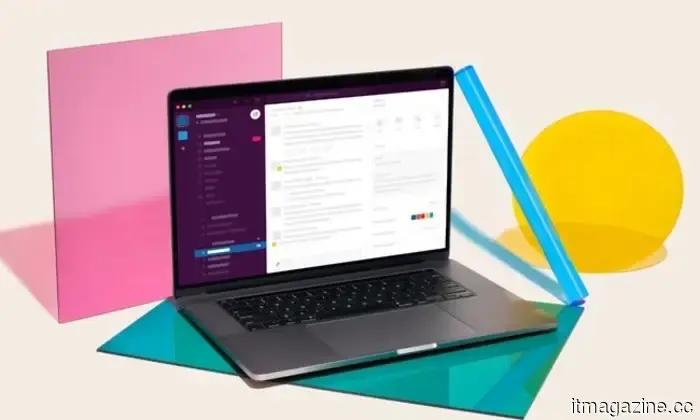
Slack is more than merely a chat application; it is a cloud-based workspace designed to consolidate your entire team in one location. Instead of managing endless emails, swapping between multiple project tools, or trying to reach people through direct messages, Slack integrates everything into a single, well-organized hub. What makes it increasingly intriguing now is its expanding use of AI. Slackbot, which once seemed like a simple assistant, is gradually becoming more advanced. It can send reminders, answer frequently asked questions, automate minor tasks, and help teams stay on track with their work without constant back-and-forth communication. While Slack already excelled at keeping conversations and collaboration synchronized, these new features aim to enhance Slackbot towards becoming a more dependable teammate.
What’s new in this regard?
Next-gen AR technology transforms any surface into a touchscreen without requiring specialized equipment.
No floating keyboards, no tired arms—just tap your desk and begin working.
Typing on a virtual keyboard suspended in mid-air may sound appealing until fatigue sets in. This is the experience associated with many augmented reality (AR) and mixed reality (MR) headsets today. Users often find themselves either juggling handheld controllers or keeping their hands raised for extended periods, leading to exhaustion.
Researchers at Tohoku University





Other articles
 Google Pixel devices may soon prevent users from reverting to a previous version of the Android operating system.
Google might be strengthening anti-rollback measures on upcoming Pixel devices, potentially preventing users from flashing previous Android versions, even for testing or recovery purposes.
Google Pixel devices may soon prevent users from reverting to a previous version of the Android operating system.
Google might be strengthening anti-rollback measures on upcoming Pixel devices, potentially preventing users from flashing previous Android versions, even for testing or recovery purposes.
 Why probability, rather than averages, is transforming decision-making in AI.
AI-driven tools such as ChanceOmeters assist organizations in assessing uncertainty, modeling results, and enhancing decision-making beyond simple averages.
Why probability, rather than averages, is transforming decision-making in AI.
AI-driven tools such as ChanceOmeters assist organizations in assessing uncertainty, modeling results, and enhancing decision-making beyond simple averages.
 Why probability, rather than averages, is transforming AI decision-making.
AI-driven tools such as ChanceOmeters assist organizations in assessing uncertainty, simulating outcomes, and enhancing decision-making beyond mere averages.
Why probability, rather than averages, is transforming AI decision-making.
AI-driven tools such as ChanceOmeters assist organizations in assessing uncertainty, simulating outcomes, and enhancing decision-making beyond mere averages.
 Android 17 is significantly enhancing location privacy.
I appreciate the offer, but I don’t require a shadow!
Android 17 is significantly enhancing location privacy.
I appreciate the offer, but I don’t require a shadow!
 Volvo's parent company has just unveiled a $15,000 extended-range electric vehicle, highlighting the extent of the value gap in the US market.
Geely's latest Boyue EREV begins at a mere $14,900 in China, highlighting once again that some of the most competitive pricing for electrified vehicles is taking place far from American consumers.
Volvo's parent company has just unveiled a $15,000 extended-range electric vehicle, highlighting the extent of the value gap in the US market.
Geely's latest Boyue EREV begins at a mere $14,900 in China, highlighting once again that some of the most competitive pricing for electrified vehicles is taking place far from American consumers.
 Legora has just reached $100 million in revenue, achieving this milestone in 18 months.
Swedish legal AI startup Legora reports that it has surpassed $100 million in annual recurring revenue, a significant increase from $1 million just 18 months prior, as it vies with Harvey for leadership in law-firm AI.
Legora has just reached $100 million in revenue, achieving this milestone in 18 months.
Swedish legal AI startup Legora reports that it has surpassed $100 million in annual recurring revenue, a significant increase from $1 million just 18 months prior, as it vies with Harvey for leadership in law-firm AI.
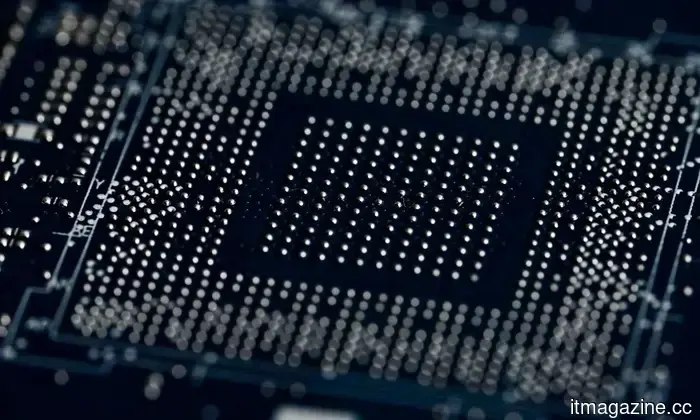
Researchers developed a chip capable of functioning at temperatures exceeding those of lava.
Researchers have developed a chip that operates at 700°C. This advancement has the potential to transform AI, space exploration, and virtually every gadget you possess.