
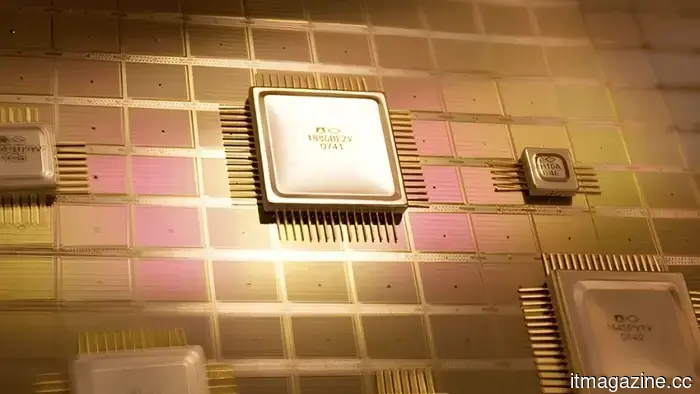
China's Nexchip applies for a listing in Hong Kong as it speeds up its $5 billion chip expansion.
Nexchip Semiconductor submitted its application for a listing on the Hong Kong Stock Exchange on Tuesday, entering a wave of Chinese chip firms seeking to leverage the city’s financial markets as Beijing invests heavily to establish a domestic semiconductor supply chain capable of enduring American export restrictions. Based in Hefei, Nexchip is the third-largest foundry in China, following SMIC and Hua Hong Semiconductor, and aims for a dual listing in addition to its current shares in Shanghai, intending to attract international capital for what is essentially a massive industrial expansion.
This filing comes shortly after Nexchip announced the completion of its full-process development for a 28nm logic platform on March 11, marking a significant advancement in the company’s efforts to enter higher-value chip production. Until recently, the company primarily operated at process nodes ranging from 55nm to 150nm, which are typically employed in display drivers, power management chips, and image sensors. Although the leap to 28nm is still a step behind the leading-edge 3nm and 5nm technologies made by TSMC and Samsung, it represents a substantial progression within the mature-node landscape, positioning Nexchip to meet the demand for AI-driven smartphones, smart vehicles, and OLED displays.
The funds Nexchip aims to secure through the Hong Kong listing correspond to its financial needs. In January, the company initiated its Phase IV project in Hefei’s Xinzhan High-Tech Zone, which involves a significant investment of 35.5 billion yuan ($5.1 billion) to build a new 12-inch wafer production line with a targeted monthly output of 55,000 wafers at 40nm and 28nm nodes. Equipment installation is expected to commence in the fourth quarter of this year, with initial production slated to start soon after and full operational capacity anticipated by Q2 2028. This is in addition to Nexchip’s current N3 fab, which is increasing output to 100,000 wafers each month at the 55nm and 40nm nodes, primarily focused on high-end CMOS image sensors.
The financial figures illustrate a rapidly growing company that requires capital to sustain its expansion. Nexchip recorded 2025 revenues of 10.89 billion yuan (about $1.58 billion), reflecting a 17.7 percent increase year-over-year, alongside a 32 percent rise in net profit. An analysis from TrendForce in early 2025 projected that the company would surpass Taiwanese foundries VIS and PSMC, moving up from tenth to eighth place in global foundry rankings. This trajectory showcases both solid commercial growth and the inherent advantages of operating within China’s heavily supported semiconductor sector.
Nexchip’s foundation is noteworthy. Established in 2015 as a partnership between Hefei City Construction Investment Holding, a state-controlled entity, and Taiwan's Powerchip Technology Corporation, Powerchip supplied the technical expertise while Hefei offered land, funding, and political backing. Within less than ten years, Nexchip has evolved from a vehicle for technology transfer to a competitor that its Taiwanese partner now views with some concern. The principal controlling shareholder remains the Hefei state entity, which held around 39.7 percent of the shares as of September 2025.
The Hong Kong listing situates Nexchip within a broader trend of Chinese semiconductor public offerings that are transforming the exchange. Deloitte anticipates approximately 160 new listings in Hong Kong in 2026, aiming to raise at least HK$300 billion, with AI and semiconductor firms driving this fundraising boom. Earlier this year, Biren Technology, a Chinese AI chip designer, surged nearly 120 percent during its Hong Kong debut after raising HK$5.58 billion. Baidu’s chip division, Kunlunxin, has submitted a confidential filing, while GigaDevice Semiconductor is targeting HK$4.68 billion. This pipeline signifies a strategic decision: as access to advanced chips becomes increasingly limited by export restrictions, Chinese companies require capital to develop domestic alternatives, and Hong Kong presents a conduit to international investors that mainland exchanges do not offer.
Nexchip operates within the mature-node market, which is where China’s semiconductor strategy is most consistent and impactful. Barred from producing chips below 14nm due to U.S. sanctions on advanced lithography equipment, Chinese foundries have concentrated their investments on nodes that are crucial for much of the world’s electronic devices: the 28nm and above technologies utilized in automobiles, industrial machinery, consumer electronics, and the internet of things. Industry projections suggest that over half of all new global capacity additions in mature nodes through the mid-2020s will be located in China. By the conclusion of 2025, Chinese foundries are expected to represent more than 25 percent of the global top-10 mature-node capacity.
The pricing trends affirm that this strategy is succeeding. On March 12, Nexchip announced a 10 percent increase in foundry fees that will take effect in June, following similar increases from SMIC and
Other articles
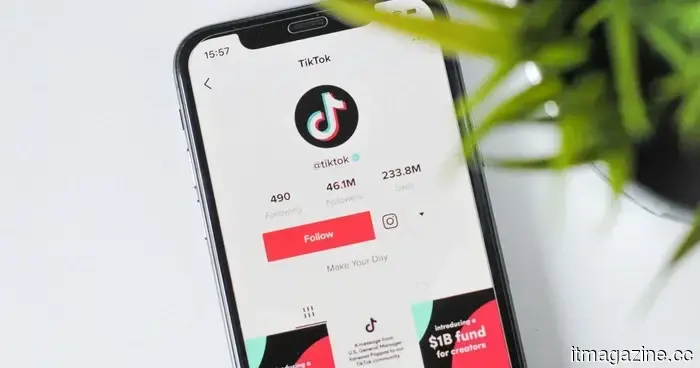 As if doomscrolling on TikTok wasn't already problematic, it now features an emoji game in direct messages.
TikTok has launched a hidden emoji game in direct messages worldwide, enabling users to challenge their friends without having to exit the app.
As if doomscrolling on TikTok wasn't already problematic, it now features an emoji game in direct messages.
TikTok has launched a hidden emoji game in direct messages worldwide, enabling users to challenge their friends without having to exit the app.
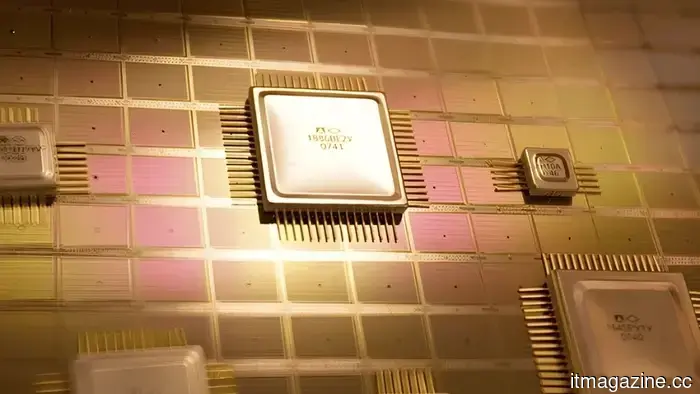 Nexchip from China has submitted an application for a Hong Kong stock listing as it speeds up its $5 billion chip expansion.
Nexchip Semiconductor, the third-largest foundry in China, has submitted an application for a dual listing in Hong Kong to raise funds for a $5.1 billion expansion of its fabrication facilities, driven by a rise in demand for mature-node chips.
Nexchip from China has submitted an application for a Hong Kong stock listing as it speeds up its $5 billion chip expansion.
Nexchip Semiconductor, the third-largest foundry in China, has submitted an application for a dual listing in Hong Kong to raise funds for a $5.1 billion expansion of its fabrication facilities, driven by a rise in demand for mature-node chips.
 Australia alleges that Meta, TikTok, and YouTube are failing to adhere to the ban on social media access for children.
Australia's eSafety Commissioner has issued a warning of legal action against five platforms for not preventing users under the age of 16 from creating accounts, three months after implementing the first ban of its kind in the world.
Australia alleges that Meta, TikTok, and YouTube are failing to adhere to the ban on social media access for children.
Australia's eSafety Commissioner has issued a warning of legal action against five platforms for not preventing users under the age of 16 from creating accounts, three months after implementing the first ban of its kind in the world.
 Slack is adding so many features that you can count them on both hands and feet.
Your entire process is now fully automated (at last).
Slack is adding so many features that you can count them on both hands and feet.
Your entire process is now fully automated (at last).
 Australia claims that Meta, TikTok, and YouTube are not adhering to the ban on social media for children.
Australia's eSafety Commissioner has issued a warning of potential legal action against five platforms for not preventing users under 16 years old from creating accounts, three months following the implementation of the world's inaugural ban.
Australia claims that Meta, TikTok, and YouTube are not adhering to the ban on social media for children.
Australia's eSafety Commissioner has issued a warning of potential legal action against five platforms for not preventing users under 16 years old from creating accounts, three months following the implementation of the world's inaugural ban.
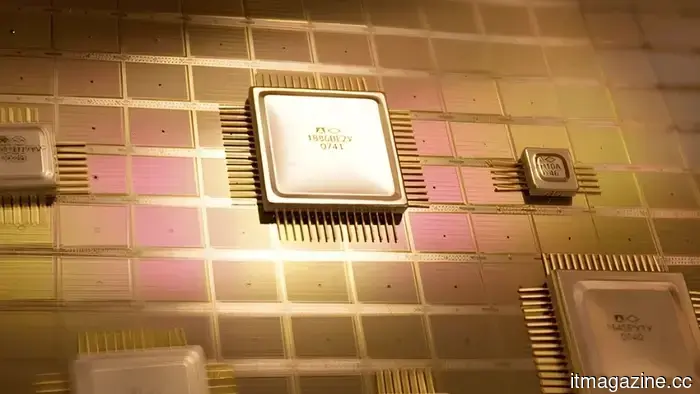 Nexchip from China submits application for a Hong Kong listing as it speeds up its $5 billion chip expansion.
Nexchip Semiconductor, the third-largest foundry in China, has submitted an application for a dual listing in Hong Kong to finance a $5.1 billion expansion of its fabrication facilities due to the increasing demand for mature-node chips.
Nexchip from China submits application for a Hong Kong listing as it speeds up its $5 billion chip expansion.
Nexchip Semiconductor, the third-largest foundry in China, has submitted an application for a dual listing in Hong Kong to finance a $5.1 billion expansion of its fabrication facilities due to the increasing demand for mature-node chips.
China's Nexchip applies for a listing in Hong Kong as it speeds up its $5 billion chip expansion.
Nexchip Semiconductor, the third-largest foundry in China, has submitted an application for a dual listing in Hong Kong to finance a $5.1 billion expansion of its fabrication facility, driven by a surge in demand for mature-node chips.