
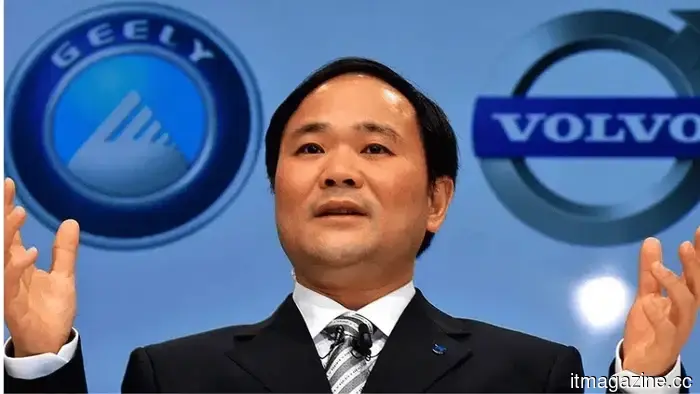
Geely will cease the construction of new factories and will utilize Volvo's manufacturing facilities instead.
Li Shufu, the billionaire chairman of Geely Holding Group, who purchased Volvo Cars from Ford for $1.8 billion in 2010, has come to a realization that many of his counterparts in the global automotive sector have been slow to accept: there are too many car factories worldwide, and creating more is an inefficient use of funds. In a statement covered by Bloomberg and the South China Morning Post, Li announced that Geely would cease constructing new manufacturing facilities globally, opting instead to utilize existing plants, particularly those of Volvo Cars, for vehicle production in overseas markets.
This announcement represents a formal shift in strategy for China’s second-largest automaker. Instead of acquiring land, constructing buildings, outfitting them with equipment, and hiring staff in new regions, Li indicated that the company would focus on partnerships, integration, and revitalizing current capacities. This approach is pragmatic, given that the global automotive production surplus is estimated to be between 5 and 20 million vehicles annually, and about half of China's output is driven by domestic demand. Li seems to suggest that the time for expanding through construction to achieve global scale is over.
The immediate effect is that Volvo’s factory network, including plants in Sweden, Belgium, China, Malaysia, India, and the United States, will serve as the main vehicle for Geely’s international growth. Li informed Bloomberg that Volvo should start producing models from its Chinese sister brands at existing facilities, allowing for the optimization of underused capacity while providing Geely access to manufacturing in Europe and the U.S. without incurring the capital costs associated with new construction. The Volvo plant in Ridgeville, South Carolina, already produces the electric EX90 and will add the XC60 later this year. The factory in Ghent, Belgium, began producing the EX30 in April 2025 after relocating the model from China to avoid EU tariffs on electric vehicles made in China.
The current tariff situation has rendered this kind of flexibility not just beneficial but necessary. Tariffs imposed by the Trump administration on imported vehicles and auto parts have cost the global automotive industry over $35 billion since they were introduced in 2025, according to Automotive News. European manufacturers alone suffered approximately $6 billion of that total in 2025. Volvo, in particular, faced significant challenges: in April 2025, the company announced an SEK 18 billion cost-cutting and cash action plan, roughly $1.9 billion, which included laying off 3,000 employees globally, or about 15 percent of its office workforce. That restructuring was completed by fall 2025, with financial improvements beginning to emerge in the fourth quarter extending into 2026.
In response to tariff challenges, Volvo has rapidly regionalized its production. The company restructured its global operations, granting greater decision-making power to its three main business regions: the U.S., China, and Europe. Polestar, the electric performance brand also under Geely's ownership, consolidated production of the Polestar 3 at Volvo’s South Carolina factory, abandoning plans for a factory in Chengdu, China. A new Volvo factory in Slovakia will manufacture the Polestar 7 for the European market. The straightforward strategy is to produce where the sales occur, utilizing existing plants in the appropriate regions.
Li’s commitment to not build new factories extends this rationale further. Instead of limiting this strategy to Volvo, he is implementing it across Geely’s entire brand portfolio, which includes Lynk & Co, Proton, and its commercial vehicle division, while also forming partnerships outside the group. Geely is reportedly in initial discussions with Ford to utilize the American manufacturer’s excess production capacity in Europe for Geely vehicles, with talks occurring in Michigan and China in early February 2026. Additionally, Geely has partnered with Renault in South Korea and Brazil to manufacture and sell vehicles built on Geely platforms using the factories and sales networks of the French company.
This approach challenges the conventional expectations for Chinese automakers. For years, industry analysts anticipated that companies like BYD, Geely, and SAIC would replicate the model established by Japanese and Korean manufacturers in the 1980s and 1990s, which involved exporting products first and then establishing local factories to ensure market access and goodwill. Some companies continue on this path; for instance, BYD is building plants in Hungary, Turkey, Thailand, and Brazil. However, Li believes the financial landscape has shifted. With global overcapacity reaching critical levels and tariff policies changing unpredictably, investing capital in fixed assets that require years to construct and decades to recover seems riskier than before.
Geely’s goals are still ambitious. The group aims to sell 6.5 million vehicles and generate 1 trillion yuan in revenue by 2030. Li Shufu personally invested $200 million in Polestar in June 2025, and Geely is preparing to announce its entry into the U.S. market within the next two to three years, likely using factories already owned through Volvo rather than
Other articles
 Researchers developed a chip capable of functioning at temperatures exceeding those of lava.
Researchers have developed a chip that operates at 700°C. This advancement has the potential to transform AI, space exploration, and virtually every gadget you possess.
Researchers developed a chip capable of functioning at temperatures exceeding those of lava.
Researchers have developed a chip that operates at 700°C. This advancement has the potential to transform AI, space exploration, and virtually every gadget you possess.
 Gmail has finally enabled the option to change your outdated usernames.
Google is finally implementing a feature that Gmail users have requested for years: the ability to change the actual username in their Gmail address. This is no longer just a preliminary rollout, as Google has announced that the feature is now accessible to all Google Account users in the US. However, it remains a limited release, […]
Gmail has finally enabled the option to change your outdated usernames.
Google is finally implementing a feature that Gmail users have requested for years: the ability to change the actual username in their Gmail address. This is no longer just a preliminary rollout, as Google has announced that the feature is now accessible to all Google Account users in the US. However, it remains a limited release, […]
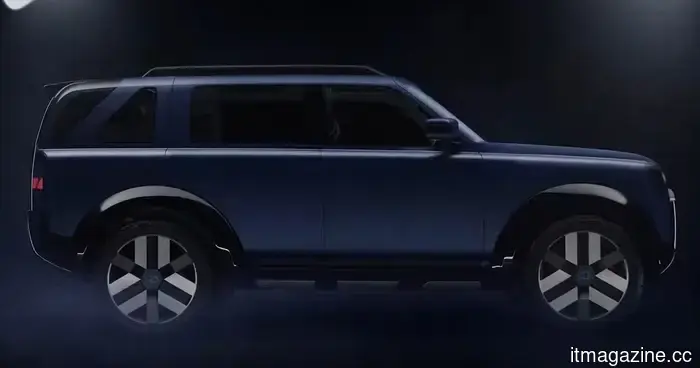 Land Rover is reintroducing the Freelander as an electric vehicle brand, with plans for six models.
Land Rover is bringing back Freelander as an independent electric vehicle brand, with six models in the pipeline. The initial model will be introduced this year in China, marking a swift and technology-driven entry into the premium electric market.
Land Rover is reintroducing the Freelander as an electric vehicle brand, with plans for six models.
Land Rover is bringing back Freelander as an independent electric vehicle brand, with six models in the pipeline. The initial model will be introduced this year in China, marking a swift and technology-driven entry into the premium electric market.
 Hasbro breaches: Owner of Peppa Pig and Transformers cautions of potential weeks of disruptions.
Hasbro announced unauthorized access to its network in an SEC filing, stating that it has taken systems offline and cautioned that product deliveries may be postponed for several weeks.
Hasbro breaches: Owner of Peppa Pig and Transformers cautions of potential weeks of disruptions.
Hasbro announced unauthorized access to its network in an SEC filing, stating that it has taken systems offline and cautioned that product deliveries may be postponed for several weeks.
 Gmail has finally allowed users to update their embarrassing old usernames.
Google is finally implementing a feature that Gmail users have been requesting for years: the ability to change their actual username within their Gmail address. This is no longer just a pilot program, as Google has announced that the feature is now accessible to all Google Account users in the US. However, it still remains a limited rollout, [...]
Gmail has finally allowed users to update their embarrassing old usernames.
Google is finally implementing a feature that Gmail users have been requesting for years: the ability to change their actual username within their Gmail address. This is no longer just a pilot program, as Google has announced that the feature is now accessible to all Google Account users in the US. However, it still remains a limited rollout, [...]
 Meta and YouTube were found responsible in a groundbreaking trial related to social media addiction.
A jury in Los Angeles determined that Meta and YouTube were responsible for creating addictive platforms that caused harm to a young user, resulting in a $6 million award and establishing a precedent for over 10,000 ongoing cases.
Meta and YouTube were found responsible in a groundbreaking trial related to social media addiction.
A jury in Los Angeles determined that Meta and YouTube were responsible for creating addictive platforms that caused harm to a young user, resulting in a $6 million award and establishing a precedent for over 10,000 ongoing cases.
Geely will cease the construction of new factories and will utilize Volvo's manufacturing facilities instead.
Geely's chairman, Li Shufu, has announced that the company will cease the construction of new factories, opting instead to utilize Volvo's existing facilities and collaborate with Ford and Renault for overseas production.