

Chinese technology firms are shifting their focus to Hong Kong as restrictions from the US and EU become more stringent.
The number of companies from mainland China that listed on the Hong Kong Stock Exchange surged from 30 in 2024 to 76 in 2025, marking an increase of 153%, according to PricewaterhouseCoopers. Last year, Hong Kong regained its position as the leading global venue for IPO fundraising, achieving 119 listings that raised HK$285.8 billion, more than double the amount from the previous year. These figures indicate a significant structural change: as geopolitical tensions escalate in the U.S. and Europe, Chinese tech firms are increasingly using Hong Kong to secure international funding, evaluate products against global benchmarks, and establish the credibility necessary for expansion beyond the mainland.
Regulators from both sides have actively supported this shift. China's securities authority implemented measures last year to expedite approvals for eligible mainland tech companies looking to list in Hong Kong. Additionally, the Hong Kong Stock Exchange introduced a Technology Enterprises Channel in May 2025 to speed up IPO approvals for specialized technology and biotechnology firms. Consequently, a pipeline of AI, robotics, and software companies from the mainland is choosing Hong Kong over New York, not necessarily for a superior market, but because it remains more accessible.
In practical examples, Yunji Technology, a Beijing-based developer of delivery robots for hotels, hospitals, and factories, went public in Hong Kong in October 2025, raising HK$660 million. Its shares jumped 26% on their trading debut. The company, which has deployed robots in over 15,000 hotels around the world, is leveraging Hong Kong as a testing ground for international clients. According to its vice-president, Xie Yunpeng, the goal is to validate the product in real-world international settings before expanding further.
MiningLamp Technology, an enterprise AI software provider, listed on the Hong Kong exchange in November 2025, referring to the city as a “data compliance transfer station.” Its founder, Wu Minghui, explained that mainland companies like his can utilize Hong Kong to assess the handling of cross-border data and establish compliance measures before entering other markets. This characterization indicates that Hong Kong is serving not only as a financial hub but as a regulatory environment where Chinese firms can demonstrate their ability to operate under rules recognized by international clients and regulators.
Xiaomeng Lu, a director at Eurasia Group, mentioned to the BBC that mainland Chinese tech companies are “shifting to Hong Kong” for primary listings as geopolitical challenges dim their prospects of launching in New York. Alicia Garcia-Herrero, chief economist for Asia-Pacific at Natixis, noted that Hong Kong provides a venue for mainland firms to showcase their adherence to international standards while fostering trust with global investors.
This shift to Hong Kong coincides with an intensified self-reliance strategy in China’s technology sector. The 15th Five-Year Plan, covering 2026 to 2030, prioritizes artificial intelligence, semiconductors, robotics, quantum computing, and 6G as central to economic and national security objectives. Beijing is investing heavily in large computing clusters, backing advanced manufacturing, and establishing technology independence as a key priority in light of U.S.-China tensions.
Simultaneously, the obstacles for Chinese tech companies seeking to operate internationally are increasing. The U.S. has enforced export controls on advanced semiconductors, limited Chinese suppliers’ access to telecommunications networks, and imposed broad investment reviews on Chinese tech acquisitions. The European Union’s new foreign direct investment screening framework, set to be implemented in summer 2026, will mandate the review of Chinese investments in sectors like AI, semiconductors, quantum technology, critical infrastructure, and defense. The United Kingdom designated both Apple and Google as having “Strategic Market Status” under its Digital Markets, Competition and Consumers Act in October 2025, and has taken steps to restrict Chinese telecommunications equipment.
For Chinese tech firms that previously aimed to list on the Nasdaq or the London Stock Exchange and establish direct ties with Western firms, these regulations have narrowed their options. Hong Kong presents a partial alternative: a jurisdiction with common law traditions, English-language legal and financial infrastructure, and regulatory standards recognized by international investors, all devoid of the political hazards that accompany listing in a market where Chinese companies face potential forced delisting or sanctions.
However, this strategy has its limitations. Paul Triolo, a partner at DGA Group, told the BBC that Hong Kong is “not really a geopolitical shield” for mainland firms and “only partially mitigates” their risks. Companies operating from Hong Kong are still subject to Beijing’s evolving regulations on cybersecurity, data management, and public-facing AI requirements. The national security law enacted in 2020, followed by additional local security laws, has damaged Hong Kong’s reputation as an autonomous jurisdiction in the eyes of many global investors and governments.
The Luckin Coffee scandal, where the Chinese coffee chain admitted to inflating hundreds of millions in sales before being delisted from the Nasdaq in 2020, is a key reference point for investors evaluating governance risks in
Other articles
 Rebellions has wrapped up a $400 million pre-IPO funding round, achieving a valuation of $2.34 billion.
Rebellions secures $400M in pre-IPO funding at a valuation of $2.34B, supported by South Korea's government growth fund, and unveils two new AI infrastructure products.
Rebellions has wrapped up a $400 million pre-IPO funding round, achieving a valuation of $2.34 billion.
Rebellions secures $400M in pre-IPO funding at a valuation of $2.34B, supported by South Korea's government growth fund, and unveils two new AI infrastructure products.
 Roblox now employs AI moderation to eliminate harmful content before it can reach users.
Roblox's updated AI moderation system examines entire game scenes in real time, identifying harmful content that many previous systems would have overlooked, and is currently shutting down 5,000 servers each day.
Roblox now employs AI moderation to eliminate harmful content before it can reach users.
Roblox's updated AI moderation system examines entire game scenes in real time, identifying harmful content that many previous systems would have overlooked, and is currently shutting down 5,000 servers each day.
 PUBG's top-down experiment has concluded before it truly began.
PUBG: Blindspot’s distinctive top-down tactical approach captured a portion of its audience, yet the game is being discontinued before it has a chance to achieve a full release.
PUBG's top-down experiment has concluded before it truly began.
PUBG: Blindspot’s distinctive top-down tactical approach captured a portion of its audience, yet the game is being discontinued before it has a chance to achieve a full release.
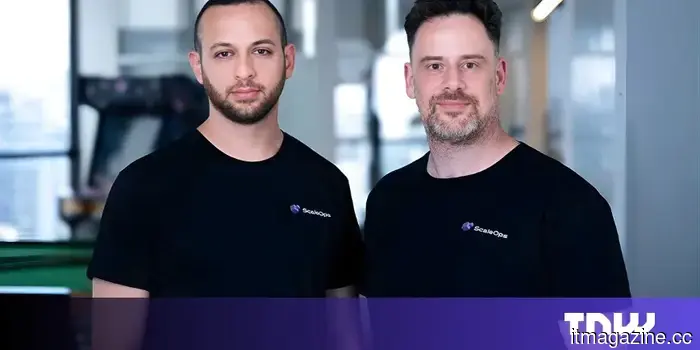 ScaleOps secures $130 million at a valuation exceeding $800 million.
ScaleOps has secured $130 million at a valuation exceeding $800 million, with Insight Partners leading the round, to autonomously manage Kubernetes and AI infrastructure.
ScaleOps secures $130 million at a valuation exceeding $800 million.
ScaleOps has secured $130 million at a valuation exceeding $800 million, with Insight Partners leading the round, to autonomously manage Kubernetes and AI infrastructure.
 The UK's enforcement agency has imposed a fine of £390,000 on Apple's Irish subsidiary for violating sanctions against Russia.
Apple Distribution International made a payment of £635,000 to the sanctioned Russian streamer Okko through App Store revenue. The fine imposed by OFSI establishes a precedent for app marketplaces.
The UK's enforcement agency has imposed a fine of £390,000 on Apple's Irish subsidiary for violating sanctions against Russia.
Apple Distribution International made a payment of £635,000 to the sanctioned Russian streamer Okko through App Store revenue. The fine imposed by OFSI establishes a precedent for app marketplaces.
 PUBG's top-down experiment has ended before it truly began.
PUBG: Blindspot’s distinctive top-down tactical approach gained a portion of its audience, yet the game is being discontinued before it achieves a full release.
PUBG's top-down experiment has ended before it truly began.
PUBG: Blindspot’s distinctive top-down tactical approach gained a portion of its audience, yet the game is being discontinued before it achieves a full release.
Chinese technology firms are shifting their focus to Hong Kong as restrictions from the US and EU become more stringent.
Mainland Chinese companies listed on the Hong Kong Stock Exchange saw a 153% increase in 2025. As Western markets contract, Hong Kong is emerging as China's technology launch platform.