
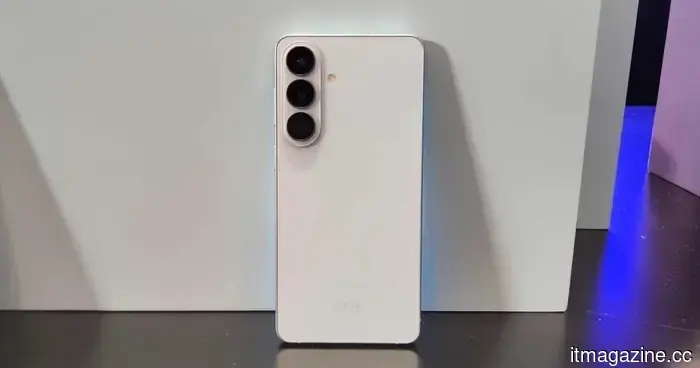
Battery tests on the Galaxy S26 reveal that Qualcomm's chipset outperforms Samsung's own processor.
The first-ever 2nm smartphone chip, with world-class ambition, has a battery life that still lags behind competitors by nearly 28 percent. Samsung's Exynos 2600 has some explaining to do.
A YouTube channel carried out a battery test on two variants of the Galaxy S26. The same device performed under the same tasks and conditions, but the only variation was the chip inside. The outcome? It was nearly three hours less of screen time.
Android Addicts tested two Galaxy S26 models side by side: one equipped with the Exynos 2600 (available in select Asian countries) and the other with the Snapdragon 8 Elite Gen 5 (available in the United States).
How bad is it?
The testing involved the phones performing identical functions, such as making calls, recording videos in 4K, using navigation, streaming content, running gaming benchmarks, and engaging in social media. Although not everyone performs all these tasks on a daily basis, such tests typically put a significant strain on the device, leading to battery depletion.
To maximize the results, both phones had Wi-Fi disabled and 5G active throughout the tests. The verdict? The S26 with Snapdragon lasted 9 hours and 26 minutes, while the Exynos model lasted just 6 hours and 48 minutes—a difference of nearly 28% or two-and-a-half hours of actual usage.
The Galaxy S26 powered by Exynos didn’t even last through the Instagram and Amazon Prime Video part of the battery test, leaving the Snapdragon variant to keep going.
Why is Samsung’s chip falling behind Qualcomm’s?
The short answer is thermal performance and power consumption. The Exynos 2600 chip consumes approximately 30W during peak loads, which is nearly 40% more than the Snapdragon 8 Elite Gen 5’s 21W cap, while yielding similar multi-core performance.
These power spikes create heat, which negatively impacts the efficiency of the chipset; the resulting reduction in performance leads to higher battery usage. During video encoding, especially on the Exynos-powered S26, the device began to overheat, further diminishing its runtime.
While the Exynos 2600 can still boast being the world's first 2nm GAA chip, it appears that this distinction is benefiting marketing more than actual performance in real-world scenarios.
For Galaxy S26 buyers in the United States, this difference may not be significant. However, for consumers in other regions, the battery drain test highlights the ongoing performance gap between Samsung and Qualcomm's latest mobile processors.
For over five years, Shikhar has consistently delivered simplified updates on consumer tech developments.
Your Android phone will soon feature an AirDrop-like file-sharing functionality.
Google and Samsung are developing a feature that allows file transfers by bringing two phones together, similar to Apple’s AirDrop. The premise is straightforward: users can hold two phones close to each other to transfer files without navigating share menus or searching for device names.
Evidence of this feature has reportedly accumulated across three different sources: within Samsung's One UI 9 builds, Google Play Services code, and Android 17 system files. Developers monitoring these updates note that this feature has been in the works since late 2025 and now seems to be moving toward an official launch rather than remaining a Samsung experiment.
Apple may be launching an AI app store for the next version of Siri.
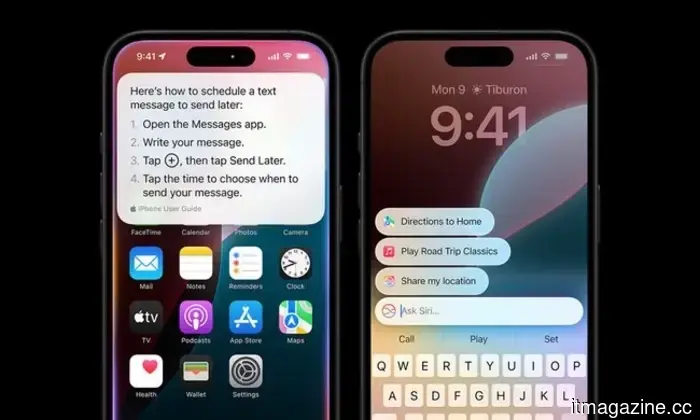
Apple's AI strategy may take a familiar direction, reminiscent of what brought the iPhone to prominence. According to a recent Bloomberg report, Apple is developing a new “Extensions” system in iOS 27 that would enable third-party AI assistants to integrate with Siri, including services like Google Gemini and Anthropic’s Claude.
Importantly, this feature will not just be a hidden option; Apple is reportedly planning to create a dedicated section in the App Store for these AI integrations, essentially establishing a marketplace for AI tools akin to current app distribution methods.
Android is modifying its sideloading rules, but phone upgrades remain unaffected.
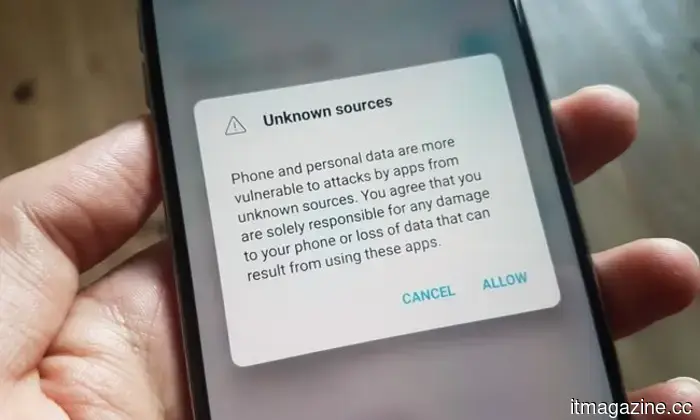
Starting August 2026, Google will implement stricter measures concerning sideloading. Users looking to install apps from unverified sources will need to navigate a new “advanced flow” akin to a full security check. This includes enabling developer mode, manually reviewing security alerts, restarting the device to prevent unauthorized remote access, and enduring a mandatory 24-hour cooldown prior to proceeding. This procedure aims to slow users down enough to identify potential scams before falling victim to them. Once this process is completed, users will not need to repeat it each time. Google’s message is essentially, “Feel free to sideload, but do so cautiously.” Your next upgrade will remain completely unaffected.


Other articles
 Avatar Legends: The Fighting Game is set to be released in July, and it appears quite impressive.
Avatar Legends: The Fighting Game is set to launch on July 2, featuring a stylish 2D fighting experience with elemental battles, cross-play capabilities, and a roster of 12 characters.
Avatar Legends: The Fighting Game is set to be released in July, and it appears quite impressive.
Avatar Legends: The Fighting Game is set to launch on July 2, featuring a stylish 2D fighting experience with elemental battles, cross-play capabilities, and a roster of 12 characters.
 Chromebooks are losing popularity in US schools for unexpected reasons.
U.S. schools are reducing Chromebook usage because of distractions, behavioral problems, and worries that excessive technology might negatively impact learning results.
Chromebooks are losing popularity in US schools for unexpected reasons.
U.S. schools are reducing Chromebook usage because of distractions, behavioral problems, and worries that excessive technology might negatively impact learning results.
 Starcloud has secured $170 million at a valuation of $1.1 billion to develop data centers in space.
 This funding will support the startup's upcoming two satellites.
Starcloud has secured $170 million at a valuation of $1.1 billion to develop data centers in space.
Starcloud has secured $170 million at a valuation of $1.1 billion to develop data centers in space. This funding will support the startup's upcoming two satellites.
 Smart glasses were already unsettling, and now they're being used to assist people in cheating.
Smart glasses powered by AI are generating new worries as reports emerge of users using them to cheat on exams, in addition to existing privacy concerns.
Smart glasses were already unsettling, and now they're being used to assist people in cheating.
Smart glasses powered by AI are generating new worries as reports emerge of users using them to cheat on exams, in addition to existing privacy concerns.
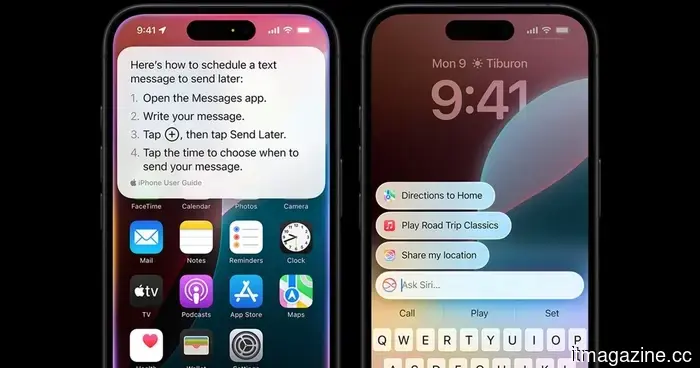 Apple may develop an AI app store for the next version of Siri.
Apple's approach to AI seems to be following a well-known path, similar to what contributed to the iPhone's success. According to a recent Bloomberg report, Apple is developing a new "Extensions" system for iOS 27 that would enable third-party AI assistants, such as Google Gemini and Anthropic’s Claude, to integrate directly with Siri. More […]
Apple may develop an AI app store for the next version of Siri.
Apple's approach to AI seems to be following a well-known path, similar to what contributed to the iPhone's success. According to a recent Bloomberg report, Apple is developing a new "Extensions" system for iOS 27 that would enable third-party AI assistants, such as Google Gemini and Anthropic’s Claude, to integrate directly with Siri. More […]
 AI is becoming remarkably proficient, yet studies indicate that the notion of AI creativity is merely an illusion.
Recent studies indicate that AI can reach the level of average human creativity, but genuine originality and exceptional creativity continue to be uniquely human traits.
AI is becoming remarkably proficient, yet studies indicate that the notion of AI creativity is merely an illusion.
Recent studies indicate that AI can reach the level of average human creativity, but genuine originality and exceptional creativity continue to be uniquely human traits.
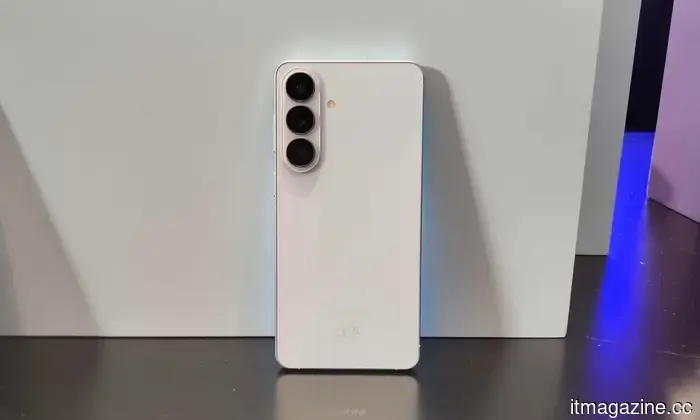
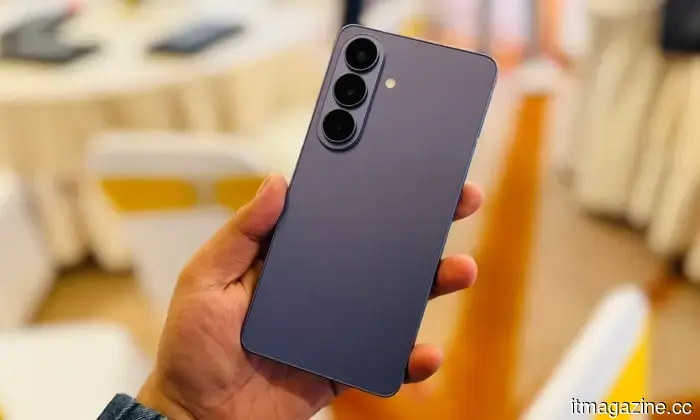
Battery tests on the Galaxy S26 reveal that Qualcomm's chipset outperforms Samsung's own processor.
Samsung's Exynos 2600 is the first smartphone chip to be manufactured using a 2nm process, which is quite remarkable. However, it still falls short of surpassing Qualcomm's Snapdragon 8 Elite Gen 5 in terms of battery efficiency.