
Starcloud has secured $170 million at a valuation of $1.1 billion to develop data centers in space.
The startup based in Redmond, Washington, which has already deployed an Nvidia H100 GPU in orbit and trained the first AI model in space, is now developing a Starship-class spacecraft aimed at being the first orbital data center that is cost-competitive with ground-based facilities. Starcloud has secured $170 million in a Series A funding round led by Benchmark and EQT Ventures, which values the company at $1.1 billion. This funding round closed 17 months after Starcloud's presentation at Y Combinator demo day, making it one of the fastest startups in YC’s history to achieve unicorn status.
The total funding has now reached $200 million. The company is focused on building space-based data centers, initially providing GPU computing for other satellites and advancing towards a long-term goal of creating orbital infrastructure that can manage workloads similar to terrestrial hyperscale data centers.
The fundamental concept is straightforward to explain, yet extremely challenging to execute. In space, solar power is effectively boundless and free once a satellite is launched. Cooling occurs passively, as waste heat dissipates into deep space, which is around -270°C, with no water needed. There are no requirements for planning approvals, grid connections, or land acquisition disputes. Starcloud's CEO and co-founder Philip Johnston contends that these inherent advantages will enable orbital data centers to be cost-competitive with those on the ground, once launch costs decrease sufficiently. However, Johnston acknowledges that the necessary technology is still not functional.
Despite this, Starcloud is further ahead than its rivals. In November 2025, merely 21 months after its founding, it launched Starcloud-1, a 60 kg satellite equipped with an Nvidia H100 GPU, marking the most powerful GPU computing ever conducted in space, approximately 100 times more powerful than previous efforts. The satellite was also the first to train an AI model in orbit, specifically NanoGPT, which was trained on the complete works of Shakespeare, and the first to execute a version of Gemini. Currently, the company is processing data from the radar satellites of Capella Space, representing its first commercial application. One Nvidia A6000 GPU malfunctioned during launch, highlighting a technical consideration for future hardware selections.
The Series A funding will support three initiatives. First, the launch of Starcloud-2 in October 2026: a more advanced satellite featuring multiple GPUs, including an Nvidia Blackwell chip, an AWS server blade, and a bitcoin mining computer. It will carry the largest deployable radiator ever sent into orbit on a private satellite. Second, the company will commence development of Starcloud-3: a 200-kilowatt, three-ton spacecraft engineered to utilize the ‘pez dispenser’ deployment mechanism that SpaceX designed for launching Starlink satellites from Starship.
Johnston believes Starcloud-3 will be the first orbital data center capable of genuinely competing with terrestrial facilities in terms of cost, with anticipated rates around $0.05 per kilowatt-hour, contingent on commercial Starship launch costs dropping to approximately $500 per kilogram. He predicts that access to commercial Starship will become available in 2028 or 2029. If there are delays with Starship, the company plans to continue launching smaller satellites using Falcon 9.
The strategic landscape is becoming increasingly competitive. SpaceX, which acquired Elon Musk’s AI venture xAI in February 2026, has sought approval from the US government to create and operate a distributed computing network in orbit comprising a million satellites. Blue Origin has communicated similar ambitions.
Google is pursuing Project Suncatcher; Aethero launched Nvidia's first space-based Jetson GPU in 2025; and Aetherflux recently announced it raised funds at a $2 billion valuation.
The disparity between existing capabilities in space and those on Earth remains vast: SpaceX’s Starlink network, featuring 10,000 satellites, generates about 200 megawatts of power, while data centers with over 25 gigawatts of combined capacity are currently being constructed in the US alone. Starcloud’s long-term vision includes an eventual constellation of 88,000 satellites, which assumes a future that may not unfold as anticipated.
Other articles
 OpenAI shut down the Sora AI video generator, and you might be misjudging the reasons behind it.
OpenAI has closed Sora less than a year after its launch, and the true reason may not be what you anticipate.
OpenAI shut down the Sora AI video generator, and you might be misjudging the reasons behind it.
OpenAI has closed Sora less than a year after its launch, and the true reason may not be what you anticipate.
 Avatar Legends: The Fighting Game is set to be released in July, and it appears quite impressive.
Avatar Legends: The Fighting Game is set to launch on July 2, featuring a stylish 2D fighting experience with elemental battles, cross-play capabilities, and a roster of 12 characters.
Avatar Legends: The Fighting Game is set to be released in July, and it appears quite impressive.
Avatar Legends: The Fighting Game is set to launch on July 2, featuring a stylish 2D fighting experience with elemental battles, cross-play capabilities, and a roster of 12 characters.
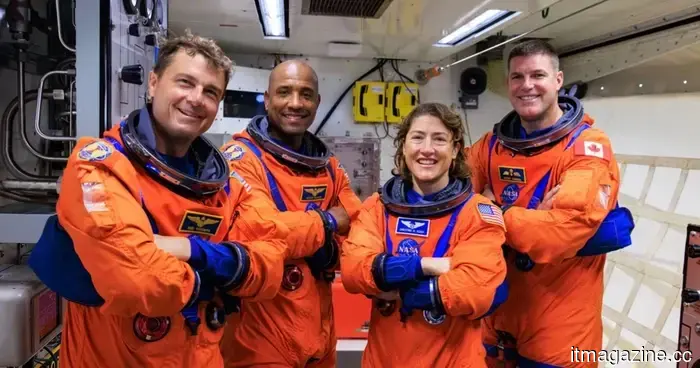 What makes this week’s moon mission particularly significant for Jeremy Hansen?
NASA is in the final stages of preparation for the highly anticipated Artemis II mission, which will send astronauts to the moon for the first time in over fifty years. The space agency plans to launch at 6:24 p.m. ET on Wednesday, April 1, from the Kennedy Space Center in Florida. Suggested Videos The four […]
What makes this week’s moon mission particularly significant for Jeremy Hansen?
NASA is in the final stages of preparation for the highly anticipated Artemis II mission, which will send astronauts to the moon for the first time in over fifty years. The space agency plans to launch at 6:24 p.m. ET on Wednesday, April 1, from the Kennedy Space Center in Florida. Suggested Videos The four […]
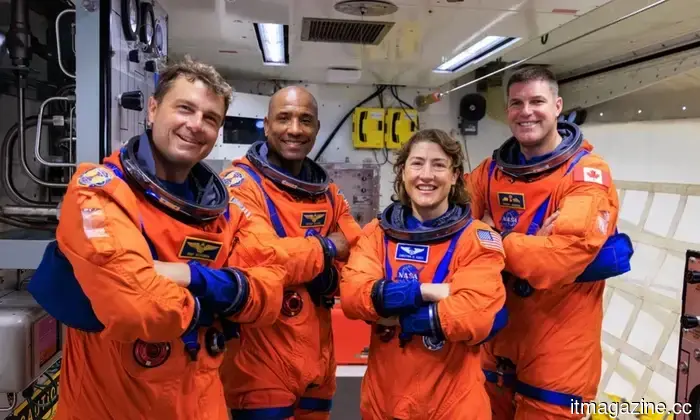 What makes this week's moon mission particularly significant for Jeremy Hansen?
NASA is in the final stages of preparation for the highly awaited Artemis II mission, which will send astronauts to the moon for the first time in over fifty years. The space agency aims for a launch at 6:24 p.m. ET on Wednesday, April 1, from the Kennedy Space Center in Florida. Recommended Videos The four […]
What makes this week's moon mission particularly significant for Jeremy Hansen?
NASA is in the final stages of preparation for the highly awaited Artemis II mission, which will send astronauts to the moon for the first time in over fifty years. The space agency aims for a launch at 6:24 p.m. ET on Wednesday, April 1, from the Kennedy Space Center in Florida. Recommended Videos The four […]
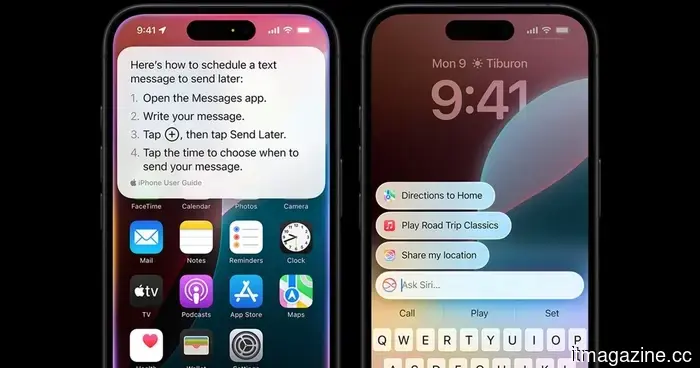 Apple may develop an AI app store for the next version of Siri.
Apple's approach to AI seems to be following a well-known path, similar to what contributed to the iPhone's success. According to a recent Bloomberg report, Apple is developing a new "Extensions" system for iOS 27 that would enable third-party AI assistants, such as Google Gemini and Anthropic’s Claude, to integrate directly with Siri. More […]
Apple may develop an AI app store for the next version of Siri.
Apple's approach to AI seems to be following a well-known path, similar to what contributed to the iPhone's success. According to a recent Bloomberg report, Apple is developing a new "Extensions" system for iOS 27 that would enable third-party AI assistants, such as Google Gemini and Anthropic’s Claude, to integrate directly with Siri. More […]
 Your Android device is receiving a feature similar to AirDrop that allows for easy sharing with a tap.
Google and Samsung are developing a tap-to-share functionality for Android that enables file transfers by placing two phones next to each other. Signs of this feature can be found in One UI 9, Play Services, and Android 17.
Your Android device is receiving a feature similar to AirDrop that allows for easy sharing with a tap.
Google and Samsung are developing a tap-to-share functionality for Android that enables file transfers by placing two phones next to each other. Signs of this feature can be found in One UI 9, Play Services, and Android 17.
Starcloud has secured $170 million at a valuation of $1.1 billion to develop data centers in space.
Starcloud has secured $170 million at a valuation of $1.1 billion to develop data centers in space. This funding will support the startup's upcoming two satellites.