
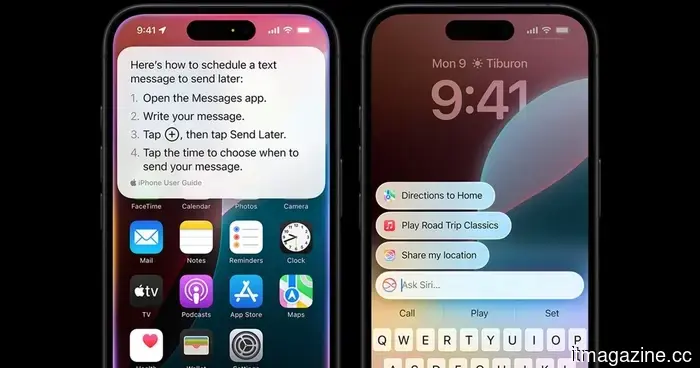
Apple may develop an AI app store for the next version of Siri.
Digital Trends may receive a commission when you make a purchase through links on our site. Why should you trust us?
The upcoming iteration of Siri may allow users to select their preferred AI-like applications.
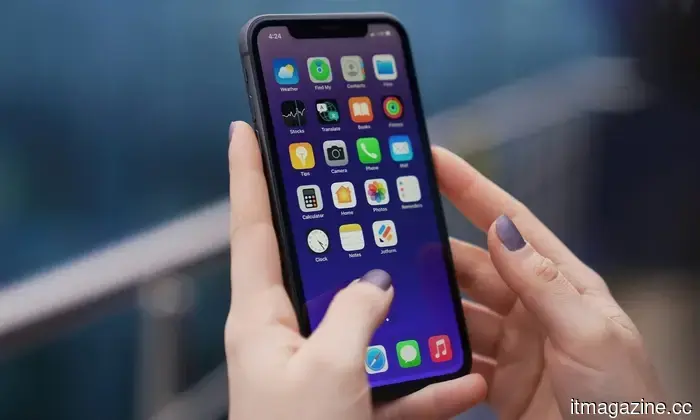
Apple's AI approach seems to be taking a direction that echoes what made the iPhone a success. According to a recent report by Bloomberg, Apple is developing a new “Extensions” system in iOS 27 that would enable third-party AI assistants to connect directly to Siri, incorporating services such as Google Gemini and Anthropic’s Claude.
More significantly, this won't be merely a hidden feature. Apple is reportedly planning to establish a specific section within the App Store for these AI integrations, effectively creating a marketplace for AI tools, much like how apps are currently distributed.
What does this mean for Siri?
This represents a substantial change. Instead of aiming to create a singular, flawless AI, Apple seems to be transforming Siri into a hub or “router” for various AI models, allowing users to choose which assistant addresses their inquiries. This means Siri could serve as the front-end while different AIs manage specific tasks—one for writing, another for coding, and another for research. It’s not about “Siri vs. ChatGPT” anymore; it’s more about “Siri + everything.”
Currently, Apple appears to be pursuing a dual approach: developing its own internal AI (Apple Intelligence) while also welcoming third-party services. This strategy allows Apple to maintain competitiveness without being dependent on a single model and prevents users from switching to Android.
There’s also a business component to consider. By allowing AI tools to be installed via the App Store, Apple could benefit financially from subscription revenues, similar to its current app model.
So, is Siri set to become the new App Store?
This could drastically alter how AI functions on mobile devices. Rather than hinging on one assistant for all tasks, Apple seems to be moving toward a modular framework where users can combine various AI tools according to their needs. If this concept materializes, Siri could evolve from a mere assistant into a comprehensive platform.
Varun is a seasoned technology journalist and editor with over eight years in consumer tech media. His experience covers a wide range...
Your Android device is getting an AirDrop-like sharing feature.
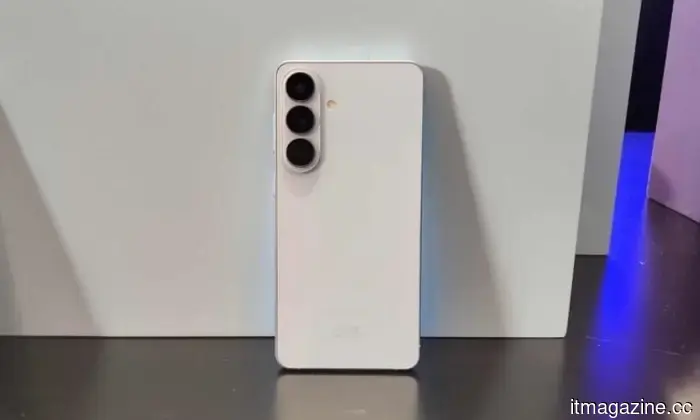
Google and Samsung are developing a feature that allows file transfers by bringing two phones together, much like Apple’s AirDrop. The concept is straightforward: you hold two phones in close proximity, and files transfer seamlessly without the need to navigate through share menus or locate a nearby device.
Reports from Android Authority suggest that evidence for this feature has been accumulating in three separate areas. It can be found in Samsung's One UI 9 builds, within Google Play Services code, and even in Android 17 system files. Developers following these updates note that the feature has been progressively evolving since late 2025 and is now moving towards an official release rather than remaining a Samsung-specific test.
A YouTube channel conducted a battery test comparing two versions of the Galaxy S26. The phones had the same model, performed the same tasks, and operated under the same conditions, with the only variation being the processor inside. The result? It translated to almost three hours of additional screen time.
Android Addicts executed a battery test on two Galaxy S26 devices side by side: one utilizing the Exynos 2600 (available in specific Asian markets) and the other powered by the Snapdragon 8 Elite Gen 5 (available in the United States).
Android is modifying the rules for sideloading, but this won’t affect your phone upgrades.
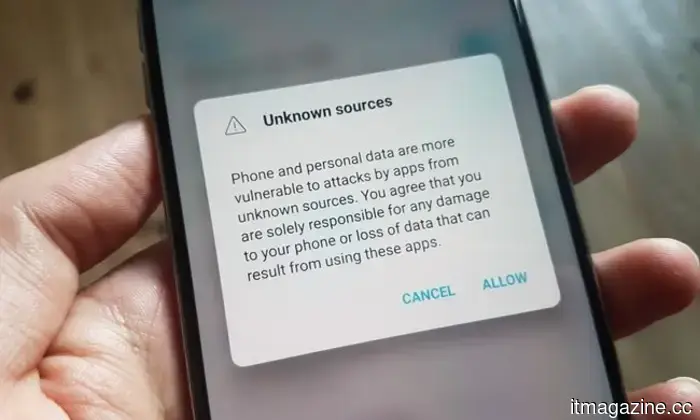
Beginning August 2026, Google will implement stricter regulations around sideloading. To install apps from unverified sources, users will need to navigate a new “advanced flow” akin to a comprehensive security protocol. This involves enabling developer mode, manually assessing security warnings, restarting the phone to prevent any shady remote access, and enduring a mandatory 24-hour waiting period before proceeding. This protocol is designed to add just enough delay for users to identify potential scams before they can cause harm. Once the process is complete, it won’t need to be repeated. Essentially, Google is indicating, “Feel free to sideload, but do so with caution.”
Your upcoming upgrades will remain entirely unaffected.


Other articles
 What makes this week’s moon mission particularly significant for Jeremy Hansen?
NASA is in the final stages of preparation for the highly anticipated Artemis II mission, which will send astronauts to the moon for the first time in over fifty years. The space agency plans to launch at 6:24 p.m. ET on Wednesday, April 1, from the Kennedy Space Center in Florida. Suggested Videos The four […]
What makes this week’s moon mission particularly significant for Jeremy Hansen?
NASA is in the final stages of preparation for the highly anticipated Artemis II mission, which will send astronauts to the moon for the first time in over fifty years. The space agency plans to launch at 6:24 p.m. ET on Wednesday, April 1, from the Kennedy Space Center in Florida. Suggested Videos The four […]
 Samsung created an alcohol refrigerator equipped with an AI feature to help manage your exquisite wine collection.
Samsung has introduced a wine fridge powered by AI that can automatically scan, monitor, and manage your wine collection.
Samsung created an alcohol refrigerator equipped with an AI feature to help manage your exquisite wine collection.
Samsung has introduced a wine fridge powered by AI that can automatically scan, monitor, and manage your wine collection.
 AI is becoming remarkably proficient, yet studies indicate that the notion of AI creativity is merely an illusion.
Recent studies indicate that AI can reach the level of average human creativity, but genuine originality and exceptional creativity continue to be uniquely human traits.
AI is becoming remarkably proficient, yet studies indicate that the notion of AI creativity is merely an illusion.
Recent studies indicate that AI can reach the level of average human creativity, but genuine originality and exceptional creativity continue to be uniquely human traits.
 Smart glasses were already unsettling, and now they're being used to assist people in cheating.
Smart glasses powered by AI are generating new worries as reports emerge of users using them to cheat on exams, in addition to existing privacy concerns.
Smart glasses were already unsettling, and now they're being used to assist people in cheating.
Smart glasses powered by AI are generating new worries as reports emerge of users using them to cheat on exams, in addition to existing privacy concerns.
 Your Android device is receiving a feature similar to AirDrop that allows for easy sharing with a tap.
Google and Samsung are developing a tap-to-share functionality for Android that enables file transfers by placing two phones next to each other. Signs of this feature can be found in One UI 9, Play Services, and Android 17.
Your Android device is receiving a feature similar to AirDrop that allows for easy sharing with a tap.
Google and Samsung are developing a tap-to-share functionality for Android that enables file transfers by placing two phones next to each other. Signs of this feature can be found in One UI 9, Play Services, and Android 17.
 Chromebooks are losing popularity in US schools for unexpected reasons.
U.S. schools are reducing Chromebook usage because of distractions, behavioral problems, and worries that excessive technology might negatively impact learning results.
Chromebooks are losing popularity in US schools for unexpected reasons.
U.S. schools are reducing Chromebook usage because of distractions, behavioral problems, and worries that excessive technology might negatively impact learning results.
Apple may develop an AI app store for the next version of Siri.
Apple's approach to AI seems to be following a well-known path, similar to what contributed to the iPhone's success. According to a recent Bloomberg report, Apple is developing a new "Extensions" system for iOS 27 that would enable third-party AI assistants, such as Google Gemini and Anthropic’s Claude, to integrate directly with Siri. More […]