
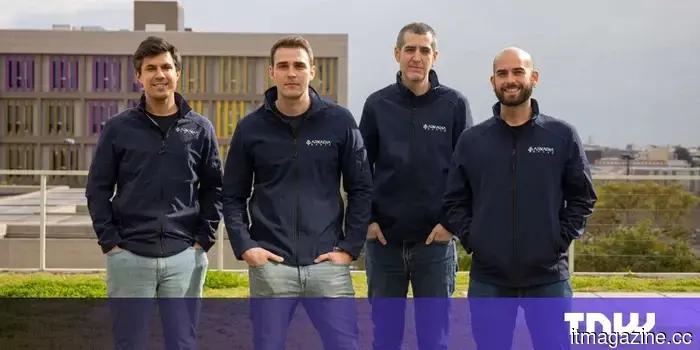
Arkadia Space secures €14.5M for eco-friendly propulsion technology.
The Spanish propulsion startup located at Castellón Airport is the first Spanish space company to be chosen for the European Innovation Council Accelerator. Its DARK system has achieved the milestone of being the first hydrogen peroxide propulsion system to operate in orbit within Europe, launching on a SpaceX mission in March 2025.
Currently, most satellites in orbit are repositioned and navigated using hydrazine, a fuel that has been the norm in spacecraft propulsion since the 1960s. While hydrazine is efficient, it is highly toxic, carcinogenic, flammable, and classified as a substance of very high concern under European chemical regulations.
Using hydrazine to fuel a satellite necessitates specialized facilities, the handling of hazardous materials, and operational complexities that increase both time and costs in launch preparations.
Arkadia Space, also based at Castellón Airport in eastern Spain, has spent the last five years developing a credible alternative and recently received substantial institutional support for its efforts: €14.5 million from the European Innovation Council Accelerator.
This funding consists of a €2.5 million grant, €6 million in equity from the EIC Fund, and €6 million in private investment, which makes Arkadia the first Spanish space company to benefit from the EIC Accelerator, one of the EU’s most competitive deep-tech funding programs.
Arkadia was selected from 923 applications as one of 61 startups in this round. The support from the European Commission signifies more than just financial assistance; it sends a clear institutional message that Europe views hydrogen peroxide propulsion as a strategic technology worthy of domestic development.
Arkadia's strategy revolves around a hypergolic bipropellant system that combines high-concentration hydrogen peroxide with a proprietary green fuel. Hypergolic means the two propellants ignite spontaneously upon contact, eliminating the need for ignition hardware that traditional engines require and enhancing reliability for precision maneuvers, docking operations, and, eventually, lunar landings.
The company asserts that this system can significantly lower operational and refueling costs by over 60% compared to traditional methods, partially due to the simpler ground handling hydrogen peroxide permits compared to hydrazine.
Last year, the technology achieved an important milestone. Arkadia’s DARK propulsion system was launched in March 2025 aboard a D-Orbit ION Satellite Carrier during SpaceX’s Transporter-13 rideshare mission from Vandenberg Space Force Base, becoming the first hydrogen peroxide-based propulsion system to operate in orbit in Europe.
By June 2025, the company confirmed successful in-orbit test firings, including short pulses and extended steady-state burns, and reported that the performance in orbit matched ground test data. The launch also highlighted a practical advantage: hydrogen peroxide can be fueled at the launch site without the hazardous procedures associated with hydrazine, reducing pre-launch costs and complexity for satellite operators.
In addition to DARK, Arkadia has developed ARIEL, a 250-newton monopropellant thruster intended for reaction control systems on launch vehicles and spacecraft, created under a contract with ESA’s Future Launchers Preparatory Programme.
ARIEL reached technology readiness level six within two years of signing the initial ESA contract in June 2023, and Arkadia has since obtained a contract to provide reaction control thrusters for MaiaSpace, the reusable launch vehicle program supported by ArianeGroup, directed by co-founder and CTO Ismael Gutierrez.
The EIC funding will aid in the commercialization, further R&D, expanding testing infrastructure at Castellón Airport, and scaling commercial operations.
Francho García, co-founder and CEO, noted that the support arrives at a time when the company has already shown its market fit: “We have proven that our technology aligns with market needs and that there is a genuine performance alternative to highly toxic fuels,” stressing the goal of commercial deployment as early as next year.
Arkadia asserts it is the only company in the world with propulsion systems at this level of development in hypergolic hydrogen peroxide technology, a statement that, if accurate, would position it as a sole-source supplier for European space programs looking to reduce reliance on hydrazine before stricter EU chemical regulations make such a transition mandatory.
Other articles
 Sony aims to attach your phone to a DualSense controller, which could transform your gaming experience.
Sony has secured a patent for a system that connects your phone to a PlayStation controller, utilizing its cameras, gyroscope, and touchscreen as an additional input device to enhance the gaming experience.
Sony aims to attach your phone to a DualSense controller, which could transform your gaming experience.
Sony has secured a patent for a system that connects your phone to a PlayStation controller, utilizing its cameras, gyroscope, and touchscreen as an additional input device to enhance the gaming experience.
 Sony aims to attach your phone to a DualSense controller, which may transform your gaming experience.
Sony has secured a patent for a system that connects your phone to a PlayStation controller, utilizing its cameras, gyroscope, and touchscreen as an additional input device to enhance the gaming experience.
Sony aims to attach your phone to a DualSense controller, which may transform your gaming experience.
Sony has secured a patent for a system that connects your phone to a PlayStation controller, utilizing its cameras, gyroscope, and touchscreen as an additional input device to enhance the gaming experience.
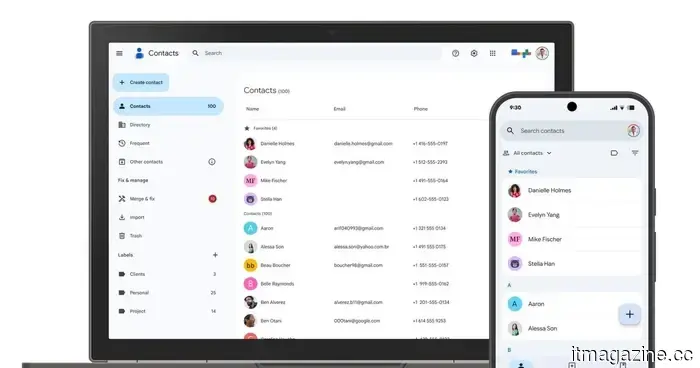 The new Contact Picker on Android 17 prevents applications from gaining access to your complete contact list.
Android 17 is introducing a new Contact Picker that alters how applications interact with your contacts list. Earlier reports indicated this move towards enhanced privacy, and Google is now implementing it. Rather than granting applications complete access to your address book, you will have the option to select specific contacts they can view. Previously, […]
The new Contact Picker on Android 17 prevents applications from gaining access to your complete contact list.
Android 17 is introducing a new Contact Picker that alters how applications interact with your contacts list. Earlier reports indicated this move towards enhanced privacy, and Google is now implementing it. Rather than granting applications complete access to your address book, you will have the option to select specific contacts they can view. Previously, […]
 Sony and Honda have abandoned their electric vehicle project, AFEELA.
Sony Honda Mobility has called off the AFEELA 1 and its subsequent SUV following Honda's withdrawal from the electric vehicle sector, resulting in the dissolution of the joint venture.
Sony and Honda have abandoned their electric vehicle project, AFEELA.
Sony Honda Mobility has called off the AFEELA 1 and its subsequent SUV following Honda's withdrawal from the electric vehicle sector, resulting in the dissolution of the joint venture.
 The first trailer for the Harry Potter TV series has been released, and it feels like a replay I never requested.
HBO's Harry Potter reboot aimed to reinterpret the books, yet the initial trailer appears to closely resemble the films, prompting a straightforward doubt: If nothing is altered, what is the purpose of this?
The first trailer for the Harry Potter TV series has been released, and it feels like a replay I never requested.
HBO's Harry Potter reboot aimed to reinterpret the books, yet the initial trailer appears to closely resemble the films, prompting a straightforward doubt: If nothing is altered, what is the purpose of this?
 Reddit might require you to verify your humanity as it takes measures against bot accounts.
Reddit is enforcing stricter measures against bots by introducing human verification procedures for accounts that appear suspicious. Additionally, the platform intends to implement clearer labels for automated profiles, allowing users to discern whether they are engaging with software.
Reddit might require you to verify your humanity as it takes measures against bot accounts.
Reddit is enforcing stricter measures against bots by introducing human verification procedures for accounts that appear suspicious. Additionally, the platform intends to implement clearer labels for automated profiles, allowing users to discern whether they are engaging with software.
Arkadia Space secures €14.5M for eco-friendly propulsion technology.
Arkadia Space has obtained €14.5 million from the EIC Accelerator to bring its hydrogen peroxide propulsion system to market.