
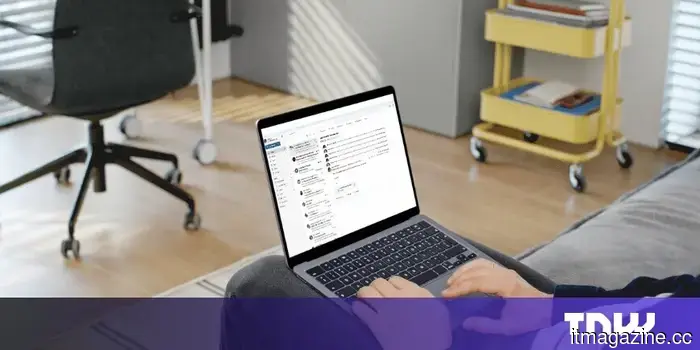
Your inbox is a business model for someone else. It doesn't have to be that way.
There comes a time, typically after encountering the third eerily precise advertisement for something you only mentioned in an email, when you begin to question what exactly your inbox knows about you. The answer, as it turns out, is everything. And the companies managing the most widely used free email services globally are not keeping that information private.
This article features affiliate links. If you make a purchase through these links, we may receive a commission at no additional cost to you.
The true cost of free email
When Gmail debuted in 2004, the offer of a gigabyte of free storage seemed almost unbelievable. Two decades on, the situation looks quite different. Google manages about 1.8 billion Gmail accounts worldwide, and the service remains free because the users are not the customers; the advertisers are.
Every email that arrives in a free inbox is analyzed, categorized, and added to a profile that dictates which advertisements accompany you across the internet. The contents of your emails, including receipts, travel confirmations, and medical appointment reminders, all contribute to an advertising profile you never consented to create and cannot completely remove. This isn't a conspiracy theory; it’s a well-documented aspect of the business model of the largest email providers on the planet.
For years, many accepted this trade-off since the alternatives were either costly, cumbersome, or both. However, that is no longer true.
The state of private email in 2026
The market for private email has developed significantly. Services now provide the speed, polish, and reliability of Gmail without the data collection. The model is straightforward: you pay a reasonable subscription, and in exchange, your provider has no incentive to access your data because your subscription is the product, not your attention.
Fastmail stands out as a noteworthy player in this market, and it’s essential to understand why. Established in 1999 in Melbourne, Australia, the company has operated independently for over 25 years, predating Gmail by half a decade. While most of the tech sector was focused on advertising revenue during the 2010s, Fastmail quietly developed a subscription email service centered on a seemingly simple goal: delivering an exceptional email experience.
The outcome is a platform that operates noticeably faster than what most users are accustomed to. Full-text searches yield results throughout your entire inbox in milliseconds, not in seconds. Keyboard shortcuts cover virtually every action, and server-side filtering rules enable you to automate sorting and labeling without requiring an email client to be open. These features may seem minor until you experience them for a week and realize that your previous inbox felt laborious by comparison.
The important features
It’s easy to list features, but it’s more challenging to explain why they are significant. Here’s what stands out after prolonged use.
Custom domains on all plans. If you possess a domain, you can immediately use it with Fastmail. This ensures that your email address is permanently yours, not tied to a specific provider. If you decide to switch, your address will still belong to you. For freelancers, small business owners, and anyone treating their email address as essential infrastructure, this is one of the most crucial features an email service can provide.
Over 600 masked email aliases. Whenever you sign up for a new service, you can create a unique address that forwards to your actual inbox. If that address gets sold to spammers or compromised in a data breach, you can easily delete it. Fastmail integrates this feature directly with 1Password, allowing you to generate a new alias in about two seconds.
Support for open standards. Fastmail natively supports IMAP, SMTP, CalDAV, and CardDAV. This means it works seamlessly with any email client you may already use, such as Apple Mail, Thunderbird, Outlook, or any other that adheres to standard protocols. You won't be confined to a proprietary application to access your own email. This level of compatibility is surprisingly uncommon among private email providers, several of which require additional applications or restrict you to their proprietary clients entirely.
Integrated calendars and contacts. Every plan includes shared calendars, contact management, and file storage. For families and small teams, this eliminates the need for a separate productivity suite. The Duo plan accommodates two users with shared calendars for $8 per month if billed annually, while the Family plan covers up to six users at $11 per month.
Honesty regarding privacy
Fastmail is clear about its offerings and what it does not provide. It utilizes TLS encryption during transit and AES encryption at rest, which are industry standards. However, it does not offer end-to-end encryption, and the company has candidly explained its reasoning: the usability trade-offs (slower searches, limited client support, and complex key management) do not benefit the majority of users.
If your security needs include protection against server-side access by a state actor, Fastmail may not be the ideal choice. For that purpose, you would want a
Other articles
 DoorDash introduces Tasks.
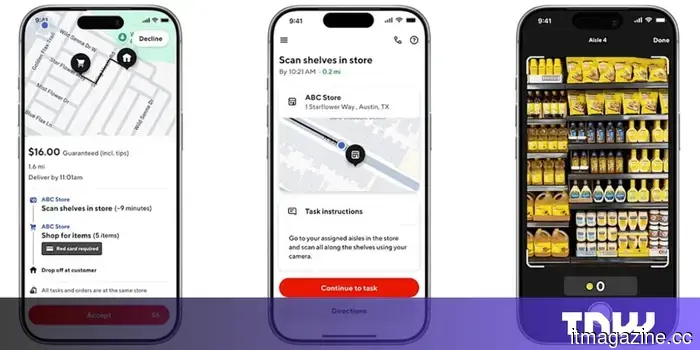
DoorDash has introduced Tasks, an independent app that compensates Dashers for filming home chores and recording audio to help train AI models.
DoorDash introduces Tasks.
DoorDash has introduced Tasks, an independent app that compensates Dashers for filming home chores and recording audio to help train AI models.
 Hydrogen fuel vehicles failed to gain popularity, but they could potentially power the next generation of long-range drones.
Hydrogen has not been successful in powering cars, but scientists in Norway have developed a drone that operates on hydrogen, replacing batteries with a fuel cell to manage long-distance tasks such as inspecting power lines.
Hydrogen fuel vehicles failed to gain popularity, but they could potentially power the next generation of long-range drones.
Hydrogen has not been successful in powering cars, but scientists in Norway have developed a drone that operates on hydrogen, replacing batteries with a fuel cell to manage long-distance tasks such as inspecting power lines.
 Microsoft's MAI-Image-2 ranks among the top three AI image generators.
Microsoft's MAI-Image-2 launches at #3 on Arena.ai's text-to-image leaderboard, trailing Google and OpenAI, and starts to be implemented on Copilot.
Microsoft's MAI-Image-2 ranks among the top three AI image generators.
Microsoft's MAI-Image-2 launches at #3 on Arena.ai's text-to-image leaderboard, trailing Google and OpenAI, and starts to be implemented on Copilot.
 Uber and Rivian have finalized a $1.25 billion agreement for robotaxi services.
Uber plans to invest as much as $1.25 billion in Rivian by 2031, aiming for a fleet of as many as 50,000 autonomous R2 robotaxis in 25 cities.
Uber and Rivian have finalized a $1.25 billion agreement for robotaxi services.
Uber plans to invest as much as $1.25 billion in Rivian by 2031, aiming for a fleet of as many as 50,000 autonomous R2 robotaxis in 25 cities.
 Alpine Eagle is ramping up its production of counter-drone systems.
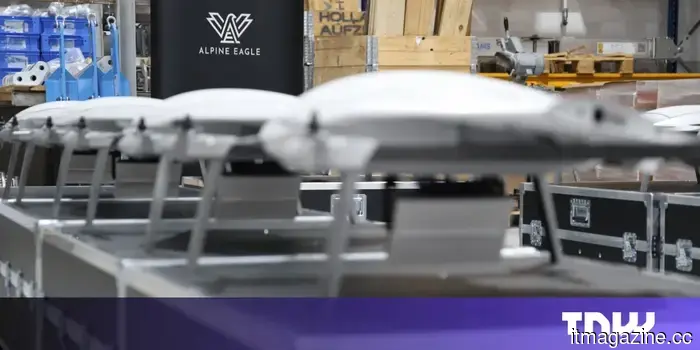
The Munich-based counter-drone company Alpine Eagle is expanding its production of the Sentinel by opening a new facility and partnering with DeltaQuad.
Alpine Eagle is ramping up its production of counter-drone systems.
The Munich-based counter-drone company Alpine Eagle is expanding its production of the Sentinel by opening a new facility and partnering with DeltaQuad.
 Hydrogen fuel vehicles never gained widespread popularity, but they could potentially lead to the development of next-generation long-range drones.
Hydrogen has not been effective for use in cars, but scientists in Norway have developed a drone powered by hydrogen, replacing batteries with a fuel cell to support long-distance tasks such as inspecting power lines.
Hydrogen fuel vehicles never gained widespread popularity, but they could potentially lead to the development of next-generation long-range drones.
Hydrogen has not been effective for use in cars, but scientists in Norway have developed a drone powered by hydrogen, replacing batteries with a fuel cell to support long-distance tasks such as inspecting power lines.
Your inbox is a business model for someone else. It doesn't have to be that way.
Free email services can be more expensive than you realize. We explore why investing in a paid email service could be the wisest choice for your privacy this year.