
Hydrogen fuel vehicles never gained widespread popularity, but they could potentially lead to the development of next-generation long-range drones.
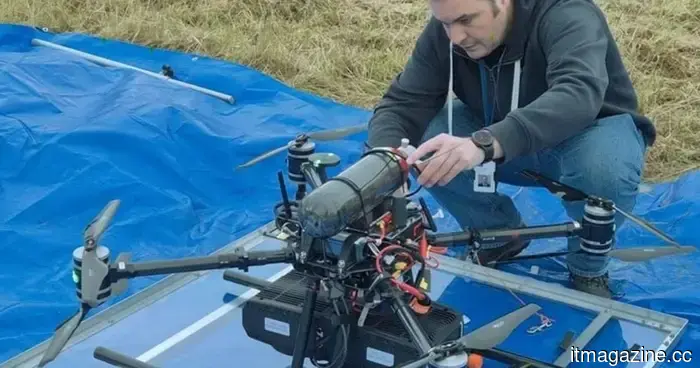
Hydrogen power has struggled to find a place in vehicles, but it may finally find its niche in drones. Researchers in Norway have developed a heavy-lift drone that operates on hydrogen, replacing batteries with a fuel cell to address the range limitations that often keep commercial drones from flying.
The prototype created by SINTEF, a Scandinavian research institute, is designed for tasks where battery-powered drones prove inadequate. This includes inspecting remote power lines post-storm or searching for missing hikers in adverse weather. Senior research scientist Federico Zenith explains that the aim isn’t to substitute recreational drones, but rather to undertake missions that current drones cannot accomplish.
Why fuel cells outperform batteries and gasoline
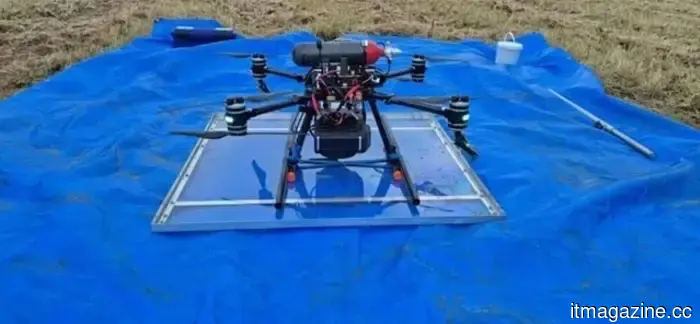
Rather than starting from scratch, the SINTEF team modified an existing heavy battery-powered model by integrating a fuel cell and hydrogen tank. Zenith describes this conversion as simple, providing a way for operators to upgrade their current equipment instead of purchasing entirely new systems.
Currently, their prototype is quite uncommon. Zenith notes that it is the only hydrogen drone flying in Norway and, to their knowledge, the only one in all of Scandinavia, making the institute a unique case study for assessing the capabilities of hydrogen in extending flight durations.
The fuel cell also surpasses traditional gas-powered engines, which require regular replacements and substantial maintenance. According to Zenith, a fuel cell can operate for at least a thousand hours and is easier to replace once it eventually deteriorates.
Where hydrogen drones offer real benefits
Extended flight times enable the execution of critical tasks. The SINTEF team envisions the hydrogen prototype conducting power line inspections following storms, a task that often necessitates a helicopter. When a tree falls on a power line amid inclement weather, deploying a crew is hazardous. In such cases, a hydrogen drone could be launched promptly to aid in power restoration.
Search and rescue operations also represent a strong application. The same endurance that allows a drone to traverse power lines from transformer to transformer also enables it to survey large areas in search of a lost hiker. The researchers also propose uses such as mapping, monitoring snowpacks for flood forecasts, and observing landslide activity.
The financial aspect is shifting as well. Although a fuel cell is still costly, Zenith acknowledges, using a drone significantly reduces expenses compared to deploying a helicopter for the same task. This financial advantage could finally provide the foothold for hydrogen that it has yet to achieve in passenger vehicles.
What lies ahead for hydrogen aviation
The hydrogen drone has achieved flight, but it is not yet equipped to handle a true Norwegian winter. The prototype's fuel cell is currently only rated for conditions above freezing and in dry environments, which means, as Zenith highlights, there are limited flyable days in Trondelag county at the moment.
Weatherproofing is the next major challenge. The SINTEF team is actively seeking funding and partnerships to pursue this goal, aiming to determine how long they can keep a drone operational under genuine northern climatic conditions, beyond just laboratory settings.
The potential is evident. If they can overcome the weather-related challenges, hydrogen drones may quietly assume roles that are too remote, perilous, or costly for helicopters and battery-operated units. The technology that floundered on the ground might finally discover its role in the skies.
Other articles
 Your inbox serves as a revenue stream for others. It doesn’t have to be that way.
Free email could end up being more costly than you realize. We examine why investing in a paid email service might be the most prudent privacy choice you make this year.
Your inbox serves as a revenue stream for others. It doesn’t have to be that way.
Free email could end up being more costly than you realize. We examine why investing in a paid email service might be the most prudent privacy choice you make this year.
 Samsung will offer you a Galaxy S26 Ultra for rent at 50% of its retail price for one year.
Galaxy Forever transforms flagship ownership in India — make a 50% payment now and then, after a year, choose whether to retain, return, or upgrade to the next Galaxy.
Samsung will offer you a Galaxy S26 Ultra for rent at 50% of its retail price for one year.
Galaxy Forever transforms flagship ownership in India — make a 50% payment now and then, after a year, choose whether to retain, return, or upgrade to the next Galaxy.
 According to CEO Carl Pei, AI agents are set to take the place of your applications in the near future.
Nothing's CEO Carl Pei believes that apps are on the verge of disappearing. AI agents will soon be able to understand your intentions and respond accordingly, eliminating the need for tapping, swiping, or switching between apps.
According to CEO Carl Pei, AI agents are set to take the place of your applications in the near future.
Nothing's CEO Carl Pei believes that apps are on the verge of disappearing. AI agents will soon be able to understand your intentions and respond accordingly, eliminating the need for tapping, swiping, or switching between apps.
 The Microsoft PowerToys update introduces three significant enhancements for your Windows PC.
The latest update of Microsoft's PowerToys introduces three significant workflow enhancements for Windows power users, including a revamped keyboard remapping tool and a command launcher that can be pinned to any edge of the screen, remaining visible at all times.
The Microsoft PowerToys update introduces three significant enhancements for your Windows PC.
The latest update of Microsoft's PowerToys introduces three significant workflow enhancements for Windows power users, including a revamped keyboard remapping tool and a command launcher that can be pinned to any edge of the screen, remaining visible at all times.
 AI is bringing Val Kilmer back to life in the new film “As Deep as the Grave.”
As Deep as the Grave employs AI to bring Val Kilmer back into a role that was originally created for him, with his family's support for the choice, even amidst ongoing discussions about technology in the film industry.
AI is bringing Val Kilmer back to life in the new film “As Deep as the Grave.”
As Deep as the Grave employs AI to bring Val Kilmer back into a role that was originally created for him, with his family's support for the choice, even amidst ongoing discussions about technology in the film industry.
 Nothing's CEO, Carl Pei, states that AI agents will soon take the place of your applications.
Nothing's CEO, Carl Pei, believes that apps are on the verge of becoming obsolete. He predicts that AI agents will soon understand your intentions and take action on them without the need for tapping, swiping, or switching between apps.
Nothing's CEO, Carl Pei, states that AI agents will soon take the place of your applications.
Nothing's CEO, Carl Pei, believes that apps are on the verge of becoming obsolete. He predicts that AI agents will soon understand your intentions and take action on them without the need for tapping, swiping, or switching between apps.
Hydrogen fuel vehicles never gained widespread popularity, but they could potentially lead to the development of next-generation long-range drones.
Hydrogen has not been effective for use in cars, but scientists in Norway have developed a drone powered by hydrogen, replacing batteries with a fuel cell to support long-distance tasks such as inspecting power lines.