
Hydrogen fuel vehicles failed to gain popularity, but they could potentially power the next generation of long-range drones.
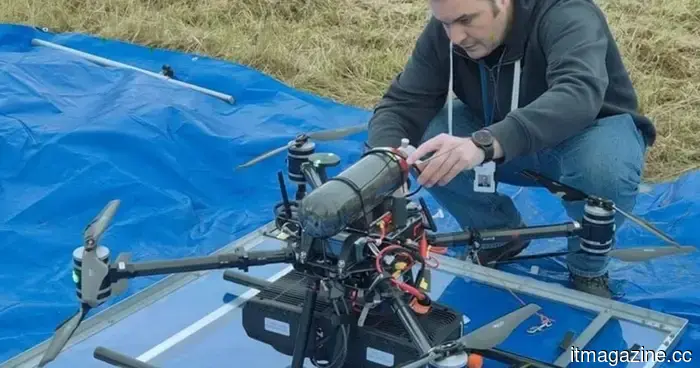
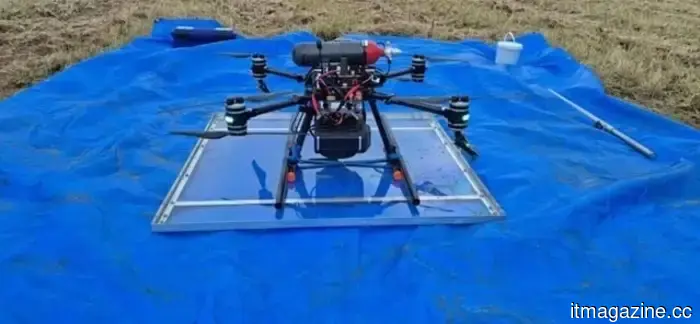
Hydrogen power has yet to gain traction in the automotive industry, but it may soon find its place in the world of drones. Researchers in Norway have developed a heavy-lift drone powered by hydrogen, replacing batteries with a fuel cell to address the range limitations that usually confine commercial drones.
This prototype, created by the Scandinavian research institute SINTEF, aims to fulfill tasks where battery-operated drones struggle. Consider scenarios like inspecting remote power lines after storms or searching for missing hikers in adverse weather conditions. Senior research scientist Federico Zenith explains that the intention isn’t to replace hobby drones; rather, it's to undertake missions that current drones cannot accomplish.
Why fuel cells surpass batteries and gas
Rather than starting from scratch, the SINTEF team modified an existing heavy battery-operated model by integrating a fuel cell and hydrogen tank. Zenith describes this conversion as simple, providing a way for operators to upgrade their current equipment instead of purchasing entirely new systems.
Drone testing at SINTEF
At present, their prototype is a unique sight; according to Zenith, it is the only hydrogen drone currently airborne in Norway and, to their knowledge, the sole one in all of Scandinavia. This makes the institute an unusual test case for assessing what hydrogen can achieve in terms of flight duration.
Additionally, fuel cells outperform gas-powered alternatives. Conventional engines require frequent replacements and substantial upkeep, while a fuel cell, according to Zenith, can run for at least a thousand hours and is simpler to replace once it begins to degrade.
Where hydrogen drones are most beneficial
Extended flight times create opportunities for critical tasks. The SINTEF team envisions the hydrogen prototype conducting power line inspections after storms—a job that now frequently necessitates a helicopter. When a tree falls on a power line during inclement weather, deploying a crew can be hazardous. A hydrogen drone could be launched immediately, facilitating faster power restoration.
SINTEF
Search and rescue operations represent another promising application. The same range that enables a drone to follow power lines also allows it to cover large areas in search of a lost hiker. The researchers also highlight potential uses in mapping, monitoring snowpack for flood predictions, and observing landslide activity.
The financial dynamics shift as well. Zenith acknowledges that fuel cells are still costly, but when compared to the expense of staffing a helicopter for similar missions, the drone presents a more economical alternative. This financial rationale might finally allow hydrogen to gain the foothold it has missed in the passenger vehicle market.
Future prospects for hydrogen flight
Although the hydrogen drone has taken flight, it’s not yet ready for the harsh Norwegian winter. The fuel cell in the prototype is designed for above-freezing temperatures and dry conditions, limiting its operability in Trondelag county, where there are currently few days suitable for flying.
Weatherproofing the drone is the next crucial step. The SINTEF team is actively seeking funding and collaborators to address this challenge, aspiring to determine how long they can keep a drone airborne in genuine northern weather conditions, rather than just in a controlled environment.
The potential is evident. If they can overcome the weather challenges, hydrogen drones could quietly assume roles that are too distant, perilous, or costly for helicopters and battery-operated systems. The technology that stalled on the roads may finally discover its role in the skies.

Other articles
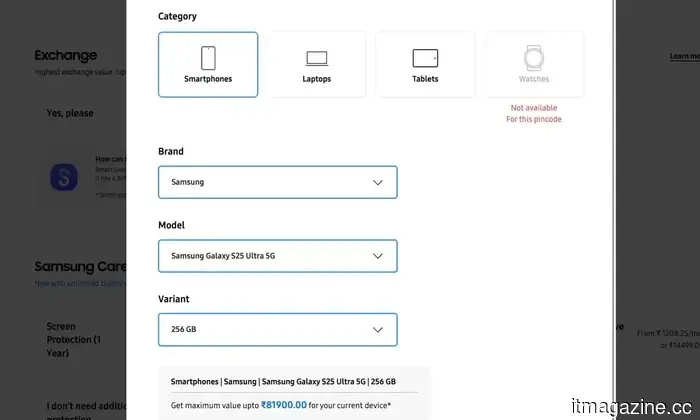 Samsung is offering to rent you a Galaxy S26 Ultra for a year at 50% of the retail price.
Galaxy Forever redefines flagship ownership in India—make a 50% payment now, and after a year, choose whether to retain, return, or upgrade to the next Galaxy.
Samsung is offering to rent you a Galaxy S26 Ultra for a year at 50% of the retail price.
Galaxy Forever redefines flagship ownership in India—make a 50% payment now, and after a year, choose whether to retain, return, or upgrade to the next Galaxy.
 Your inbox serves as a revenue stream for others. It doesn’t have to be that way.
Free email could end up being more costly than you realize. We examine why investing in a paid email service might be the most prudent privacy choice you make this year.
Your inbox serves as a revenue stream for others. It doesn’t have to be that way.
Free email could end up being more costly than you realize. We examine why investing in a paid email service might be the most prudent privacy choice you make this year.
 You may need to wait several months for Intel’s newest chips to be available in laptops from your preferred brands.
Intel's Core Ultra 200HX laptop processors are being released in phases, which means that certain brands will receive them months ahead of others.
You may need to wait several months for Intel’s newest chips to be available in laptops from your preferred brands.
Intel's Core Ultra 200HX laptop processors are being released in phases, which means that certain brands will receive them months ahead of others.
 According to CEO Carl Pei, AI agents are set to take the place of your applications in the near future.
Nothing's CEO Carl Pei believes that apps are on the verge of disappearing. AI agents will soon be able to understand your intentions and respond accordingly, eliminating the need for tapping, swiping, or switching between apps.
According to CEO Carl Pei, AI agents are set to take the place of your applications in the near future.
Nothing's CEO Carl Pei believes that apps are on the verge of disappearing. AI agents will soon be able to understand your intentions and respond accordingly, eliminating the need for tapping, swiping, or switching between apps.
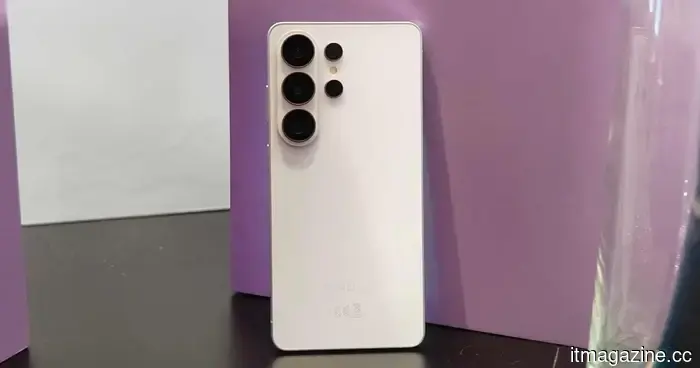 Samsung will lease you a Galaxy S26 Ultra for a year at 50% of its retail price.
Galaxy Forever reshapes flagship ownership in India — pay half now and then, after a year, choose whether to keep, return, or upgrade to the next Galaxy.
Samsung will lease you a Galaxy S26 Ultra for a year at 50% of its retail price.
Galaxy Forever reshapes flagship ownership in India — pay half now and then, after a year, choose whether to keep, return, or upgrade to the next Galaxy.
 Nothing's CEO, Carl Pei, states that AI agents will soon take the place of your applications.
Nothing's CEO, Carl Pei, believes that apps are on the verge of becoming obsolete. He predicts that AI agents will soon understand your intentions and take action on them without the need for tapping, swiping, or switching between apps.
Nothing's CEO, Carl Pei, states that AI agents will soon take the place of your applications.
Nothing's CEO, Carl Pei, believes that apps are on the verge of becoming obsolete. He predicts that AI agents will soon understand your intentions and take action on them without the need for tapping, swiping, or switching between apps.
Hydrogen fuel vehicles failed to gain popularity, but they could potentially power the next generation of long-range drones.
Hydrogen has not been successful in powering cars, but scientists in Norway have developed a drone that operates on hydrogen, replacing batteries with a fuel cell to manage long-distance tasks such as inspecting power lines.