
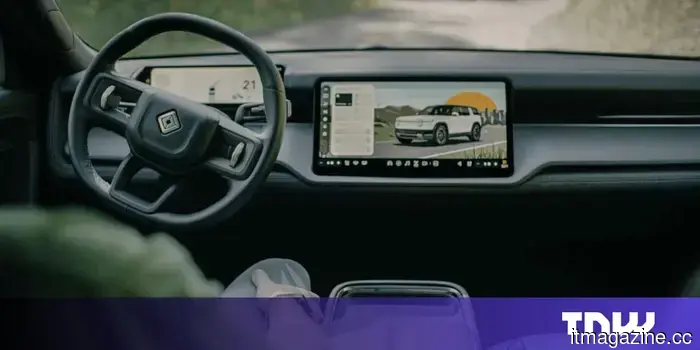
Uber and Rivian have finalized a $1.25 billion agreement for robotaxi services.
The collaboration utilizes Rivian’s proprietary chip and complete autonomous system as a robotaxi platform, with plans for commercial launch in San Francisco and Miami by 2028.
Uber has been rapidly securing robotaxi agreements, making any single announcement appear commonplace. However, this partnership with Rivian stands apart from the others. Unlike Uber's agreements with Waymo, Avride, or Zoox, where Uber acts merely as a distribution channel for another’s autonomous vehicle technology, this collaboration focuses on a manufacturer that has developed its own silicon, autonomy software, and manufacturing process from the ground up.
On Thursday, Rivian (NASDAQ: RIVN) and Uber (NYSE: UBER) declared that Uber will invest up to $1.25 billion in Rivian by 2031, contingent on Rivian achieving several autonomous performance targets by specified deadlines.
An initial investment of $300 million has been pledged following the agreement, pending regulatory approval. In return, Uber or its fleet partners will acquire 10,000 fully autonomous Rivian R2 robotaxis in the first phase of deployment, with an option to negotiate the purchase of up to 40,000 additional units starting in 2030. The total of 50,000 is a maximum number, not a guarantee.
Commercial operations are set to begin in San Francisco and Miami in 2028 and will extend to 25 cities across the US, Canada, and Europe by 2031. The vehicles will be exclusively available through the Uber platform. All timelines are projections and dependent on achieving milestones, with Rivian's own securities filings cautioning that actual results may differ significantly from the forecasts provided by the companies.
The rationale for the deal is heavily based on what Rivian presented during its first Autonomy & AI Day in Palo Alto in December 2025. During that event, the company introduced a comprehensive autonomous driving architecture centered around its first in-house processor, RAP1: a custom 5nm chip capable of 1,600 sparse TOPS of AI computing, produced by TSMC.
The Gen 3 Autonomy Compute Module (ACM3) is powered by two RAP1s and can process 5 billion pixels of sensor data each second. It employs RivLink, a proprietary low-latency interconnect, which enables the chaining of chips together for enhanced computational capacity.
Additionally, Rivian developed its own AI compiler and platform software to operate on this chip, a level of vertical integration that positions it alongside Tesla as one of the few consumer EV manufacturers designing specialized silicon for autonomous applications.
The Gen 3 platform features 11 cameras (totaling 65 megapixels), five radars, and a LiDAR sensor, which is currently undergoing validation and is anticipated to be available on R2 models starting late 2026, as reported by WardsAuto, Edmunds, and Electrek. Rivian confirmed that the initial R2 production run, expected earlier in 2026, will launch without the Gen 3 hardware. Therefore, the announced robotaxi program is predicated on the successful completion of the hardware validation process.
Uber CEO Dara Khosrowshahi emphasized Rivian’s vertical integration as the foundation for their confidence in the partnership. “We strongly believe in Rivian’s strategy of designing the vehicle, computing platform, and software stack together while maintaining end-to-end control over large-scale manufacturing and supply in the US,” he stated in the announcement.
This framing is noteworthy: unlike Uber’s arrangement with Lucid and Nuro, where Nuro delivers the autonomous driving software and Lucid provides the vehicle, Rivian is responsible for the entire stack. Uber is licensing access to this complete solution, rather than merging the technologies of two separate companies into one vehicle.
For Rivian, this agreement offers both financial backing and a critical use case for a platform it has developed over several years. RJ Scaringe, Rivian’s founder and CEO, characterized the partnership as a catalyst for advancing the company’s journey toward Level 4 autonomy. “The scale of Rivian’s expanding data flywheel combined with RAP1, our advanced in-house inference platform, and our multi-modal perception system make us incredibly optimistic about the swift progression of Rivian’s autonomy in the coming years,” he expressed.
At the close of Q4 2025, Rivian reported total liquidity of $6.59 billion, including nearly $6.1 billion in cash and equivalents, allowing it to absorb the development expenses implied by the milestone-based investment structure.
This timing coincides with a broader surge of Uber robotaxi activities. In the last six months, Uber has made partnerships with Zoox (Las Vegas this summer; Los Angeles 2027), Wayve and Nissan (Tokyo late 2026), NVIDIA and Stellantis (28 cities by 2028), and has extended existing partnerships with Waymo, Avride, WeRide, and Lucid/Nuro.
The company has
Other articles
 Your inbox is a business model for someone else. It doesn't have to be that way.
Free email services can be more expensive than you realize. We explore why investing in a paid email service could be the wisest choice for your privacy this year.
Your inbox is a business model for someone else. It doesn't have to be that way.
Free email services can be more expensive than you realize. We explore why investing in a paid email service could be the wisest choice for your privacy this year.
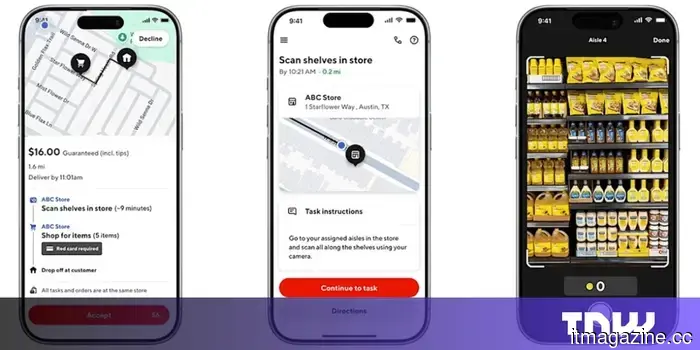 DoorDash introduces Tasks.
DoorDash has introduced Tasks, an independent app that compensates Dashers for capturing videos of household tasks and recording audio to help train AI models.
DoorDash introduces Tasks.
DoorDash has introduced Tasks, an independent app that compensates Dashers for capturing videos of household tasks and recording audio to help train AI models.
 Bluesky secures $100 million in Series B funding as a new CEO steps in.
Bluesky announced a $100M Series B funding round led by Bain Capital Crypto, which concluded last April, and has appointed a new CEO.
Bluesky secures $100 million in Series B funding as a new CEO steps in.
Bluesky announced a $100M Series B funding round led by Bain Capital Crypto, which concluded last April, and has appointed a new CEO.
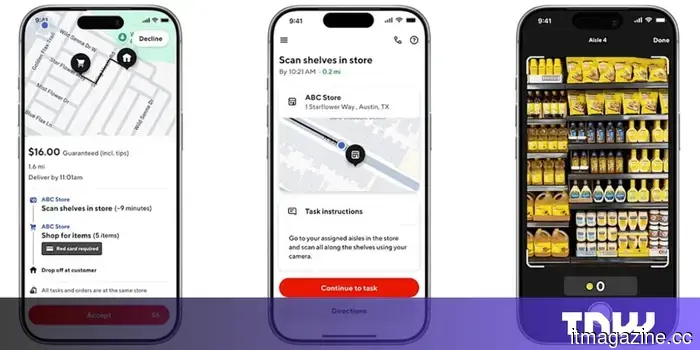 DoorDash introduces Tasks.
DoorDash has introduced Tasks, an independent app that compensates Dashers for filming home chores and recording audio to help train AI models.
DoorDash introduces Tasks.
DoorDash has introduced Tasks, an independent app that compensates Dashers for filming home chores and recording audio to help train AI models.
 AI analytics agents require limitations rather than increased model size.
AI analytics agents require safeguards rather than larger models. Discover why governed data, common definitions, and semantic layers are more crucial than the size of the model.
AI analytics agents require limitations rather than increased model size.
AI analytics agents require safeguards rather than larger models. Discover why governed data, common definitions, and semantic layers are more crucial than the size of the model.
 AI analytics agents require boundaries instead of an increase in model size.
AI analytics agents require boundaries rather than larger models. Discover why managed data, common definitions, and semantic layers are more important than the size of the model.
AI analytics agents require boundaries instead of an increase in model size.
AI analytics agents require boundaries rather than larger models. Discover why managed data, common definitions, and semantic layers are more important than the size of the model.
Uber and Rivian have finalized a $1.25 billion agreement for robotaxi services.
Uber plans to invest as much as $1.25 billion in Rivian by 2031, aiming for a fleet of as many as 50,000 autonomous R2 robotaxis in 25 cities.