
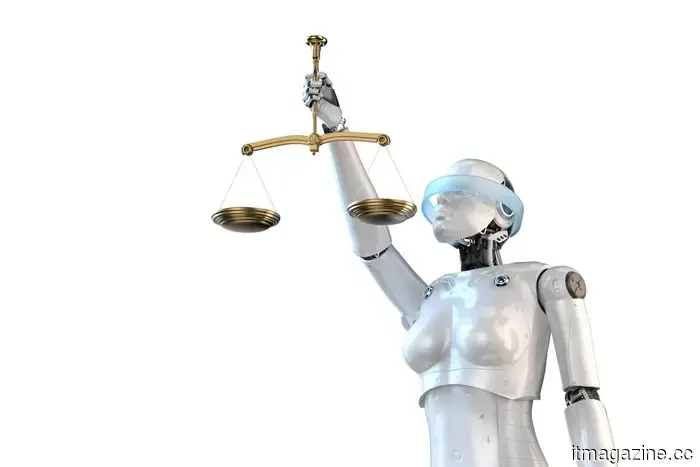
AI has mastered procedural legislation.
For a long time, it was believed that legal disputes were the domain of people with stone faces and piles of papers. But technology does not stand still. Our old acquaintance, the Neuro-Lawyer, has undergone another upgrade and has finally come to understand that it is not enough to simply know who is right; one must also know how to properly torment the opponent in court.
If previously the neural network could only philosophize on the topic of "Who should and who should not" (this is called substantive law), now it has uncovered the great secret of the bureaucratic dance. Artificial intelligence has mastered civil and arbitration processes. In simple terms, it now understands the difference between "filing a claim" and "filing a claim on time and paying the fee promptly."
Now AI will suggest what to write in the claim so that the judge does not throw it out the window on the 15th page and will ponder whether it is worth initiating a review of the case at all. In general, now any practicing lawyer, tormented by doubts about pre-trial procedures or the amount of state duty, can skip through thick codes and simply ask the soulless machine.
Let us remind those who are not specialists in jurisprudence: there is law that says "do not kill" and "pay taxes," and there is law that explains how exactly you will be judged if you did kill or did not pay. The latter is precisely the process. And it is vitally necessary to understand, for example, until what point you have a chance to introduce important evidence into the case or how to properly state that "everything is annoying, let's take a break."
But the most interesting thing is that procedural innovations have overlapped with seven areas of law that AI already knows by heart. Labor, corporate, advertising law, and consumer rights protection have now been enriched with procedural nuances. If a lawyer asks about how to take a brand from a competitor, the neural network will not just provide a link to the law but will also slyly inquire: "And how do you plan to prove the degree of confusion in court? Did you bring the methodology?"
Yegor Staroverov, the head of Neuro-Lawyer, expressed the general thought this way: procedural legislation is simply an instruction for applying the law. By teaching the machine to read instructions, we not only free lawyers from boredom, but we also make the answers more complete and, to be frank, usable in real battles.
Let us remind you that this miracle assistant operates on the basis of the "Garant" system, meaning it advises strictly with references to authoritative sources. It can also read files, create knowledge bases, and solve routine tasks with one click.
Forecast of consequences for the Russian justice system
Firstly, a sharp increase in the quality of claims can be expected. If previously texts like "give it back because I want it" came to the courts, now AI will suggest that one must first comply with the pre-trial procedure and only then "want." Some judges, accustomed to dismissing half of the cases due to formal errors, will suddenly have to genuinely delve into the essence of disputes rather than just dismissing them. On one hand, this is stressful for judges; on the other hand, it is a benefit for society.
Secondly, an "arms race" will inevitably arise. The plaintiff's side will come with a perfectly crafted claim, while the defendant's side will come with a rebuttal that the same AI, but with a different account, has crafted even better. The court will only have to observe this duel of artificial intelligences and issue a verdict signed by a living person. This will elevate the role of the judge to that of an arbiter in a cyber-sport discipline.
Thirdly, template legal consultations will become obsolete. Those lawyers whose job was to tell clients "this is under the jurisdiction of such-and-such court" and charge for it will have to either upgrade their qualifications or go sell hot pies. Artificial intelligence will do this faster, cheaper, and without tea breaks.
And finally, the most unexpected consequence. When every practicing lawyer gets their hands on such a procedural assistant, courts will not drown in the number of errors but rather in perfect correctness.
Imagine that all parties in the process stop making mistakes. All motions are filed on time, all deadlines are met, and all documents are properly attached. This is an ideal world! But in it, it will immediately become apparent that the laws themselves are imperfect. If previously the imperfections of the law were overlooked due to errors in its application, now, when the application becomes perfect, the absurdity of some norms will come to light. And then it will be necessary to fix not AI, but the legislation. However, we are still far from that, but it is quite pleasant to dream of a bright future where courts do not drown in paperwork but seek justice.
Other articles
 Neural networks are "stewing" in their own juice, Telegram is not liked by Roskomnadzor, and the editor-in-chief is digging into the "hardware."
Today, IT-World observed how neural networks began to master the art of legal nitpicking, one and a half million AI agents locked themselves in their own social network, Roskomnadzor is setting personal records for the number of posts read on Telegram, GIGABYTE is inventing new laptops, how the domestic "Beetle" helps bloggers speak clearly, and how Meizu is transforming smartphones into software developments.
Neural networks are "stewing" in their own juice, Telegram is not liked by Roskomnadzor, and the editor-in-chief is digging into the "hardware."
Today, IT-World observed how neural networks began to master the art of legal nitpicking, one and a half million AI agents locked themselves in their own social network, Roskomnadzor is setting personal records for the number of posts read on Telegram, GIGABYTE is inventing new laptops, how the domestic "Beetle" helps bloggers speak clearly, and how Meizu is transforming smartphones into software developments.
 T-Mobile 5G Home Internet's newest offer provides up to $300 in cashback.
If you have been thinking about transitioning from traditional cable, T-Mobile 5G Home Internet’s latest promotion could be the most persuasive reason to do so. The provider is giving new customers up to $300 back, depending on the selected plan. Along with an easy setup, unlimited data, and no-contract policy, this time-limited offer shines as one of the most straightforward and […]
T-Mobile 5G Home Internet's newest offer provides up to $300 in cashback.
If you have been thinking about transitioning from traditional cable, T-Mobile 5G Home Internet’s latest promotion could be the most persuasive reason to do so. The provider is giving new customers up to $300 back, depending on the selected plan. Along with an easy setup, unlimited data, and no-contract policy, this time-limited offer shines as one of the most straightforward and […]
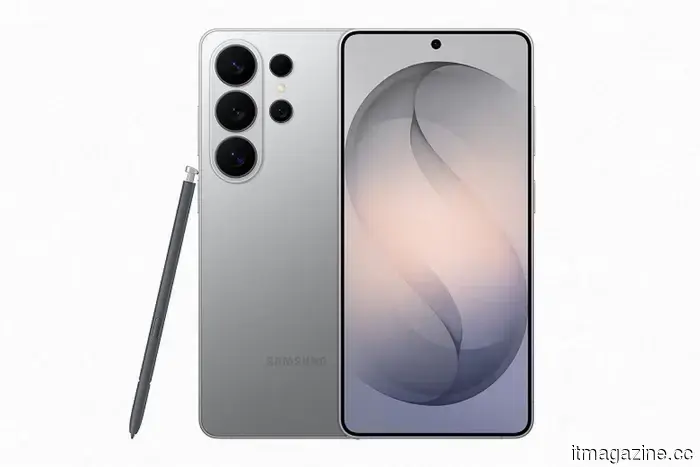 Samsung, it seems you have problems!
The official presentation of the Galaxy S26 took place on February 25. Beautiful, "polished," showcasing smart features and promises of a bright future. However, the future for Samsung arrived a bit earlier, and it turned out to be far from bright and rosy.
iPhone Fold. What is known about the specifications, release dates, and price
Apple still does not publicly confirm work on a foldable iPhone. However, discussions about the device have noticeably intensified in specialized media.
Samsung, it seems you have problems!
The official presentation of the Galaxy S26 took place on February 25. Beautiful, "polished," showcasing smart features and promises of a bright future. However, the future for Samsung arrived a bit earlier, and it turned out to be far from bright and rosy.
iPhone Fold. What is known about the specifications, release dates, and price
Apple still does not publicly confirm work on a foldable iPhone. However, discussions about the device have noticeably intensified in specialized media.
-and-headphones-Headphone-(a)-from-Nothing.webp) Smartphone Phone (4a) and headphones Headphone (a) from Nothing
The brand Nothing, which loves to create transparent devices, has brought two new products to Russia. The smartphone Phone (4a) and the large headphones Headphone (a) are now on sale. As usual, the main features here are the design that allows you to observe the rich inner world of the devices, and the attempt to harmonize hardware with artificial intelligence.
Smartphone Phone (4a) and headphones Headphone (a) from Nothing
The brand Nothing, which loves to create transparent devices, has brought two new products to Russia. The smartphone Phone (4a) and the large headphones Headphone (a) are now on sale. As usual, the main features here are the design that allows you to observe the rich inner world of the devices, and the attempt to harmonize hardware with artificial intelligence.
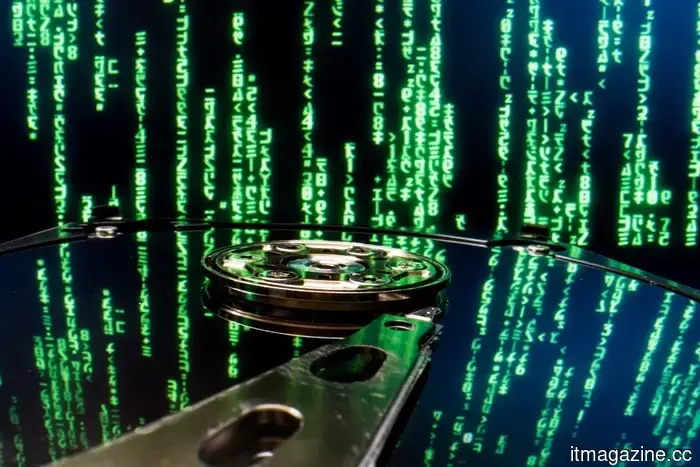 Seagate has begun shipping 44 TB HDDs.
American storage manufacturer Seagate has officially announced the start of mass shipments of 44 terabyte hard drives. This is an absolute record for the industry, made possible by years of research in magnetic recording. The new platform is called Mozaic 4+.
Seagate has begun shipping 44 TB HDDs.
American storage manufacturer Seagate has officially announced the start of mass shipments of 44 terabyte hard drives. This is an absolute record for the industry, made possible by years of research in magnetic recording. The new platform is called Mozaic 4+.
AI has mastered procedural legislation.
For a long time, it was believed that legal battles were the domain of stone-faced people and piles of paperwork. But technology does not sleep. Our old acquaintance, the Neuro-Lawyer, has undergone another upgrade and has finally reached the understanding that it is not enough to just know who is right; one must also know how to properly torment the opponent in court.