

JD Sports introduces AI shopping.
For years, online shopping adhered to a consistent process: using a search bar, navigating a product grid, applying filters, and completing checkout. The interface remained largely unchanged despite shifts in the broader internet landscape. However, that pattern is now evolving.
On Monday, January 12, 2026, JD Sports Fashion plc (JD Group) became one of the first major retailers to allow U.S. customers to search for and purchase sneakers directly through AI chatbots such as ChatGPT, Microsoft Copilot, and Google Gemini. There’s no need to visit a website or use an app; it’s simply a conversation that concludes with a payment.
Essentially, a customer can engage with an AI bot, request “add these shoes to my cart,” and finalize a purchase with a single click.
Here's how it operates: JD Sports has entered into a global partnership with commercetools to facilitate “one-click” purchases using AI assistants, including Copilot, Gemini, and ChatGPT. U.S. customers will simply tell the chatbot what they are looking for and make an instant payment through Stripe's integrated payment system.
The retailer is the first to implement commercetools’ “Agentic Jumpstart” solution alongside Stripe’s Agentic Commerce Suite (ACS). Stripe manages the payment processing and fraud protection, while commercetools’ AI Hub ensures that JD’s product data, pricing, and availability are consistently synchronized across all AI channels.
For instance, a customer might say, “Find me a pair of Nike Air Max in size 10.” The AI then searches JD’s catalog (via commercetools) and presents relevant products, complete with images and specifications. The shopper can then respond with "buy this pair," and Stripe efficiently takes care of the checkout process. Both commercetools and Stripe highlight that all payment and fulfillment information continues to flow through JD’s systems, meaning the retailer maintains control over inventory, pricing, and customer experience.
Shopping behavior shifts from browsing to intention-focused dialogues. Instead of scrolling through countless sneaker options, a customer can request “black running shoes under $150 that are suitable for daily training,” refine their inquiry, compare choices, and complete a payment, all within the same conversation. The AI manages product discovery, filtering, and decision-making seamlessly.
For consumers, this translates to a smoother experience with less time invested in navigating interfaces centered on catalogs rather than inquiries. For retailers, it implies the loss of something they have depended on for two decades: control over the purchasing journey.
JD Sports CEO Regis Schultz compared the influence of AI on retail to the internet boom of the late 1990s, suggesting it could minimize physical store sizes by reducing the necessity for cash registers. This commentary hints at a broader reevaluation, indicating that as discovery and checkout transition into AI frameworks, the significance of both digital and physical stores diminishes.
The challenge to traditional e-commerce models is significant. Classic platforms are designed around web pages, categories, and conversion funnels, whereas AI shopping circumvents most of these structures. When transactions occur within chatbots, platforms lose visibility into how customers make choices. Consequently, brand differentiation becomes more complex when products are presented as responses rather than destinations. Customer loyalty may shift from individual websites to the AI assistant that consumers trust.
This ushers in a new competitive environment where retailers must compete not only on price, delivery, or user experience but also on how effectively their inventory, data, and brand are translated into AI-facilitated conversations. It raises new considerations for marketplaces as well; if AI assistants can compare items from various retailers in real-time, the advantage of being the primary shopping destination diminishes.
Allowing customers to purchase without visiting a website introduces new vulnerabilities. Retailers must guarantee secure payments, maintain real-time accuracy in inventory and pricing, and ensure that the brand experience does not devolve into a generic AI-generated response. Here, Stripe’s role is crucial, serving as the trust foundation that makes conversational checkout feasible at scale.
Accountability presents another issue. When problems arise—be it a failed payment, incorrect size, or delayed delivery—the customer interacts with an AI, not a retail representative. Retailers still bear responsibility for the outcomes, even if they no longer control the interface.
A subtle yet fundamental shift is occurring. JD Sports is not an isolated instance. This trend indicates a larger movement: commerce is transitioning into AI systems that mediate interactions between consumers and brands. Just as mobile applications transformed shopping in the 2010s, conversational AI is reshaping it again, this time displacing the store from the central role in the shopping experience.
What takes the store's place may be less visible but more impactful: intent, context, and conversation. Retail isn’t disappearing; instead, it is merging into the tools people already use for thinking, searching, and decision-making.
This evolution is undeniably remarkable. The purchasing process becomes quicker, friction reduces, and decisions can be condensed into just a few lines of text. Yet, gradually

Other articles
 OnePlus 15R review: while it's not extravagant, it stands out as the top phone I've ever evaluated in one important aspect.
The OnePlus 15R requires a bit of unpacking, but if you look beyond its somewhat elevated price and limited features, you'll discover a dependable and robust Android device.
OnePlus 15R review: while it's not extravagant, it stands out as the top phone I've ever evaluated in one important aspect.
The OnePlus 15R requires a bit of unpacking, but if you look beyond its somewhat elevated price and limited features, you'll discover a dependable and robust Android device.
 OnePlus 15R review: it may not be eye-catching, but it excels in one important aspect more than any other phone I've evaluated.
The OnePlus 15R requires some consideration, but if you look beyond its unexpectedly high price and limited features, you'll discover a dependable and sturdy Android device.
OnePlus 15R review: it may not be eye-catching, but it excels in one important aspect more than any other phone I've evaluated.
The OnePlus 15R requires some consideration, but if you look beyond its unexpectedly high price and limited features, you'll discover a dependable and sturdy Android device.
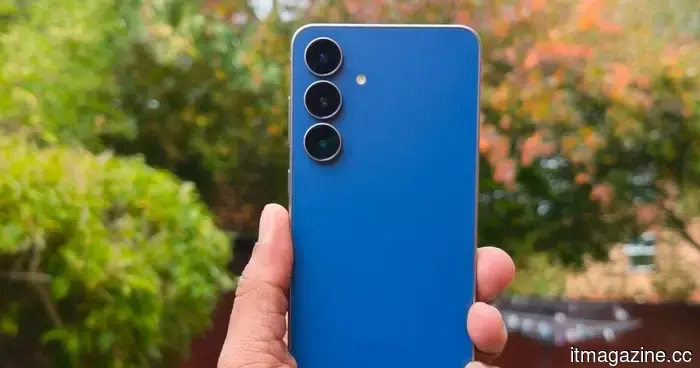 The Galaxy S26 Plus might resemble its predecessor more than you anticipate.
Leaks indicate that the Galaxy S26 Plus could be the least impressive model in Samsung's forthcoming flagship range.
The Galaxy S26 Plus might resemble its predecessor more than you anticipate.
Leaks indicate that the Galaxy S26 Plus could be the least impressive model in Samsung's forthcoming flagship range.
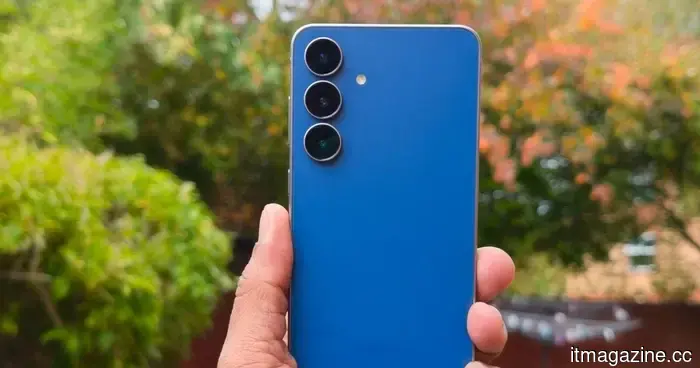 The Galaxy S26 Plus might closely resemble its predecessor more than you anticipate.
Reports indicate that the Galaxy S26 Plus could be the least exciting model in Samsung's forthcoming flagship range.
The Galaxy S26 Plus might closely resemble its predecessor more than you anticipate.
Reports indicate that the Galaxy S26 Plus could be the least exciting model in Samsung's forthcoming flagship range.
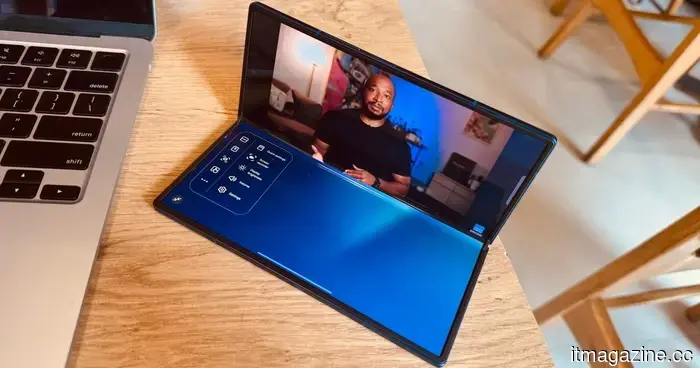 Your upcoming Galaxy Z Fold may feature a crease that is 20% shallower.
Samsung Display's demonstration at CES 2026 suggests that the crease on the Galaxy Z Fold 8 might be approximately 20% less pronounced. Changes in material could diminish glare, but the final cost and a decision made in late Q1 may determine whether it will be released.
Your upcoming Galaxy Z Fold may feature a crease that is 20% shallower.
Samsung Display's demonstration at CES 2026 suggests that the crease on the Galaxy Z Fold 8 might be approximately 20% less pronounced. Changes in material could diminish glare, but the final cost and a decision made in late Q1 may determine whether it will be released.
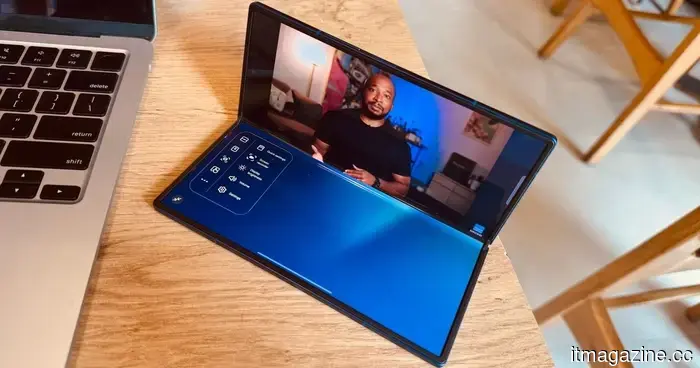 Your upcoming Galaxy Z Fold may feature a crease that's 20% shallower.
Samsung Display's demonstration at CES 2026 suggests that the crease in the Galaxy Z Fold 8 might be approximately 20% less pronounced. Changes in materials could help lessen glare, but the final decision on whether it will be released will depend on costs and a decision made in late Q1.
Your upcoming Galaxy Z Fold may feature a crease that's 20% shallower.
Samsung Display's demonstration at CES 2026 suggests that the crease in the Galaxy Z Fold 8 might be approximately 20% less pronounced. Changes in materials could help lessen glare, but the final decision on whether it will be released will depend on costs and a decision made in late Q1.
JD Sports introduces AI shopping.
JD Sports allows US customers to make purchases through AI chatbots, indicating a wider transition as retail evolves from physical stores and websites to conversational AI.