

Do you recall iTunes? You remain a significant player in the music industry.
Digital Trends may receive a commission when you make purchases through our links. Why should you trust us?
Record labels continue to structure their plans around iTunes, not because they long for the iPod days, but because over 80% of iTunes users do not subscribe to Apple Music, creating a significant audience outside of Apple’s streaming service. Those in this group are viewed by labels as straightforward buyers in the first week of a new album's release.
The first week of an album's release is crucial, as it influences headlines, chart rankings, and public perception. A paid download can rapidly boost sales figures without the delay of accumulating streams, according to Bloomberg.
Apple also contends that iTunes is not solely for revisiting old favorites. They claim that half of iTunes users started purchasing songs in the last decade, and almost half of the top 10,000 best-selling albums each quarter are new releases. This is why the store remains part of marketing strategies, as it continues to attract payments for current music.
Why downloads maintain their significance
A digital album download is counted as a full unit in Billboard's accounting, while streaming requires a significantly higher volume for equivalence. Specifically, it takes 1,000 premium audio or video streams to equal one album sale, or 2,500 streams supported by ads. One purchase therefore can equal the effect of thousands of streams.
This advantage in conversion also sheds light on the resurgence of digital exclusives and variants. There are iTunes-exclusive editions linked to popular artists, as well as multiple digital versions available through artist stores. These packages are designed to make a download feel unique enough to warrant an immediate purchase.
The behavior of iTunes buyers is distinct
Listeners of digital libraries behave differently compared to typical streamers. They tend to be more likely to express that they value an artist's opinions and report higher engagement during the initial release day and week. This behavior reflects high intent during an artist's launch.
Some buyers also see practical advantages in owning files, such as the ability to sample songs in their own music creations. Streaming services do not always offer every track, and licensing can change, so owning a file mitigates these concerns.
A shrinking market demands precision
Overall, downloads are still in decline. The Recording Industry Association of America reported that revenue from downloaded singles in the U.S. decreased by 0.3% year-over-year in the first half of 2025, while album downloads dropped 14%. Total revenue from digital downloads amounted to $139 million during this time, in contrast to $4.7 billion from streaming.
Consequently, record labels are not banking on a resurgence of downloads. Their approach is more targeted: identify the remaining buyers and provide them with compelling reasons to purchase during the launch window, whether through exclusive editions, bonus content, or collectible digital variants. If you are still utilizing iTunes, keep an eye on the store during major releases; that's when you'll see the most efforts directed toward you.
Paulo Vargas is an English major turned reporter turned technical writer, with a career that has consistently circled back to...
HAVIT Space S1 wireless headphones offer adaptive ANC and natural spatial audio
For those who depend on headphones to navigate daily life, there is a familiar and frustrating cycle. You purchase a pair based on the marketing promises - optimal silence in a bustling subway, an immersive concert-hall sound, and crystal-clear calls - yet reality often falls short. A week later, you discover the "active" noise cancellation fails during strong winds, the "spatial audio" resembles a cheap reverb effect, and the touch controls are overly sensitive, leading to accidental disconnection during calls.
These are not just minor frustrations; they represent the pain points that make technology feel burdensome. No matter how impressive the specifications are, a device proves ineffective if it’s bothersome to use. This gap is precisely what HAVIT targets with its new SPACE Series, particularly the flagship SPACE S1. Rather than chasing gimmicks, they have crafted a device aimed at addressing the real issues people face: inconsistent silence, artificial audio, and finicky controls.
Read more
A $1,100 discount makes this 65-inch Samsung OLED an essential upgrade
Samsung’s 65-inch S84F OLED is now available for $899.99, representing a significant price drop for a high-end screen.
If you’ve been anticipating the moment when OLED truly makes sense, this is it. OLED is the upgrade that people notice, even those who aren’t TV enthusiasts. Dark scenes appear genuinely dark, highlights stand out without becoming washed out, and the viewing experience feels more cinematic. The Samsung 65-inch S84F OLED has dropped to $899.99, which is $1,100 less than its original price of $1,999.99. At this price, it shifts from being a "someday" purchase to "this is the one to buy."
Get the deal
Ring now


Other articles
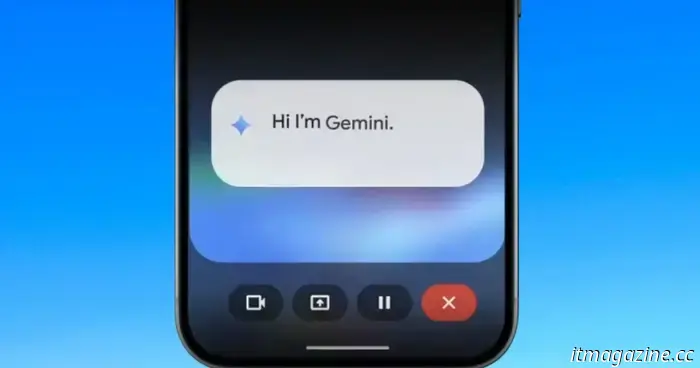 Gemini's new ChatGPT import feature allows you to maintain context when you change between tasks.
Gemini is working on a method to import ChatGPT chat history, allowing you to change assistants without losing context. This feature functions as a file upload, but the chats you import will be saved in your activity data.
Gemini's new ChatGPT import feature allows you to maintain context when you change between tasks.
Gemini is working on a method to import ChatGPT chat history, allowing you to change assistants without losing context. This feature functions as a file upload, but the chats you import will be saved in your activity data.
 The Android 16 test build introduces improved connection switching capabilities for your Pixel device.
Android 16 QPR3 Beta 2 has transformed Adaptive Connectivity into two separate switches: one for mobile fallback and another for battery optimization. This change allows Pixel users to more effectively manage unstable Wi-Fi, data consumption, and battery life.
The Android 16 test build introduces improved connection switching capabilities for your Pixel device.
Android 16 QPR3 Beta 2 has transformed Adaptive Connectivity into two separate switches: one for mobile fallback and another for battery optimization. This change allows Pixel users to more effectively manage unstable Wi-Fi, data consumption, and battery life.
 This is a robot vacuum deal that you can set up and then forget about, and the discount is genuinely astonishing.
The category of robot vacuums includes two types of products: those that require supervision and those that effectively alleviate your weekly chores. A self-emptying model represents the divide between these two experiences. The bObsweep Bio Auto-Empty Robot Vacuum & Mop is priced at $239.99, offering a substantial saving of $890 from the comparable price of $1,129.99. That’s a significant […]
This is a robot vacuum deal that you can set up and then forget about, and the discount is genuinely astonishing.
The category of robot vacuums includes two types of products: those that require supervision and those that effectively alleviate your weekly chores. A self-emptying model represents the divide between these two experiences. The bObsweep Bio Auto-Empty Robot Vacuum & Mop is priced at $239.99, offering a substantial saving of $890 from the comparable price of $1,129.99. That’s a significant […]
 Crunchyroll reveals a price increase, resulting in a higher cost for your daily anime enjoyment.
Popular anime streaming service Crunchyroll has revealed a price increase, raising subscription fees for all tiers by $2.
Crunchyroll reveals a price increase, resulting in a higher cost for your daily anime enjoyment.
Popular anime streaming service Crunchyroll has revealed a price increase, raising subscription fees for all tiers by $2.
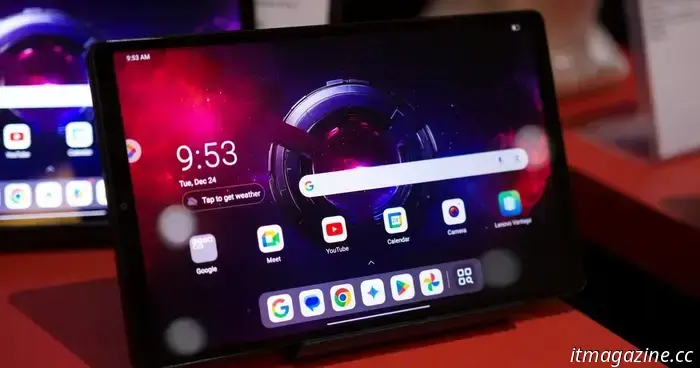 Lenovo has announced that a new compact gaming tablet is on the way.
Lenovo has teased the refreshed Legion Y700 on Weibo, and leaks suggest significant specification enhancements along with a potential launch in March.
Lenovo has announced that a new compact gaming tablet is on the way.
Lenovo has teased the refreshed Legion Y700 on Weibo, and leaks suggest significant specification enhancements along with a potential launch in March.
 When AI companions disconnect from Wi-Fi and venture outside the house with Fuzozo.
In contrast to certain products that are marketed primarily as AI toys, Fuzozo seems to be redirecting its emphasis from immediate novelty to more sustainable, long-term engagement.
When AI companions disconnect from Wi-Fi and venture outside the house with Fuzozo.
In contrast to certain products that are marketed primarily as AI toys, Fuzozo seems to be redirecting its emphasis from immediate novelty to more sustainable, long-term engagement.
Do you recall iTunes? You remain a significant player in the music industry.
Record labels continue to target iTunes purchasers since a majority of users are not subscribed to Apple Music, and a single album download can be more valuable than thousands of streams. Anticipate an increase in exclusives and different versions during the release week.