
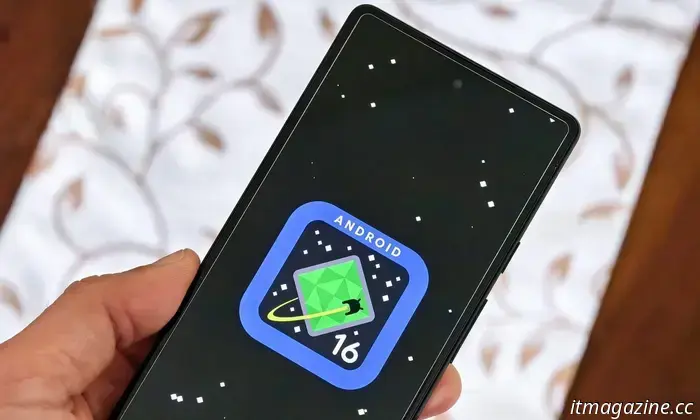
The Android 16 test build introduces improved connection switching capabilities for your Pixel device.
QPR3 Beta 2 features an automatic switch option as well as a standalone toggle focused on battery, allowing users to better balance reliability, data usage, and power consumption.
Tushar Mehta / Digital Trends
The Android 16 QPR3 Beta 2 modifies a Pixel setting that addresses one of the most frustrating mobile issues: a Wi-Fi connection that appears active but isn’t functional. Instead of having a single toggle for Adaptive Connectivity, this test build for Android 16 separates the feature into two controls, both of which are enabled by default.
In the stable QPR2 release, Adaptive Connectivity can be found under Settings, Network and Internet, and relies largely on trust. When activated, Google claims that Android will manage your connections to enhance performance and conserve battery life. In QPR3 Beta 2, the interface provides more informative visuals and clearer labels that explain what the feature does and its potential impacts.
Although it may seem like a minor change, it offers a neater way to determine when your phone should prioritize staying connected versus maximizing battery life.
Explicit mobile fallback option
The first control facilitates an automatic switch to the mobile network when Wi-Fi is weak or unavailable, ensuring that your Pixel can transition to cellular data to keep apps running, accompanied by a clear alert that data charges may apply. This is useful for those experiencing unreliable Wi-Fi at home, in cafes, or in buildings where signals fluctuate. This toggle will help minimize interruptions.
Now that it's a separate control, you can enable the fallback option without feeling obligated to adopt all aspects of the feature.
Battery optimization receives its own setting
The second control focuses on optimizing the network for battery longevity. It retains the original concept where Android automatically selects what it believes is the best connection to prolong battery life. Most users will likely leave this setting untouched, as it is designed to operate quietly in the background.
With two switches, the trade-off becomes more straightforward. You can choose to prioritize connection reliability while allowing for some additional cellular data use, or you can restrict cellular usage while still allowing Android to optimize for battery.
Background updates suggest further developments
Google has also updated Adaptive Connectivity Services through System services, with version p.2026.01 released within the past week. These system updates can modify functionality without requiring a full OS update, so the feature may continue to evolve as the QPR3 beta progresses.
For those testing this build, it's recommended to maintain your usual routine for a few days, then check your mobile data usage to evaluate the fallback's effectiveness. If you’re not participating in the beta, the key takeaway is that Pixel’s connectivity tools are becoming less of an all-or-nothing choice and more transparent.
Paulo Vargas is an English major transitioned to a reporter and then to a technical writer, consistently finding his way back to...
Galaxy S26 leak predicts an unsatisfactory wireless charging situation
Mixed signals from leaked accessories for the Galaxy S26 indicate that Samsung's anticipated Qi2 wireless charging upgrade may not be as seamless or integrated as fans had hoped.
Rumors suggested that Samsung's forthcoming Galaxy S26 series would feature native Qi2 wireless charging with a built-in magnetic profile. However, a recent report from the Dutch source Nieuwemobiel contradicts those early expectations and has shared images of first-party accessories that Samsung may launch alongside the Galaxy S26 series.
Read more
Samsung prepares a new Ultra smartwatch and a large iPad Pro competitor
Samsung is introducing a new Plus tablet tier, refreshed Galaxy Watches, and an additional rugged Ultra model, aiming to compete with Apple across various screens, wearables, and ecosystems in 2026.
Although Samsung is set to unveil the Galaxy S26 series and Galaxy Buds 4 by late February, current rumors have shifted focus to other devices, including upcoming tablets and Galaxy Watches. According to a recent report from Smartprix, citing GSMA IMEI listings, Samsung is developing two new Galaxy S series tablets: the Galaxy Tab S12 Plus 5G (SM-X846B) and the Galaxy Tab S12 Ultra 5G (SM-X946B). No details have yet emerged regarding the standard Tab S12.
Read more
Foldable iPhone leak suggests innovative engineering and a throwback design to iPhone X
Apple's foldable iPhone could break from traditional hardware norms, rearranging buttons and cameras to maximize battery life and screen real estate in what may be its boldest redesign to date.
The long-awaited foldable iPhone seems to be materializing, and if the latest leak is accurate, it might come with a significant redesign of the physical buttons, camera arrangement, and internal structure. On a standard iPhone, volume controls are typically located on the left side and the power button (with Touch ID) on the right. However, the iPhone Fold may feature volume controls on the top right, reminiscent of the button layout on the iPad mini.
Read more



Other articles
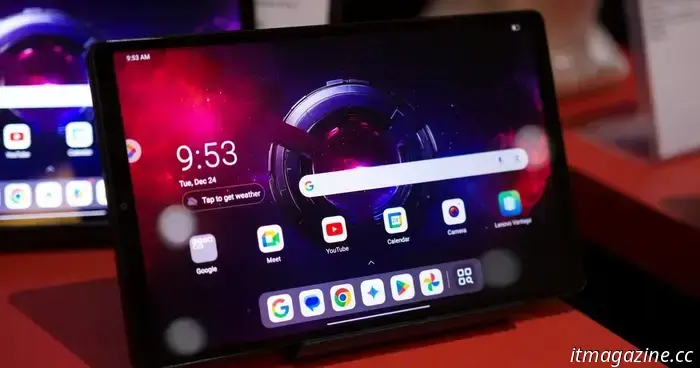 Lenovo has announced that a new compact gaming tablet is on the way.
Lenovo has teased the refreshed Legion Y700 on Weibo, and leaks suggest significant specification enhancements along with a potential launch in March.
Lenovo has announced that a new compact gaming tablet is on the way.
Lenovo has teased the refreshed Legion Y700 on Weibo, and leaks suggest significant specification enhancements along with a potential launch in March.
 Crunchyroll reveals a price increase, resulting in a higher cost for your daily anime enjoyment.
Popular anime streaming service Crunchyroll has revealed a price increase, raising subscription fees for all tiers by $2.
Crunchyroll reveals a price increase, resulting in a higher cost for your daily anime enjoyment.
Popular anime streaming service Crunchyroll has revealed a price increase, raising subscription fees for all tiers by $2.
 When AI companions disconnect from Wi-Fi and venture outside the house with Fuzozo.
In contrast to certain products that are marketed primarily as AI toys, Fuzozo seems to be redirecting its emphasis from immediate novelty to more sustainable, long-term engagement.
When AI companions disconnect from Wi-Fi and venture outside the house with Fuzozo.
In contrast to certain products that are marketed primarily as AI toys, Fuzozo seems to be redirecting its emphasis from immediate novelty to more sustainable, long-term engagement.
 Gemini's new ChatGPT import feature allows you to maintain context when you change between tasks.
Gemini is working on a method to import ChatGPT chat history, allowing you to change assistants without losing context. This feature functions as a file upload, but the chats you import will be saved in your activity data.
Gemini's new ChatGPT import feature allows you to maintain context when you change between tasks.
Gemini is working on a method to import ChatGPT chat history, allowing you to change assistants without losing context. This feature functions as a file upload, but the chats you import will be saved in your activity data.
 The latest Google Home update enhances automation controls, making it easier for you to create smarter routines.
The most recent update to the Google Home app brought a variety of new automation starters, conditions, and actions that enable you to develop more useful routines.
The latest Google Home update enhances automation controls, making it easier for you to create smarter routines.
The most recent update to the Google Home app brought a variety of new automation starters, conditions, and actions that enable you to develop more useful routines.
 Your AI could operate in orbit if SpaceX's satellite proposal is approved.
SpaceX has acquired xAI and is linking the acquisition to artificial intelligence data centers in space. A suggested constellation of 1 million satellites would enable solar-powered computing in orbit, but regulatory challenges and implementation risks will determine the feasibility of the project.
Your AI could operate in orbit if SpaceX's satellite proposal is approved.
SpaceX has acquired xAI and is linking the acquisition to artificial intelligence data centers in space. A suggested constellation of 1 million satellites would enable solar-powered computing in orbit, but regulatory challenges and implementation risks will determine the feasibility of the project.
The Android 16 test build introduces improved connection switching capabilities for your Pixel device.
Android 16 QPR3 Beta 2 has transformed Adaptive Connectivity into two separate switches: one for mobile fallback and another for battery optimization. This change allows Pixel users to more effectively manage unstable Wi-Fi, data consumption, and battery life.