
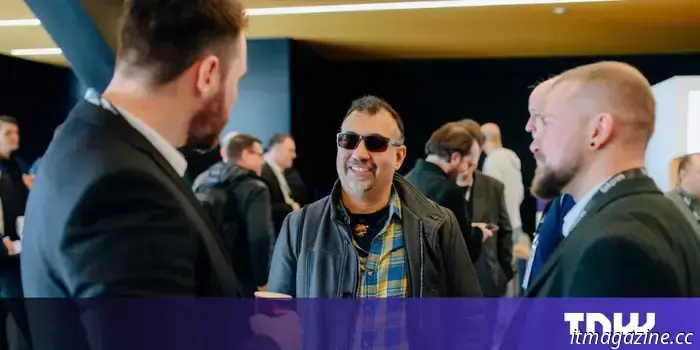
Large platforms, lesser effect.
For years, the tech industry defined success as achieving scale—bigger venues, larger audiences, more branding, more panels, and more chaos. Five thousand attendees grew to ten thousand, and that number became the target. At some point, this logic began to falter. Founders and executives didn’t formally boycott these events; they merely stopped attending.
What we observe now isn’t a dismissal of events but a recalibration in how those who truly lead companies opt to utilize their time. This change is subtle yet consistent: fewer large conferences, more intimate, curated meetups, increased private gatherings, more dinners, and more tables of twelve.
Large tech events struggle because they prioritize visibility over utility. A founder doesn’t require three days of generic presentations, numerous panels lacking genuine interaction, or networking opportunities where relevance is left to chance.
When scaled up, everything tends to become superficial. Conversations shorten, access diminishes, and the meaningful exchanges are drowned out by the format itself. What founders seek is straightforward: context, trust, direct access, and dialogues free from the pressure to perform. They desire environments where honest discussions can occur, away from public scrutiny.
Even when larger conferences are appropriate, there is a noticeable psychological threshold—typically around a thousand participants, in rare cases. Past that, maintaining quality becomes unmanageable. The event shifts from a setting for decision-making to a product meant for mass appeal.
In the tech sector, especially among founders and executives, it no longer operates like a mass industry but rather resembles a precision-focused one. This is why smaller, niche conferences consistently outperform larger ones across all relevant metrics. Having ten pertinent individuals in a room generates far more value than a thousand irrelevant participants in an auditorium.
In an intimate setting, access is organic. There’s no need for anyone to pursue another. Trust develops more swiftly, and authentic conversations take place without an audience to impress.
The most significant discussions in tech have never occurred on stage; they unfold before the lights shine and once the microphones are turned off.
Alongside this transformation, we are in the process of creating a private community exclusively for one thousand founders and executives. It is by invitation only—not a platform, nor a public group, and not meant for scaling but for relevance. The quality is safeguarded through its limitations.
One thing that can be shared publicly is that TNW will host an event in 2026. The specifics, format, and official announcement will follow soon, but not here. What’s crucial is that this return will not replicate the previous model; it will reflect the industry’s current functioning.
Big events aren’t vanishing; they simply are no longer the environments where critical decisions occur. The industry is already experiencing this change. There are smaller venues, more focused conversations, and the presence of individuals who genuinely need to attend.
Most people just haven’t recognized this shift yet.
Other articles
 The fashionable Vocci smart ring aims to document your life, one audio recording at a time.
Vocci's smart ring, which is water-resistant, is constructed from hypoallergenic titanium, offers transcription in 112 languages, and has a battery life of up to 8 hours per charge.
The fashionable Vocci smart ring aims to document your life, one audio recording at a time.
Vocci's smart ring, which is water-resistant, is constructed from hypoallergenic titanium, offers transcription in 112 languages, and has a battery life of up to 8 hours per charge.
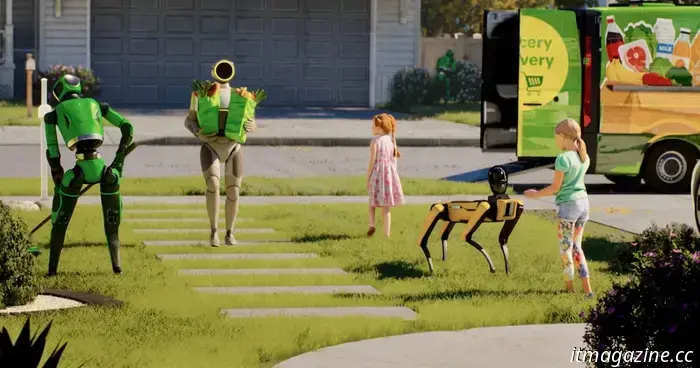 Boston Dynamics promises to transform Atlas into a ‘superhuman’ robot.
CES 2026 Check out our full coverage of CES here Updated just under 25 minutes ago Boston Dynamics stands as a leader in the field of humanoid robotics, with Atlas making its debut in 2013 and evolving into the sophisticated bipedal robot it is now. Since that time, advancements in robotics hardware and AI have enabled […]
Boston Dynamics promises to transform Atlas into a ‘superhuman’ robot.
CES 2026 Check out our full coverage of CES here Updated just under 25 minutes ago Boston Dynamics stands as a leader in the field of humanoid robotics, with Atlas making its debut in 2013 and evolving into the sophisticated bipedal robot it is now. Since that time, advancements in robotics hardware and AI have enabled […]
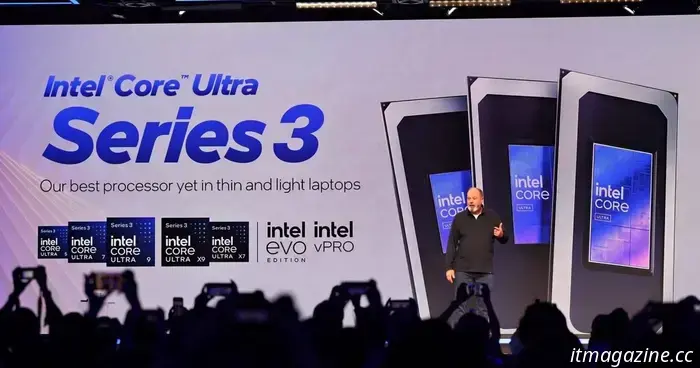 The Intel Core Ultra Series 3 laptops will be released later this month; here’s what you can anticipate.
Intel has announced that laptops equipped with its new Core Ultra Series 3 processors will be available on the market later this month.
The Intel Core Ultra Series 3 laptops will be released later this month; here’s what you can anticipate.
Intel has announced that laptops equipped with its new Core Ultra Series 3 processors will be available on the market later this month.
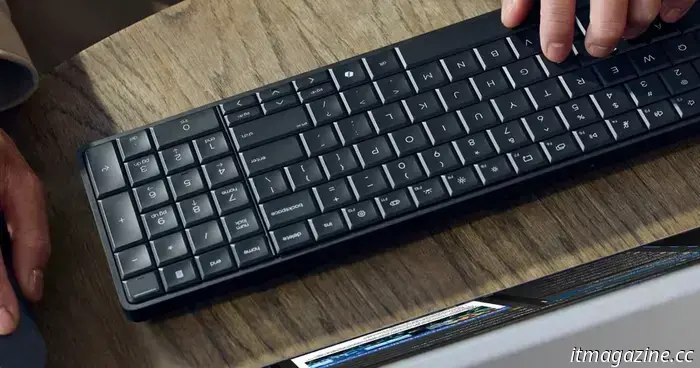 HP's latest keyboard PC aims to take the place of your traditional desktop configuration.
HP’s EliteBoard G1a is a complete Copilot+ desktop integrated into a 750 g keyboard. It is designed for flexible office environments and features over 50 TOPS of on-device AI, with a launch expected in March on HP.com.
HP's latest keyboard PC aims to take the place of your traditional desktop configuration.
HP’s EliteBoard G1a is a complete Copilot+ desktop integrated into a 750 g keyboard. It is designed for flexible office environments and features over 50 TOPS of on-device AI, with a launch expected in March on HP.com.
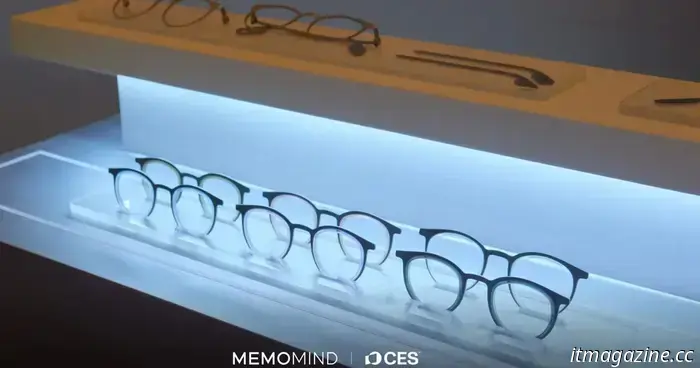 MemoMind AI glasses are designed to resemble traditional glasses rather than a technological device.
XGIMI is set to unveil MemoMind at CES 2026, a new range of AI glasses designed for everyday use. The concept features modular frames, support for prescription lenses, and discreet assistance such as translation and reminders.
MemoMind AI glasses are designed to resemble traditional glasses rather than a technological device.
XGIMI is set to unveil MemoMind at CES 2026, a new range of AI glasses designed for everyday use. The concept features modular frames, support for prescription lenses, and discreet assistance such as translation and reminders.
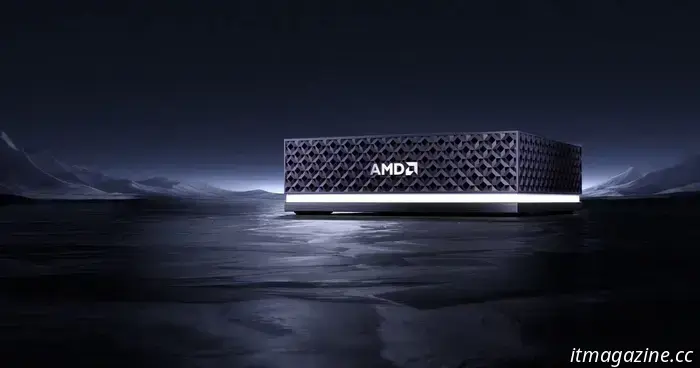 AMD aims for your next computer to be either an AI laptop or a desktop featuring the Ryzen 7 9850X3D.
AMD's CES 2026 lineup includes Ryzen AI laptops set to launch in Q1 2026, featuring the Ryzen 7 9850X3D for gamers, along with ROCm 7.2 and driver updates aimed at facilitating local AI setups.
AMD aims for your next computer to be either an AI laptop or a desktop featuring the Ryzen 7 9850X3D.
AMD's CES 2026 lineup includes Ryzen AI laptops set to launch in Q1 2026, featuring the Ryzen 7 9850X3D for gamers, along with ROCm 7.2 and driver updates aimed at facilitating local AI setups.
Large platforms, lesser effect.
For many years, success in the tech industry was synonymous with growth. Larger venues, bigger audiences, additional logos, more discussions, and increased hype became the standard. Five thousand attendees turned into ten thousand, and ten thousand became the target. At some point, this approach ceased to be meaningful.