
This innovative wearable aims to enhance your concentration and may also assist individuals with ADHD.
This mindfulness wearable enables you to rediscover your connection to daily life.
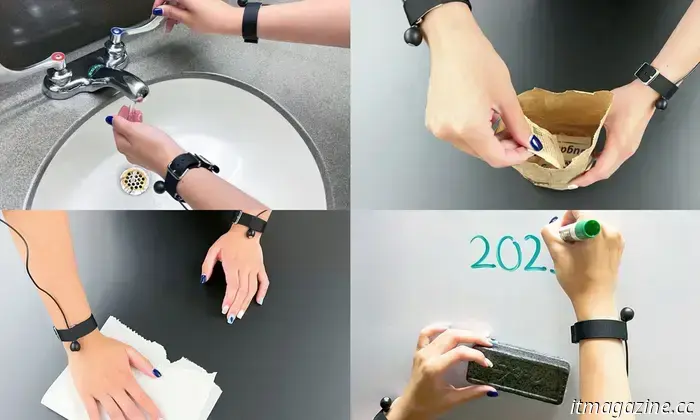
Researchers at Stanford have developed an intriguing new wearable aimed at helping you remain present, without the need for guided meditation or screen time. Instead, this device amplifies the subtle, often overlooked sounds in your environment, such as the sound of your hands rubbing together, fabric rustling, or a marker scratching against a whiteboard.
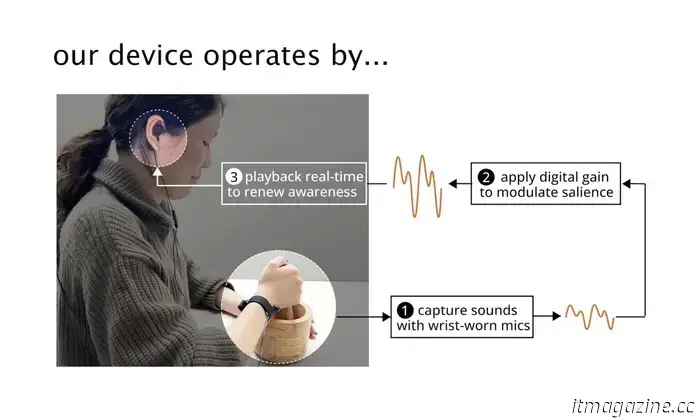
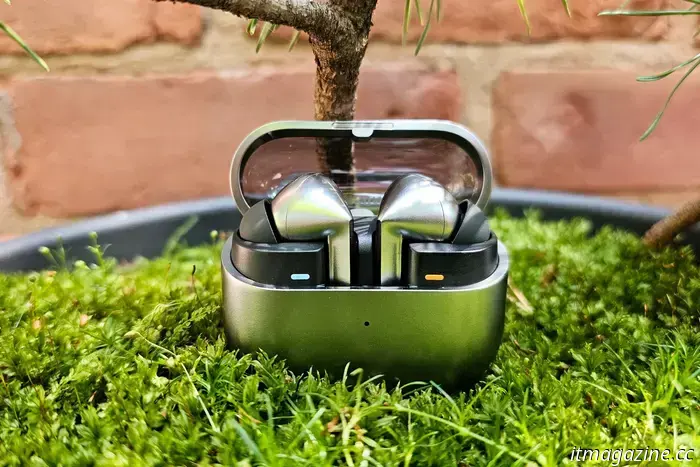
The setup is quite straightforward. It consists of two wrist straps equipped with microphones that capture the sounds made by your hands as you engage with your surroundings. These sounds are then enhanced and transmitted to your earbuds in real time. The objective is not to immerse you in virtual reality but to enhance the physical reality around you, making it feel more vivid and immediate.
“Our goal was to help individuals notice the moments when they typically get lost in their phones,” explains Sean Follmer, the lab director involved in the project.
Yujie Tao, the lead researcher, notes that most mindfulness tools depend on verbal guidance or instructions. This device, however, takes a different approach by utilizing raw sensory signals to naturally redirect your attention back to the present moment—an innovative strategy that might benefit those with ADHD.
Why It Matters: Initial tests indicate increased focus with significant therapeutic potential.
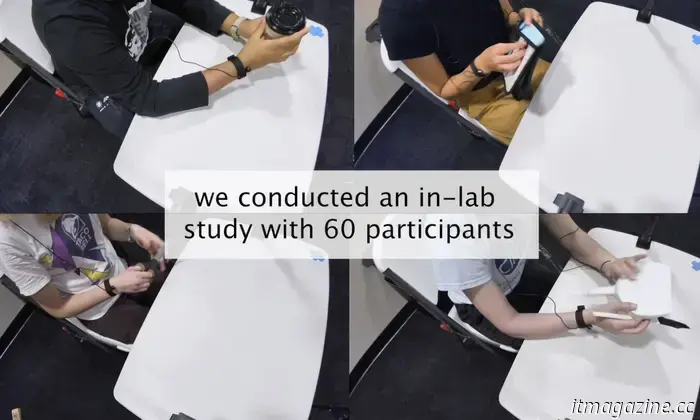
In a study involving 60 participants, the findings were clear. Users of the audio-enhancing device scored much higher on mindfulness assessments and spent significantly more time engaging with the objects around them than those who did not use the device. Their actions changed as well—they slowed down, experimented more, and focused on details they would typically overlook.
Even professional mindfulness instructors were taken aback. In early trials, one described the experience as “safe and intimate,” while another remarked that it helped them “rediscover their love for the world.”
For the average person—particularly for those who find it hard to concentrate—this has significant implications. Instead of combating distraction with digital tools that create additional noise, this method utilizes the real world as a grounding presence.
What’s Next: Clinical applications and incorporation into mindfulness programs.
The Stanford team plans to continue their work, setting up long-term studies to assess how prolonged use of the device impacts anxiety and emotional regulation. They are also exploring its potential integration into therapeutic settings or ADHD support programs.
“The potential is immense,” Tao states. “This could assist individuals in re-engaging with their environment—and themselves.”


Other articles
 Google's virtual try-on application now assists you in finding and purchasing outfits that are customized for you.
Doppl, the virtual try-on app powered by Google's AI, has introduced a shoppable discovery feed that provides outfit suggestions along with direct links to retailers.
Google's virtual try-on application now assists you in finding and purchasing outfits that are customized for you.
Doppl, the virtual try-on app powered by Google's AI, has introduced a shoppable discovery feed that provides outfit suggestions along with direct links to retailers.
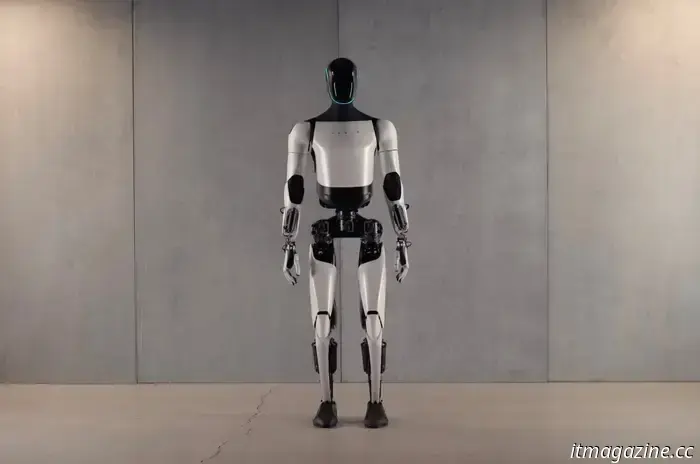 Observe as Tesla's Optimus humanoid robot takes an awkward fall.
In January, Tesla's CEO Elon Musk expressed his belief that the Optimus humanoid robot division could generate “over $10 trillion in revenue.” However, a recent video indicates that there is still much improvement needed for the robot. In an awkward incident last weekend, Optimus lost its balance and fell to the […]
Observe as Tesla's Optimus humanoid robot takes an awkward fall.
In January, Tesla's CEO Elon Musk expressed his belief that the Optimus humanoid robot division could generate “over $10 trillion in revenue.” However, a recent video indicates that there is still much improvement needed for the robot. In an awkward incident last weekend, Optimus lost its balance and fell to the […]
 This mindfulness wearable enables you to rediscover your connection to daily life.
Researchers at Stanford have developed an intriguing new wearable aimed at helping you remain present, without the need for guided meditation or screen time. Instead, this device amplifies the subtle, often overlooked sounds in your environment, such as the sound of your hands rubbing together, fabric rustling, or a marker scratching against a whiteboard.
The setup is quite straightforward. It consists of two wrist straps equipped with microphones that capture the sounds made by your hands as you engage with your surroundings. These sounds are then enhanced and transmitted to your earbuds in real time. The objective is not to immerse you in virtual reality but to enhance the physical reality around you, making it feel more vivid and immediate.
“Our goal was to help individuals notice the moments when they typically get lost in their phones,” explains Sean Follmer, the lab director involved in the project.
Yujie Tao, the lead researcher, notes that most mindfulness tools depend on verbal guidance or instructions. This device, however, takes a different approach by utilizing raw sensory signals to naturally redirect your attention back to the present moment—an innovative strategy that might benefit those with ADHD.
Why It Matters: Initial tests indicate increased focus with significant therapeutic potential.
In a study involving 60 participants, the findings were clear. Users of the audio-enhancing device scored much higher on mindfulness assessments and spent significantly more time engaging with the objects around them than those who did not use the device. Their actions changed as well—they slowed down, experimented more, and focused on details they would typically overlook.
Even professional mindfulness instructors were taken aback. In early trials, one described the experience as “safe and intimate,” while another remarked that it helped them “rediscover their love for the world.”
For the average person—particularly for those who find it hard to concentrate—this has significant implications. Instead of combating distraction with digital tools that create additional noise, this method utilizes the real world as a grounding presence.
What’s Next: Clinical applications and incorporation into mindfulness programs.
The Stanford team plans to continue their work, setting up long-term studies to assess how prolonged use of the device impacts anxiety and emotional regulation. They are also exploring its potential integration into therapeutic settings or ADHD support programs.
“The potential is immense,” Tao states. “This could assist individuals in re-engaging with their environment—and themselves.”
Samsung is preparing to unveil the Galaxy S26 series featuring its new Exynos 2600 chip, but this will be limited to Korea. Most international customers, including those in the U.S., are anticipated to receive Snapdragon versions instead.
This mindfulness wearable enables you to rediscover your connection to daily life.
Researchers at Stanford have developed an intriguing new wearable aimed at helping you remain present, without the need for guided meditation or screen time. Instead, this device amplifies the subtle, often overlooked sounds in your environment, such as the sound of your hands rubbing together, fabric rustling, or a marker scratching against a whiteboard.
The setup is quite straightforward. It consists of two wrist straps equipped with microphones that capture the sounds made by your hands as you engage with your surroundings. These sounds are then enhanced and transmitted to your earbuds in real time. The objective is not to immerse you in virtual reality but to enhance the physical reality around you, making it feel more vivid and immediate.
“Our goal was to help individuals notice the moments when they typically get lost in their phones,” explains Sean Follmer, the lab director involved in the project.
Yujie Tao, the lead researcher, notes that most mindfulness tools depend on verbal guidance or instructions. This device, however, takes a different approach by utilizing raw sensory signals to naturally redirect your attention back to the present moment—an innovative strategy that might benefit those with ADHD.
Why It Matters: Initial tests indicate increased focus with significant therapeutic potential.
In a study involving 60 participants, the findings were clear. Users of the audio-enhancing device scored much higher on mindfulness assessments and spent significantly more time engaging with the objects around them than those who did not use the device. Their actions changed as well—they slowed down, experimented more, and focused on details they would typically overlook.
Even professional mindfulness instructors were taken aback. In early trials, one described the experience as “safe and intimate,” while another remarked that it helped them “rediscover their love for the world.”
For the average person—particularly for those who find it hard to concentrate—this has significant implications. Instead of combating distraction with digital tools that create additional noise, this method utilizes the real world as a grounding presence.
What’s Next: Clinical applications and incorporation into mindfulness programs.
The Stanford team plans to continue their work, setting up long-term studies to assess how prolonged use of the device impacts anxiety and emotional regulation. They are also exploring its potential integration into therapeutic settings or ADHD support programs.
“The potential is immense,” Tao states. “This could assist individuals in re-engaging with their environment—and themselves.”
Samsung is preparing to unveil the Galaxy S26 series featuring its new Exynos 2600 chip, but this will be limited to Korea. Most international customers, including those in the U.S., are anticipated to receive Snapdragon versions instead.
 Apple's exclusive F1 agreement starts in 2026; Here's what fans should anticipate.
Apple's acquisition of F1 in 2026 is set to commence shortly, with an initial preview revealing a streaming experience packed with features, including driver cameras, Multiview, and complete race weekend broadcasts available within the Apple TV app.
Apple's exclusive F1 agreement starts in 2026; Here's what fans should anticipate.
Apple's acquisition of F1 in 2026 is set to commence shortly, with an initial preview revealing a streaming experience packed with features, including driver cameras, Multiview, and complete race weekend broadcasts available within the Apple TV app.
 Apple's AirPods Max with USB-C have received an unusual $120 price drop.
If AirPods Max have seemed a bit pricey, this discount might alter your perspective. The refreshed AirPods Max (USB-C) are now priced at $429.99, which is $120 less than the regular $549.99 price. You'll receive Apple's premier over-ear headphones featuring enhanced USB-C charging, support for lossless audio, and all the ecosystem benefits...
Apple's AirPods Max with USB-C have received an unusual $120 price drop.
If AirPods Max have seemed a bit pricey, this discount might alter your perspective. The refreshed AirPods Max (USB-C) are now priced at $429.99, which is $120 less than the regular $549.99 price. You'll receive Apple's premier over-ear headphones featuring enhanced USB-C charging, support for lossless audio, and all the ecosystem benefits...
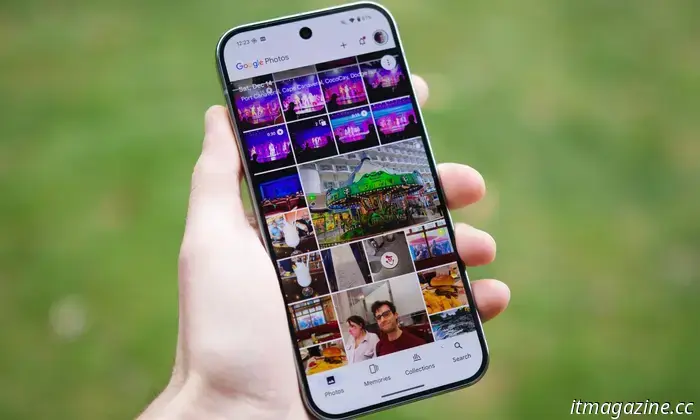 Google's new touch-up tools are set to enhance the quality of your selfies.
Google Photos is experimenting with a new "Touch Up" feature that incorporates AI-driven face retouching tools, enabling users to modify individual faces using easy sliders for natural and subtle enhancements.
Google's new touch-up tools are set to enhance the quality of your selfies.
Google Photos is experimenting with a new "Touch Up" feature that incorporates AI-driven face retouching tools, enabling users to modify individual faces using easy sliders for natural and subtle enhancements.
This innovative wearable aims to enhance your concentration and may also assist individuals with ADHD.
A new wearable device from Stanford amplifies real-world sounds to enhance focus and mindfulness. Preliminary research indicates improved attention and possible advantages for managing ADHD and anxiety.