
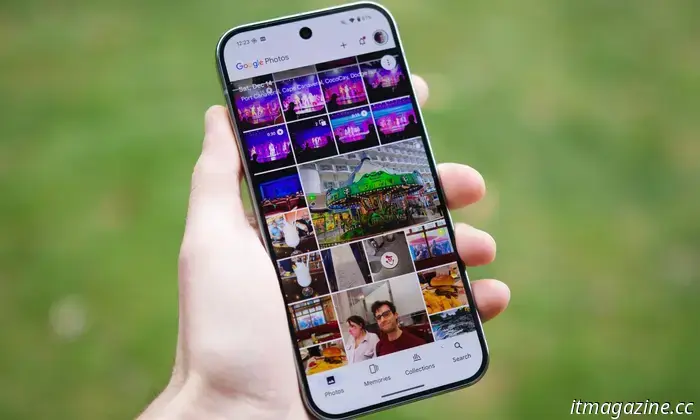
Google's new touch-up tools are set to enhance the quality of your selfies.
Google Photos is testing a comprehensive face editing suite with controls for smoothing, teeth whitening, eye enhancement, and lip adjustments.
Although Google’s Camera app has included “face retouching” options for some time, the Photos app has largely refrained from allowing users to modify specific facial features. That's about to change. Android Authority examined the latest app version (7.56) and found a fully operational “Touch Up” mode that enables users to enhance facial details long after a photo has been taken.
A New “Touch Up” Mode is on Its Way to Google Photos
Buried within the latest update is a hidden menu dubbed Touch Up. When accessed for the first time, the app prompts you to download a small 16MB file, which serves as the AI engine for the new features.
Once activated, the interface presents six distinct sliders: Smooth, Under Eyes, Irises, Teeth, Eyebrows, and Lips.
This isn’t merely a generic “beauty filter” that blurs the entire image. The standout feature is the AI's ability to identify individual faces. In a group photo, you can select one person to whiten their teeth or smooth their skin without affecting others nearby. Currently, it can process up to six faces per photo; exceeding this limit will prompt a notification from the app.
Why This is Important: Enhanced Editing, Greater Control, and Future Prospects
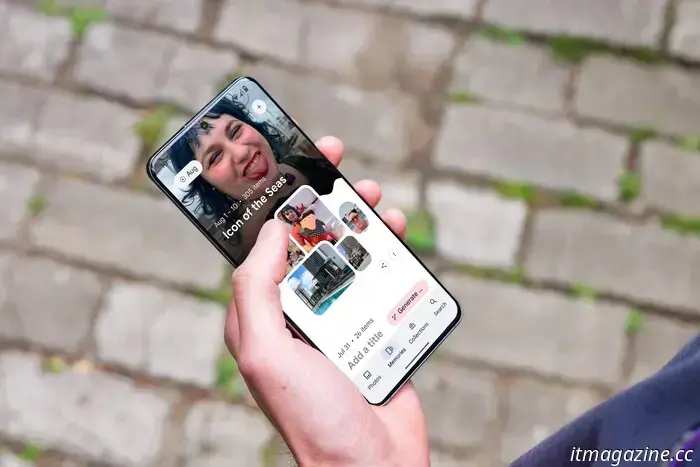
Google Photos already serves as the default gallery app for over a billion users, but until now, making adjustments like correcting dark circles or brightening smiles required switching to other apps such as Snapseed or Facetune. By integrating these editing tools, Google is positioning the app as a comprehensive solution.
This development is a significant advantage for everyday users. Many of us have group photos where one individual looks great while another suffers from poor lighting. The ability to edit on a per-person basis quickly resolves this issue. It focuses more on providing subtle, natural enhancements than on over-the-top filters.
While Google has not officially announced the release date, the fact that the feature is functional in testing versions suggests it will be available soon—possibly in the next “Feature Drop.” This indicates Google’s intention to make your photo gallery more intelligent, handling the complex editing so that you don’t need to be a Photoshop expert to look your best.




Other articles
 Observe as Tesla's Optimus humanoid robot takes an awkward fall.
In January, Tesla's CEO Elon Musk expressed his belief that the Optimus humanoid robot division could generate “over $10 trillion in revenue.” However, a recent video indicates that there is still much improvement needed for the robot. In an awkward incident last weekend, Optimus lost its balance and fell to the […]
Observe as Tesla's Optimus humanoid robot takes an awkward fall.
In January, Tesla's CEO Elon Musk expressed his belief that the Optimus humanoid robot division could generate “over $10 trillion in revenue.” However, a recent video indicates that there is still much improvement needed for the robot. In an awkward incident last weekend, Optimus lost its balance and fell to the […]
 Apple's AirPods Max with USB-C have received an unusual $120 price drop.
If AirPods Max have seemed a bit pricey, this discount might alter your perspective. The refreshed AirPods Max (USB-C) are now priced at $429.99, which is $120 less than the regular $549.99 price. You'll receive Apple's premier over-ear headphones featuring enhanced USB-C charging, support for lossless audio, and all the ecosystem benefits...
Apple's AirPods Max with USB-C have received an unusual $120 price drop.
If AirPods Max have seemed a bit pricey, this discount might alter your perspective. The refreshed AirPods Max (USB-C) are now priced at $429.99, which is $120 less than the regular $549.99 price. You'll receive Apple's premier over-ear headphones featuring enhanced USB-C charging, support for lossless audio, and all the ecosystem benefits...
 Blink cameras provide AI-driven notifications that accurately inform you about ongoing events.
Blink is introducing a new feature in beta that utilizes AI to review security camera footage and create natural-language summaries of security incidents.
Blink cameras provide AI-driven notifications that accurately inform you about ongoing events.
Blink is introducing a new feature in beta that utilizes AI to review security camera footage and create natural-language summaries of security incidents.
 The Logitech G502 X Lightspeed is currently $50 less than its regular price and remains one of the top options available.
If your existing mouse is beginning to limit your performance in shooters or extended MMO sessions, this is a great opportunity for an upgrade. The Logitech G502 X Lightspeed wireless gaming mouse is currently priced at $109.99, a discount of $50 from its usual price of $159.99. You will be getting one of Logitech's top-tier FPS mice, featuring a lighter design and enhanced […]
The Logitech G502 X Lightspeed is currently $50 less than its regular price and remains one of the top options available.
If your existing mouse is beginning to limit your performance in shooters or extended MMO sessions, this is a great opportunity for an upgrade. The Logitech G502 X Lightspeed wireless gaming mouse is currently priced at $109.99, a discount of $50 from its usual price of $159.99. You will be getting one of Logitech's top-tier FPS mice, featuring a lighter design and enhanced […]
 Witness SpaceX establish a new record with its reliable Falcon 9 rocket.
A SpaceX Falcon 9 has achieved a record of 32 launches and landings following a successful mission on Monday night. The Falcon 9 first-stage booster, designated B1067, took off at 5:26 p.m. ET from Launch Complex 39A (LC-39A) at NASA’s Kennedy Space Center in Florida. Shortly after, it deployed 29 Starlink internet […]
Witness SpaceX establish a new record with its reliable Falcon 9 rocket.
A SpaceX Falcon 9 has achieved a record of 32 launches and landings following a successful mission on Monday night. The Falcon 9 first-stage booster, designated B1067, took off at 5:26 p.m. ET from Launch Complex 39A (LC-39A) at NASA’s Kennedy Space Center in Florida. Shortly after, it deployed 29 Starlink internet […]
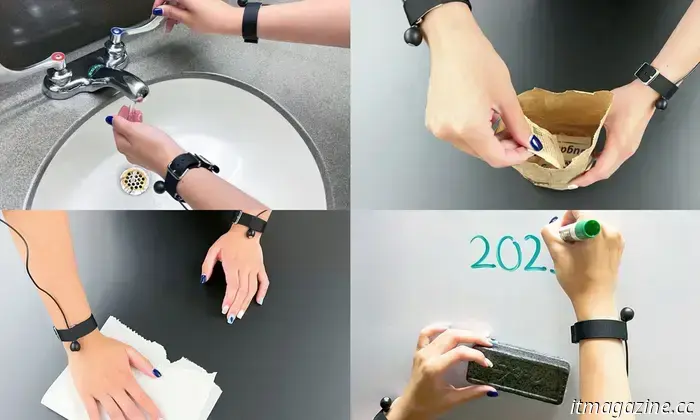 This innovative wearable aims to enhance your concentration and may also assist individuals with ADHD.
A new wearable device from Stanford amplifies real-world sounds to enhance focus and mindfulness. Preliminary research indicates improved attention and possible advantages for managing ADHD and anxiety.
This innovative wearable aims to enhance your concentration and may also assist individuals with ADHD.
A new wearable device from Stanford amplifies real-world sounds to enhance focus and mindfulness. Preliminary research indicates improved attention and possible advantages for managing ADHD and anxiety.
Google's new touch-up tools are set to enhance the quality of your selfies.
Google Photos is experimenting with a new "Touch Up" feature that incorporates AI-driven face retouching tools, enabling users to modify individual faces using easy sliders for natural and subtle enhancements.