
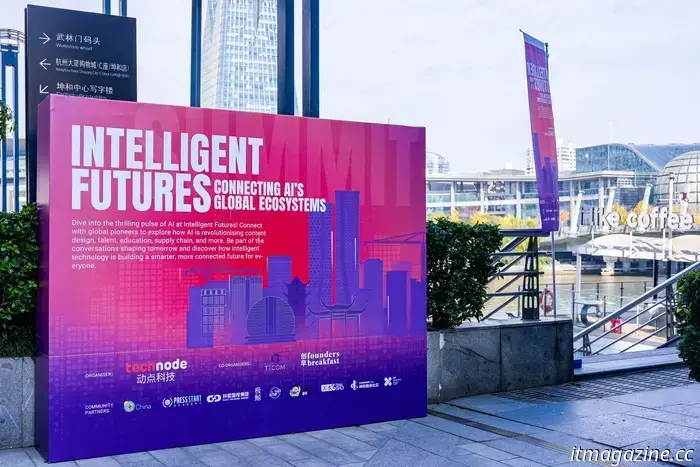
AI is shaping new content strategies and enhancing localization, yet cultural comprehension still relies on people.
Credit: TechNode
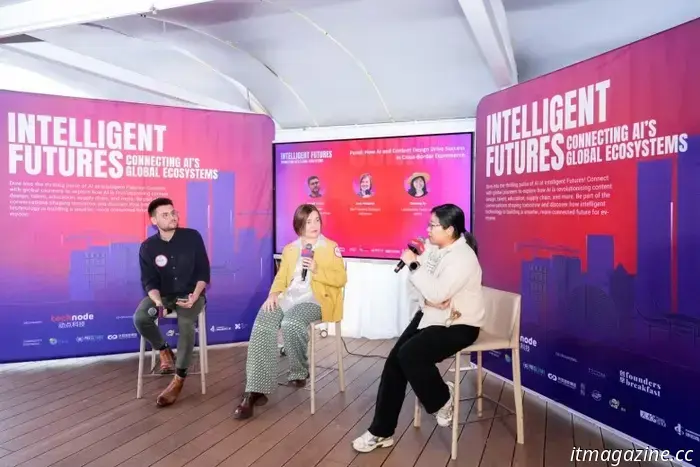
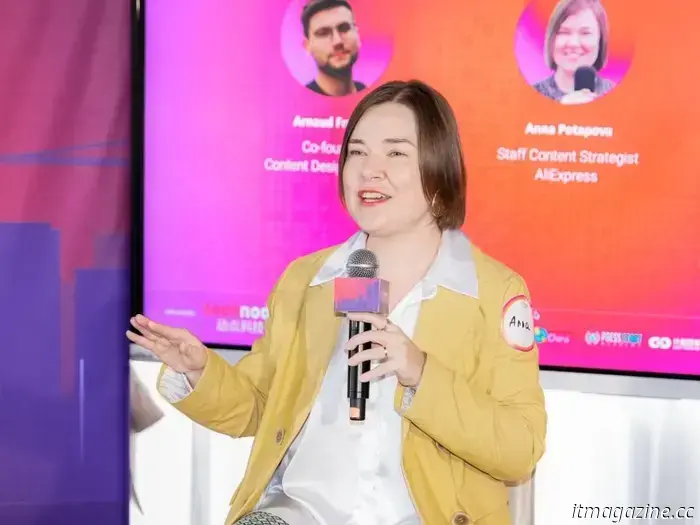
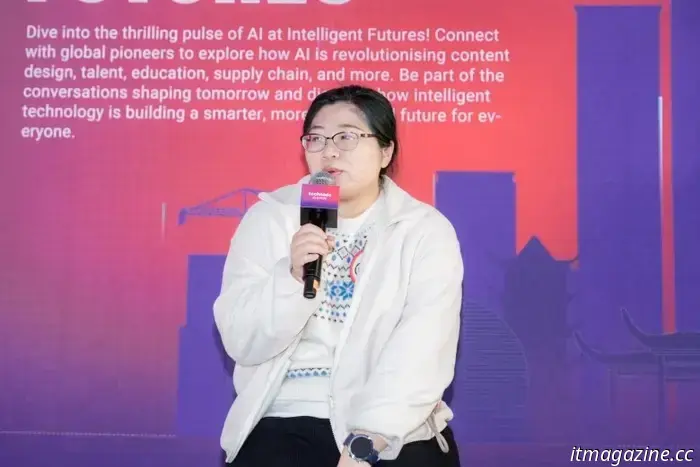
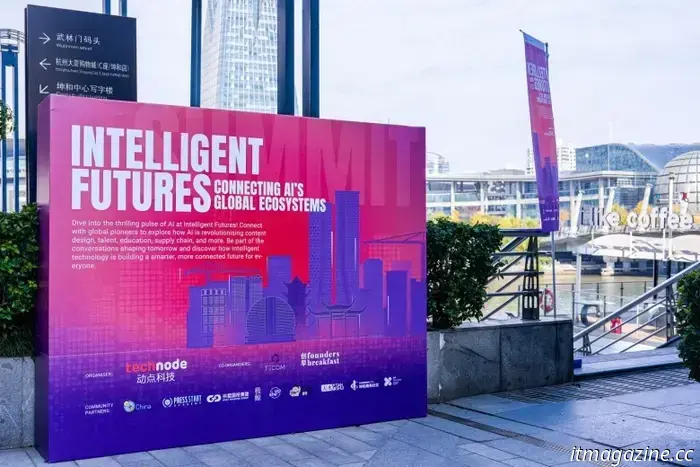
The Intelligent Futures: AI’s Global Ecosystems event, hosted by TechNode in collaboration with TECOM and Founders Breakfast, took place in Hangzhou on Thursday. During the second panel titled How AI and Content Design Drive Success in Cross-Border E-commerce, three representatives from multinational tech companies analyzed emerging trends in global digital content strategies and how businesses are adjusting to better connect with users across various markets.
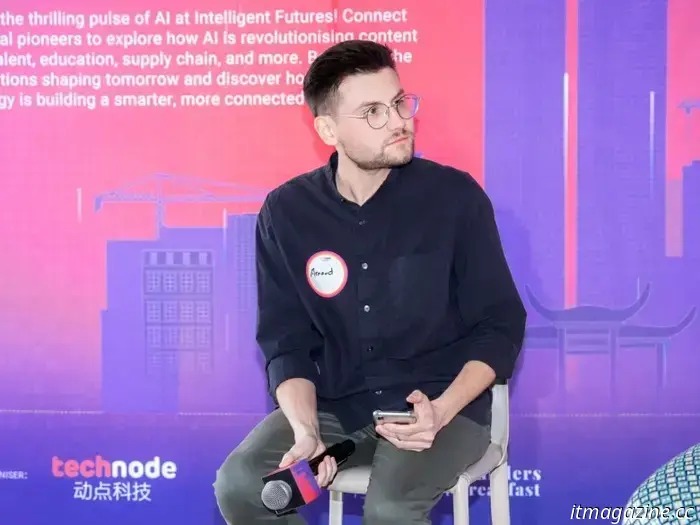
The panel included Arnaud Frattini, Co-founder of Content Designers China; Anna Potapova, Staff Content Strategist at AliExpress; and Qiaoying Su, Localization Team Lead at OPPO. Drawing on their considerable expertise in content development, brand communication, and localization, the speakers provided insights into the ways AI-powered tools and workflows are transforming global e-commerce platforms.
The panel moderator indicated that the discussion would concentrate on the intersection of generative AI with the overall content ecosystem, the execution of cross-market content strategies, and the new obstacles Chinese companies encounter as they enter the global market. With the ongoing evolution of short-form video, streaming platforms, and cross-channel content distribution, companies are re-evaluating their content processes and seeking more agile and scalable methods to engage with international audiences.
The rising significance of content design in China
Arnaud Frattini mentioned that content design, a relatively nascent field, has attracted increasing attention from businesses in China in recent years. He noted that content has evolved from being merely supplementary to marketing and has now become an integrated component of the overall user experience. As user journeys involve various touchpoints, a coherent content strategy is vital for preserving brand consistency and fostering user trust. He also pointed out that in technology sectors where products are complex and information is dense, the importance of content design and strategy has intensified.
Adopting a data-driven content strategy and addressing AI integration challenges
Anna Potapova highlighted that with AI becoming increasingly embedded in the content sector, her team is striving to embrace a more data-driven approach to content creation. “Today’s users are more dispersed than before,” she remarked. “We require not just more content, but the appropriate content—delivered timely, in the right format, to the right audience.” She further noted that while AI tools are enhancing production efficiency, the principal challenge lies in incorporating AI functionalities into existing workflows and aligning them with the company’s overarching brand values.
From translation to cultural comprehension in localization
Qiaoying Su asserted that localization for a Chinese tech brand expanding globally now transcends conventional translation. “In different markets, we observe distinctly varied user expectations, value preferences, and aesthetic standards,” she stated. She pointed out that relying solely on machine translation or standardized content no longer caters to the needs of international users. To address this, Oppo has established cross-cultural teams in various regions to ensure core product narratives are conveyed in ways that resonate culturally while maintaining consistent global branding.
Human understanding remains essential in the content industry
The speakers also discussed the limits of generative AI applications. While AI is transforming the content industry, they concurred that human involvement is still irreplaceable. Success in content strategy, brand storytelling, or localized messages requires a profound understanding of cultural contexts and the ability to connect with users emotionally—areas where AI has limitations. As AI, globalization, and the content industry continue to intertwine, content teams are confronting unparalleled challenges and opportunities. The panel provided new insights for the industry, aiming to determine how companies can formulate content strategies that are increasingly agile, intelligent, and culturally attuned.
Jessie Wu is a tech reporter based in Shanghai. She covers consumer electronics, semiconductors, and the gaming industry for TechNode. Connect with her via e-mail: [email protected].
Other articles
 I transformed the Notes app on my iPhone into a memory bank powered by ChatGPT.
There's a more intelligent method to store crucial pieces of information, and the iPhone already provides the essential framework to accomplish this with the help of some AI.
I transformed the Notes app on my iPhone into a memory bank powered by ChatGPT.
There's a more intelligent method to store crucial pieces of information, and the iPhone already provides the essential framework to accomplish this with the help of some AI.
 Google’s latest update has made your notifications more intelligent and less intrusive.
Google's Android 16 QPR2 update brings AI-driven notifications, enhanced dark mode, fraud detection, and new safety features, enhancing daily phone usage to be more seamless, secure, and user-friendly.
Google’s latest update has made your notifications more intelligent and less intrusive.
Google's Android 16 QPR2 update brings AI-driven notifications, enhanced dark mode, fraud detection, and new safety features, enhancing daily phone usage to be more seamless, secure, and user-friendly.
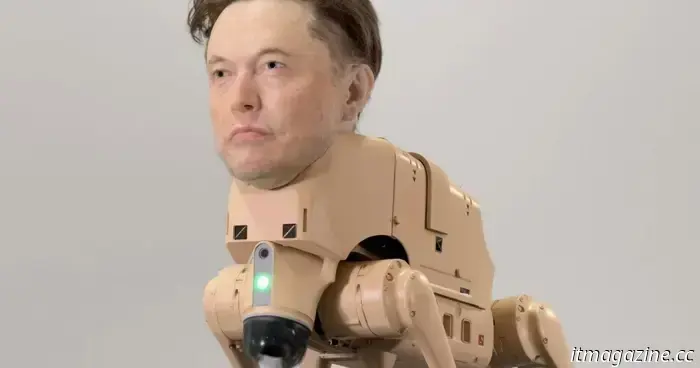 These might be the most unnerving robots you've ever seen.
Those who are easily unsettled may wish to bypass this article. It discusses some of the most unsettling robots that have ever existed on our planet, aside from this particular one, perhaps. As part of a new art exhibition at Art Basel Miami, these robot dogs showcase disturbingly realistic replicas of the heads of several prominent figures in [...]
These might be the most unnerving robots you've ever seen.
Those who are easily unsettled may wish to bypass this article. It discusses some of the most unsettling robots that have ever existed on our planet, aside from this particular one, perhaps. As part of a new art exhibition at Art Basel Miami, these robot dogs showcase disturbingly realistic replicas of the heads of several prominent figures in [...]
 The OnePlus Ace 6T launches with the Snapdragon 8 Gen 5, and it resembles the 15R quite a bit.
The OnePlus Ace 6T makes its entrance with top-tier performance, impressive durability, and a large battery capacity, indicating what Indian consumers can anticipate from the forthcoming OnePlus 15R release.
The OnePlus Ace 6T launches with the Snapdragon 8 Gen 5, and it resembles the 15R quite a bit.
The OnePlus Ace 6T makes its entrance with top-tier performance, impressive durability, and a large battery capacity, indicating what Indian consumers can anticipate from the forthcoming OnePlus 15R release.
AI is shaping new content strategies and enhancing localization, yet cultural comprehension still relies on people.
The Intelligent Futures: AI's Global Ecosystems event, arranged by TechNode and co-hosted by TECOM and Founders Breakfast, took place in Hangzhou on